

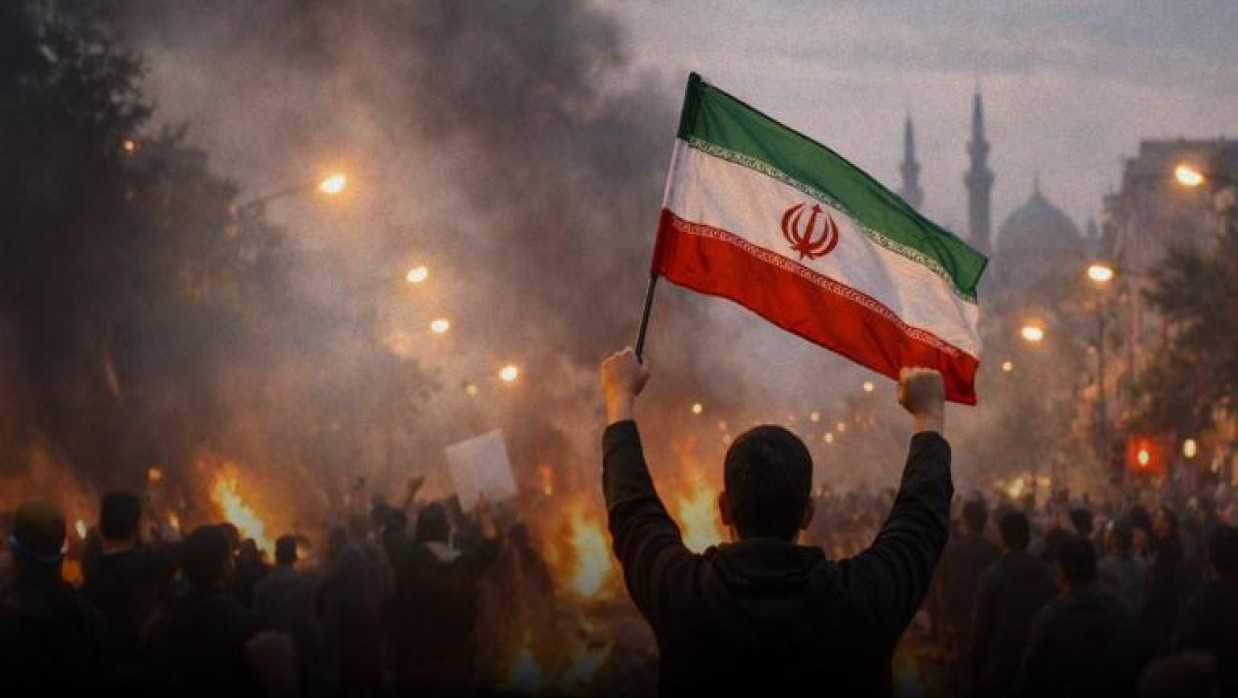
Iran does not exist in the contemporary world order as a client state or as a free actor. Rather, it is treated as something in between; an unruly society whose subjectivity must be curbed through an alternating combination of domestic repression and foreign subordination. Anybody attempting to understand the dynamics of Iranian revolt today must reckon with both phenomena in tandem. On the one hand are Iranians who suffer under the conditions of exploitation, intimidation, censorship, and political enclosure produced by the Islamic Republic. On the other hand, there is the well-documented phenomenon of foreign intelligence involvement seeking to exacerbate these tendencies for its own purposes.
Unfortunately, mainstream analysis collapses the latter into the former. For some, this means interpreting every instance of revolt through the lens of CIA plots or Mossad agent provocateurs. For others, it means ignoring the covert power’s significant role in the region altogether. Both distortions are harmful, and a reckoning with both is long overdue.
Few countries can rival Iran’s long history of targeted subversion and sponsored violence. Since the CIA and MI6 coup of 1953, Iran has been a proving ground for every imaginable form of regime control, whether it be coups, assassinations, arms deals, propaganda operations, and sectarian mobilization. Far from seeking to influence Iran’s policy positions abroad, these interventions were designed to narrow the range of acceptable political discourse within Iran. In Washington and Jerusalem, it was learned very quickly that a sovereign Iran would be a threat to their interests.
The engine driving this policy on the Israeli side cannot be overstated. The Mossad and other Israeli agencies have worked for generations with the assumption that Iran stands in the way of Israel’s unchallenged military and intelligence hegemony over the Middle East. Israel has assassinated Iranian nuclear scientists, waged cyber warfare, cultivated Iranian exiles, and aggressively worked to stoke the resentment of Iran’s ethnic and sectarian minorities in hopes of toppling, weakening, or better containing Iran through outside leverage. Balkanization was once the behind-closed-doors fantasy of neoconservatives and neoliberals; today it is the silent consensus of Bibi-hardliners.
The United States, likewise, has grown less interested in acting as its own imperial power and more invested in facilitating Israeli expansion. Whether it be congressional cowardice in the face of Israeli dictate, sanctions regimes that largely mimic Israeli security concerns, or the political hegemony of pro-Israel lobbyists inside Washington, the distinction between what benefits the United States and what benefits Israel has collapsed. American policy in the Middle East has increasingly become a function of Israeli interests, and the results are catastrophic. The damage that Israeli hegemony, enabled by the United States, could do to the world economy, global peace, and regional stability should make us all afraid.
But to suggest that Iranian uprisings are explained primarily by Mossad scheming or CIA manipulation is a harm of another sort. Iran is not a beast dormant until vicious foreign hands can pull its strings. Iranians pour into the streets because life inside Iran is no longer livable. Rampant inflation, currency manipulation, skyrocketing youth unemployment, gender oppression, and the militarization of public life have driven Iranians to their breaking point. Uprising has become habitual, and Iranians have taken to the streets again and again since 2009 because they see no political alternatives.
Foreign plots can help spark unrest, but they cannot manufacture the profound grievances that fuel it. Sanctions inflate the prices of food and medicine; espionage promotes a culture of paranoia and self-censorship; militarism crowds out public spending on health, education, and infrastructure. But the root causes for Iran’s sharpening existential crisis remain domestic. The alliance between security and capital defines Iranian politics. The Islamic Revolutionary Guard Corps acts as both the hammer of Iran’s dissidents and the license for Iran’s lucrative construction, logistics, energy, and trading conglomerates. Capital here is accumulation by force, and force by extension becomes self-financing.
Foreign actors have played no small role in maintaining this status quo. Imperialists and Iranians share a symbiotic relationship, one that empowers each side at the expense of the Iranian people. To surveil, assassinate, and sanction is to give dictatorship license. Every execution quells popular dissent; every act of intimidation enriches businessmen with ties to the IRGC; every military escalates crowdsourcing Iran’s vast resources into the war machine. Authoritarianism here is therefore not so much the suppression of revolt but the means by which the Iranian economy can be bound up with force itself.
If imperialists benefit from the Iranian dictatorship, then the Iranian dictatorship is well served by imperialist plots. The Mossad and CIA don’t simply seek allies abroad; they support political tendencies that mirror their own repressive logic at home. The criminalization of protest, the torture of detainees, and the opacity of government all allow covert action to work more efficiently. In this way, dictatorship and imperialism are two sides of the same coin.
On the left, some take refuge in campism amid these political complexities. If a state holds itself out to be “anti-imperialist,” then whatever it does is inherently just. Political prisoners vanish when held up to scrutiny; executions are justified as necessary evils in the name of national defense; protesters become pawns, proxies, and agents of one foreign power or another. This tradition stretches from the outright denial of the Hungarian revolution as an imperial conspiracy to the present-day cynical takes on the Arab Spring. Today, we see its echoes in analyses that smear Iran’s Kurdish, Baluchi, and Arab uprisings as Israeli-led sectarian violence.
Both tactics not only obscure reality but also actively bolster the powerful. Pointing to imagined Israeli agents as the cause of revolt shifts culpability away from those pulling the trigger in Tehran and towards officials in Washington and Jerusalem. Dictatorship is made reactionary rather than violent in itself. Worse still, it eclipses the agency of the Iranian people: women who brave the morality police, teachers who strike despite threats of imprisonment, factory workers who unionize at their own peril, and Iran’s minorities who seek to throw off the yoke of internal colonization. This isn’t materialism, it’s surrender dressed as theory.
Nor is this phenomenon limited to Iran. Iraq, Syria, Libya, and Yemen have all been subject to such projects for years. Sanctions are slowly normalized as a form of collective punishment, intelligence agencies research regime change as a matter of course, and color revolutions are weaponized as part of foreign policy doctrine. The result is a world slipping into total disorder. Israel wants regional dominance, and the United States thinks it can control the fires it starts, but we are already nearing the tipping point. There comes a time when empires that rule through chaos and insurrection inevitably lose control of both.
We must instead hold two things in mind simultaneously. Iran is indeed the target of Mossad and CIA interventionism. The Israeli regime has put forth a multi-generational project of weakening Iran for domestic consumption. At the same time, we cannot look at the Iranian revolt through the narrow prism of foreign sabotage. Iranian uprisings are the product of very real class struggle, misogyny, state repression, authoritarian enclosure, and economic breakdown. To deny either point is to give up on politics itself.
Solidarity, therefore, means taking a stand against both Israeli tutelage and Iranian discipline. It means listening to Iranian workers, women, students, and minority groups who understand as well as anyone the costs of foreign puppets as well as the liabilities of regime rule. Their fight is not about choosing who will lead the country. Their fight is a fight for history.


0 Comments
LEAVE A COMMENT
Your email address will not be published