

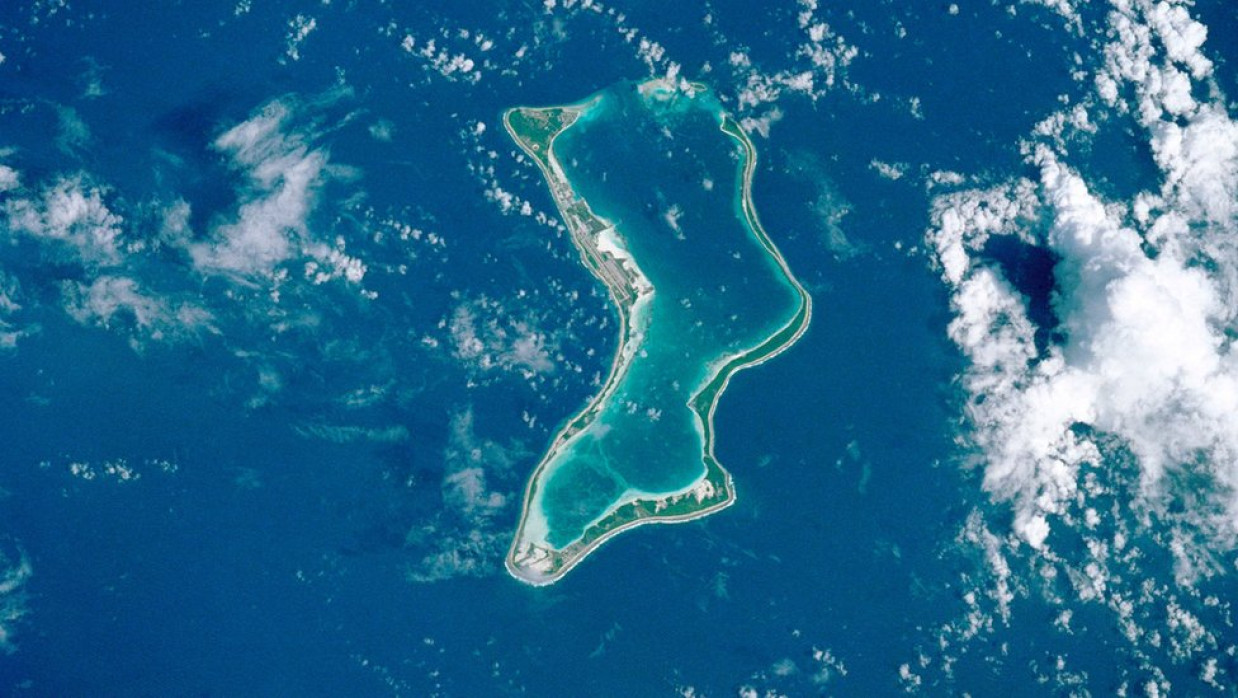
Maldivian President Mohamed Muizzu's request that British Prime Minister Andy Burnham reopen negotiations over the Chagos Archipelago adds another claimant and another layer of complexity to one of the Indian Ocean's most enduring territorial disputes. Until now, the diplomatic argument has primarily involved Britain, which administers the islands; Mauritius, which claims sovereignty; the United States, which operates a major military facility on Diego Garcia; and the Chagossians, who were expelled from their homeland. The Maldives is now insisting that its historical connections and geographical proximity also entitle it to a place at the negotiating table.
He expressed his "great disappointment" that the Maldives was not informed before the previous UK prime minister, Keir Starmer, reached an agreement with Mauritius back in May 2025. This would have handed over the Chagos Archipelago to Mauritius, with the UK leasing Diego Garcia for at least 99 years. This was supposed to settle the dispute while keeping the joint US/UK military base open.
Maldives' intervention into this should not be overlooked. As mentioned, the Chagos Islands sit in the central Indian Ocean region. Maldivian sailors have known about these islands for many years and have frequented them. This matters to the Maldives today, as control will affect its maritime borders. This includes fishing rights, environmental laws, seabed minerals, and security.
Nevertheless, the Maldives faces a difficult legal argument. An extensive international record supports Mauritius's claim. Britain detached Chagos from colonial Mauritius in 1965, three years before Mauritian independence, and incorporated it into the newly created British Indian Ocean Territory. In return, Mauritius received £3 million, but the separation occurred while it was still under British colonial authority.
In 2019, the International Court of Justice concluded that the detachment had not been based on the free and genuine will of the Mauritian people. The court found that Mauritius's decolonization had not been lawfully completed and advised Britain to end its administration of the archipelago as rapidly as possible. The United Nations General Assembly subsequently endorsed that conclusion by an overwhelming majority and affirmed that Chagos formed an integral part of Mauritius. The Maldives was one of only six countries that voted against the resolution.
This context helps explain why the UK feels sovereignty lies between them and Port Louis, not Malé. When they began negotiations with Mauritius, it was because they didn't believe any surrounding country had a stronger claim to Chagos than the others. The main concern was whether the UK tore land from Mauritius when it left. Just because they had been in contact before doesn't mean they should have given them their land.
This is also problematic because Britain did not allow the Maldiveans to be a part of this deal. This shows that one flaw in the negotiations was that the treaty was created for nations, while other people with a stake in the situation were ignored. Most of all, the Chagossians had no final say in this matter. Britain exiled many Chagossians between the end of the 1960s and the beginning of the 1970s. These people were deported mostly to Mauritius and Seychelles. They wanted these people off Diego Garcia so that the US could build their military base. Not only did the Chagossians lose their home, but they also lost their way of life and their ability to return. Now they live in Mauritius, Seychelles, and Britain.
The problem with any deal meant to represent decolonization is that it does not help those who suffered from it. The Chagossian people feel they should have been more involved in this process. Some believe Mauritius should control the Chagos, while others distrust Britain or Mauritius. Many Chagossians feel that this deal does not allow them to move to the outer islands of Chagos. They feel this deal will keep them away from Diego Garcia, which many are originally from. The U.N. committee on racial discrimination feels that this deal could create more issues. As happened before, they did not get a chance to share their true opinion. They want help with reparations, culture, and the ability to return to their homeland.
Another reason why this issue may become difficult to resolve is the Diego Garcia location. It allows the US and Britain to travel to many areas. It is located near the middle of the Indian Ocean, allowing quick travel to the Persian Gulf, Red Sea, East Africa, South Asia, and Southeast Asia. Its runway can support bombers and large cargo planes. It also allows boats to dock and use its facilities. Diego Garcia has fuel storage, radio communications, and ships to patrol the area. This gives Britain and America the upper hand in deploying troops to these regions.
Diego Garcia supported American military campaigns in Afghanistan and Iraq and remains important for monitoring maritime routes through which much of the world's trade and energy supplies pass. As strategic competition with China intensifies, Washington is reluctant to accept any arrangement that might create uncertainty about the base's future. The island's isolation is also valuable: unlike bases in politically sensitive population centers, Diego Garcia faces few immediate local pressures, though that isolation was achieved through the forced removal of its inhabitants.
The 2025 deal sought to bridge both legal and strategic concerns. Mauritius would receive legal ownership of the islands, and Britain would retain military access to Diego Garcia for 99 years. Restrictions would prevent any country from establishing a military presence around Diego Garcia. Britain would pay Mauritius significant sums and help with development. It would also help with a possible relocation to other islands, except Diego Garcia.
Many called it an exorbitant sell-off. Some suggested it would cost Britain around £35bn over the life of the deal. The British government has claimed it is significantly less in today's money. This shows how long-term costs can look. Many have also said that giving Mauritius control of the island will open the door for China to gain influence.
When President Trump pulled out of the deal, calling it a "big mistake," it put the deal on hold. Without America, Britain lacks the means to ensure Diego Garcia remains safe from future threats. So there is not really a path to pushing this through. Meaning Britain will continue to hold on to the islands. Many don't believe it has any right to.
Mauritius's action allows for Burnham to walk away from the Mauritius deal. But not enough to reopen the whole conversation of who should own the islands. Many countries will want to jump into that debate and give Britain more time to maintain the status quo. This isn't ideal either, as we don't want more time to pass before these islands are decolonized. By not allowing the Maldivians to have a say in this discussion, we are doing them a disservice as well.
The best approach would be to keep the current agreement in place and allow the Maldivians to voice their opinions on certain issues. Such as marine and national security in the area. But the Chagossians need to have a say in these discussions. This includes relocation, compensation, and access to their homeland. Diego Garcia is strategically important, but it should not come at the expense of these people's rights.
The issue with Chagos has grown beyond Britain and Mauritius trying to come to an agreement. We now face an issue of many countries trying to balance these needs in the Indian Ocean region. Britain controls these islands; Mauritius believes it has the most legitimate claim; America has a military base; and the Maldivians want to be included. How will we reach a decision that satisfies all parties and includes the Chagossian peoples?


0 Comments
LEAVE A COMMENT
Your email address will not be published