

A truck driver travelling through Jammu and Kashmir can increasingly find himself caught between two pressures: the security establishment’s suspicion and the unforgiving economics of transporting perishable produce. Recent cases in which Kashmiri truckers have been accused of maintaining links with Pakistan-based handlers raise an important question—not about whether genuine espionage should be investigated, but whether allegations against individuals are being accompanied by evidence and due process strong enough to protect the wider civilian population from collective suspicion.
In September 2026, J&K Police reportedly arrested a 24-year-old truck driver from Kathua, alleging that he used a CCTV camera near the International Border to transmit information about military movements to Pakistani handlers in return for ₹20,000. Such an allegation is serious and warrants investigation. But an allegation is not a conviction. Where electronic devices constitute a central component of the case, publicly verifiable information about forensic examination, digital evidence and the subsequent judicial process becomes essential.
This distinction matters because the pattern is not entirely new. In January 2020, Sameer Ahmed Dar of Pulwama was arrested with a truck at Ban Toll Plaza, Nagrota, in a case that subsequently involved charges against six people by the National Investigation Agency. Earlier, in September 2018, police arrested Riaz Ahmad of Pulwama and Mohammad Iqbal of Budgam, alleging links with Pakistan-based militants and claiming that Riaz had been offered money. These cases demonstrate that security agencies have repeatedly investigated alleged Pakistan-linked networks involving transporters. They do not, however, establish that allegations against every Kashmiri driver are true. That distinction becomes particularly important when security suspicion begins affecting an entire occupational community.
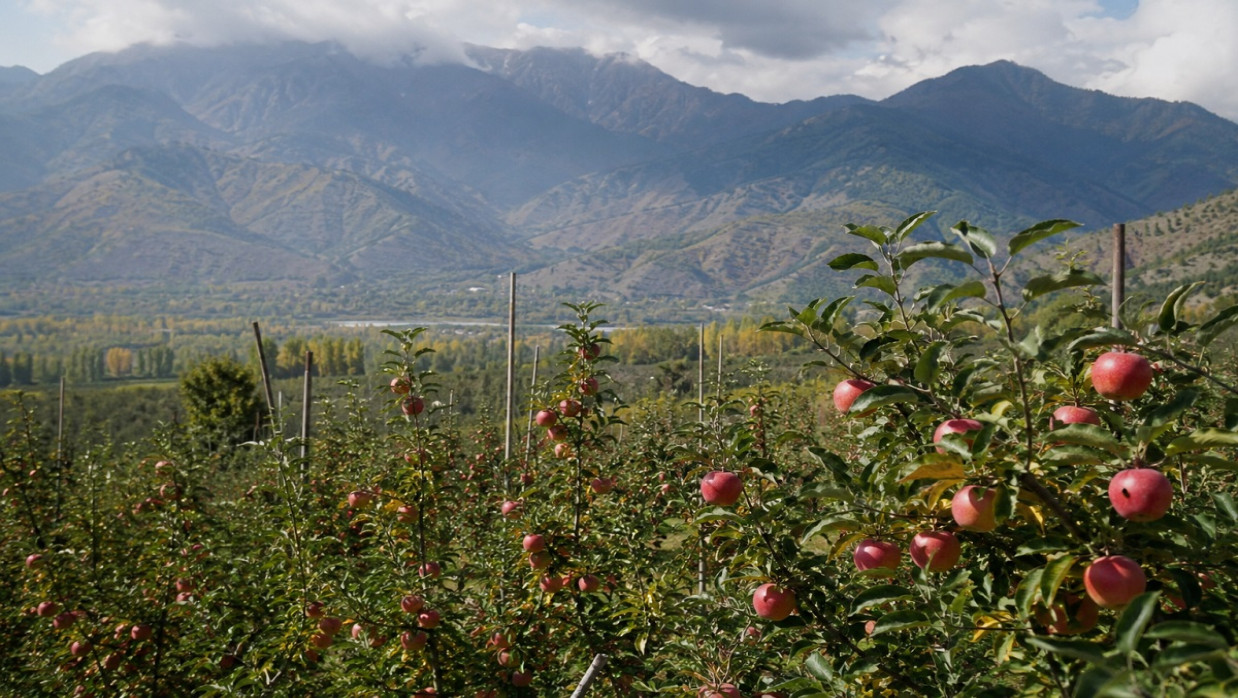
Truckers are an essential component of Kashmir’s economic supply chain. During the apple season, thousands of vehicles carry highly perishable produce from orchards and mandis towards markets outside the region. Kashmir’s horticulture economy is estimated at around ₹12,000 crore annually and supports lakhs of families. In August 2026, growers and transporters in Kulgam specifically complained about delays caused by repeated checking of fruit-laden trucks. Police subsequently discussed measures to facilitate smoother movement while maintaining security protocols.
The economic logic is straightforward: an apple can tolerate neither prolonged suspicion nor prolonged traffic congestion. Every additional checkpoint, delay or road disruption can reduce the commercial value of perishable produce. Kashmir’s trade bodies have repeatedly sought uninterrupted movement of fruit trucks during the harvest season, while authorities have themselves acknowledged the importance of timely transportation.
The issue, therefore, is not whether security checks should exist. They clearly have a legitimate purpose where credible threats exist. The issue is proportionality. Security measures should remain targeted at evidence-based threats rather than allowing suspicion to become a generalized condition imposed upon an entire population or profession.
There is also a broader political-economy dimension. When transporters face repeated scrutiny, delays and uncertainty, the resulting costs are absorbed not only by drivers but also by growers, traders, commission agents and consumers. Over time, disruption of independent commercial networks can increase economic dependence on state-controlled infrastructure, administrative permissions and institutional support. That possibility deserves scrutiny, particularly in a region where horticulture constitutes a major source of household income.
The appropriate response is neither to dismiss legitimate security concerns nor to treat every allegation as established fact. It is to insist upon evidentiary transparency, judicial oversight and proportional enforcement. Where an individual is suspected of espionage, the investigation should establish the chain of evidence and allow the courts to determine culpability. Where no such evidence exists, suspicion should not become a substitute for proof.
Kashmir’s security cannot be separated from Kashmir’s economic security. A truck driver, an orchardist and a trader all depend upon the same thing: the ability to move goods safely and predictably. Security policy that protects people while preserving lawful economic activity strengthens public confidence; security practices that generate indiscriminate suspicion and unnecessary disruption risk imposing costs on precisely the civilian communities they are intended to protect. The real test, therefore, is not whether security agencies investigate Pakistan-linked allegations. It is whether security and due process can coexist without making Kashmir’s economic lifelines collateral damage.


0 Comments
LEAVE A COMMENT
Your email address will not be published