

India’s electoral politics has entered another contentious phase, with Leader of Opposition Rahul Gandhi escalating his criticism of the Election Commission and alleging that the country’s electoral system is becoming structurally vulnerable to manipulation. His latest intervention has moved the controversy beyond individual voter deletions or procedural irregularities and placed a much larger question at the centre of India’s democratic debate: what happens to the legitimacy of government when citizens begin to doubt the integrity of the electoral process itself?
At a press conference on 24 September 2026, Gandhi demanded the resignation of Chief Election Commissioner Gyanesh Kumar and described what he called a chain of “Vote Theft → Law Theft → Institutional Theft.” His argument was that questionable electoral practices do not end with individual votes. If the composition of the electorate is manipulated, he contended, the governments subsequently formed on the basis of those elections—and the laws and institutions created by those governments—also become subject to questions of legitimacy.
Gandhi went further, claiming that there was now “100% certainty” that Indian elections, including the 2024 Lok Sabha election and state Assembly elections, had been rigged. He also levelled serious allegations against Prime Minister Narendra Modi, Home Minister Amit Shah and the BJP, while demanding that the Election Commission's functioning be investigated. These remain political allegations rather than established judicial findings, and their evidentiary basis will ultimately determine their credibility. What gives the controversy greater institutional significance, however, is that questions have also emerged from within the Election Commission itself.
An Indian Express investigation reported that Election Commissioners Sukhbir Singh Sandhu and Vivek Joshi had recorded written objections or reservations on election-related matters on at least 14 occasions over roughly ten months. The reported disagreements covered issues including the Special Intensive Revision (SIR) of electoral rolls, addition and deletion of voters, restoration of names, changes to Form 6 and the centralisation and accessibility of electoral data.
These reported internal reservations do not by themselves establish electoral manipulation. Election commissioners can disagree over procedure, interpretation or administrative practice without implying that an election has been stolen. Yet disagreements within an institution responsible for safeguarding the electoral process naturally attract public scrutiny, particularly when they concern the integrity and accessibility of voter data.
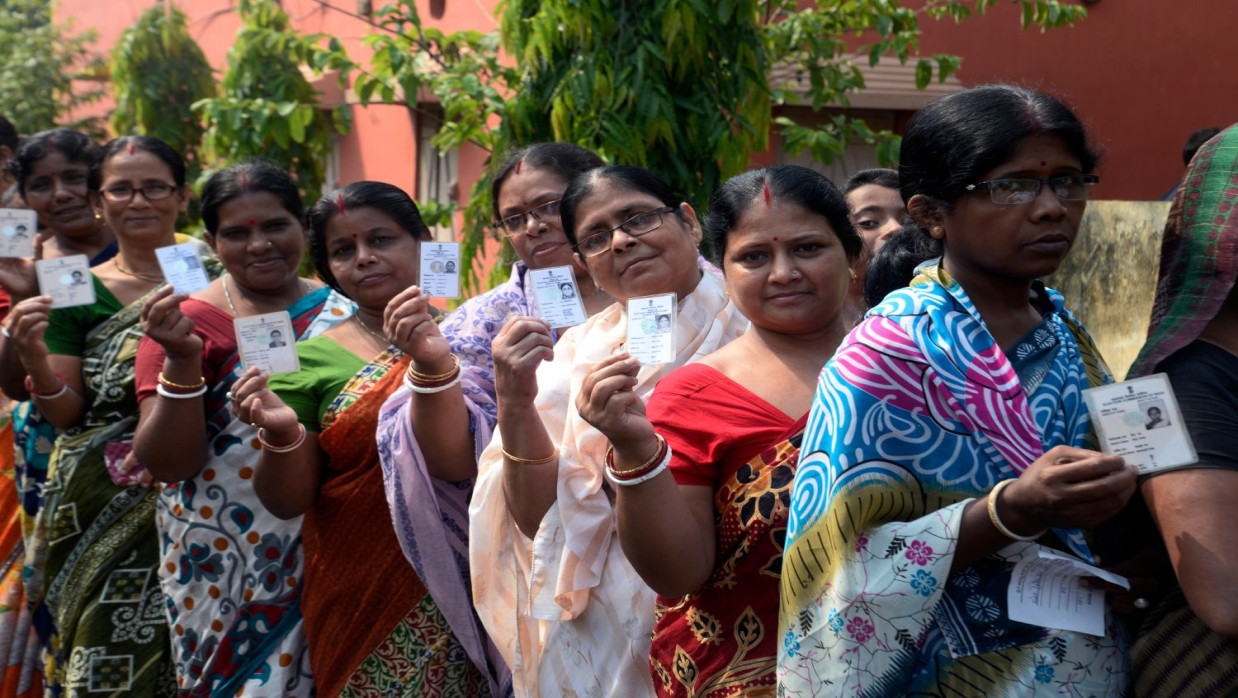
This is why the controversy surrounding SIR deserves careful attention. The stated purpose of electoral-roll revision is legitimate: inaccurate, duplicate, deceased or otherwise ineligible entries should not remain on voter lists. A credible electoral system must maintain accurate rolls. But the same process can create a democratic problem if legitimate voters are removed without adequate notice, verification and accessible mechanisms for restoration.
The political controversy becomes sharper because opposition parties and civil-society critics have alleged that minorities, particularly Muslims, could be disproportionately affected by voter-roll revisions. Such claims require empirical verification rather than assumption. But the possibility itself demonstrates why electoral authorities need to provide transparent, independently verifiable data showing how many names were deleted, why they were deleted, how many were restored and how affected citizens were able to appeal.
The institution cannot rely solely on its constitutional status to dismiss criticism. Electoral legitimacy depends not merely on the authority of an election commission but on public confidence in the procedures through which it exercises that authority. The more controversial the revision, the greater the requirement for transparency.
Gandhi's claim that India's elections are “fundamentally broken” is consequently a political conclusion that requires evidence. It should not automatically be accepted as fact. India continues to conduct elections involving hundreds of millions of voters, and political power has historically changed hands through the electoral process. At the same time, allegations involving voter deletions, access to electoral data and disagreements among election commissioners cannot simply be dismissed because they originate from the opposition.
The phrase “Vote Theft → Law Theft → Institutional Theft” captures Gandhi's broader argument about democratic legitimacy. Elections are not merely mechanisms for choosing governments. They are the constitutional bridge between citizens and state power. If that bridge is perceived to be unreliable, distrust can spread from elections to legislatures, governments and ultimately constitutional institutions themselves.
That is why the controversy should not be reduced to a confrontation between Gandhi and the BJP, or between the opposition and the Election Commission. The deeper issue concerns the institutional credibility of Indian democracy.
India's current controversy is therefore not simply about “vote theft.” It is about something more fundamental: whether the world's largest democracy can maintain public confidence in the machinery through which political power is transferred.


0 Comments
LEAVE A COMMENT
Your email address will not be published