

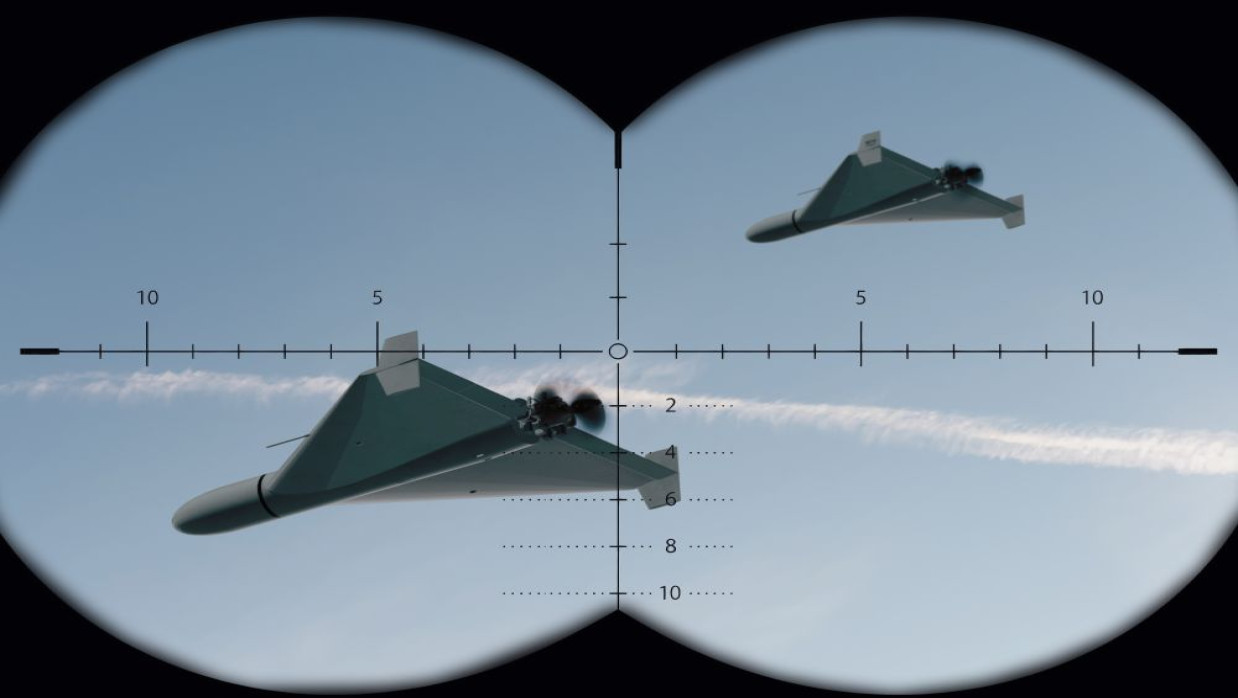
Contemporary conflicts are being increasingly shaped by drones, with unmanned systems playing a key role in determining how wars are fought. The 2025 India-Pakistan conflict marked a significant moment for drone warfare in South Asia as well, since drones were employed in strike operations for the first time. This established that in the India-Pakistan equation. Following this however, drone modernisation trends in both India and Pakistan are indicating that these systems have entered conventional military calculus and are likely to remain a dominant feature of future conflict between the countries.
Following the 2025 confrontation, New Delhi has been taking up steps toward military modernisation, for instance the creation of Rudra brigades, Bhairav commando units, Shaktibaan artillery regiments and Divyastra batteries equipped with loitering munitions, to name a few. In June this year, the outgoing Indian Army Chief General Upendra Dwivedi also announced that under the Army Aviation Corps, the Indian armed forces would be raising the Baaz battalions, projected to be specialised drone units. Two months following the announcement, the Indian military has announced of having raised the first Baaz battalion along its western front vis-à-vis Pakistan. As reported, this specialised battalion is being established as a centralized unit to operate drones including IAI Herons, Elbit Hermes, and IAI Searchers for Intelligence, Surveillance, Reconnaissance (ISR) roles, along with MQ-9B Predators which can also carry out strikes.
These initiatives, particularly taken up after May 2025 are reflective of New Delhi’s broader efforts to adapt its force structure. While New Delhi was already employing UAVs for ISR roles for enhancing situational awareness. However, as of now, the Indian military is increasingly incorporating quadcopters and loitering munitions. However so far, these developments largely involved integrating drones into existing formations rather than creating dedicated structures around them.
For instance, in June 2026, New Delhi announced the establishment of Ashni drone platoons within the military’s infantry formations. Similarly, the Divyastra, Shaktiban, and Shaurya systems were to be integrated into artillery and armoured formations, respectively. Under this arrangement, these units remained primarily part of their respective formations and continued to perform their conventional functions, while increasingly incorporating loitering munitions and other unmanned systems into their operations. In doing so, New Delhi’s aiming to move beyond simply expanding its drone inventory, and moving towards systematically integrating drones into its force structure in a layered manner.
However, the creation of dedicated drone formations such as the Baaz Battalion adds another layer to this. As dedicated formations under the Army Aviation Corps, the creation of these battalions suggests that drones are increasingly being viewed not simply as equipment that can be attached to existing units, but as a specialised military capability that would require dedicated personnel, training, maintenance, logistics and command structures. This distinction is important since the creation of permanent formations around drone technology indicates that the Indian military sees it as more than a temporary or supplementary capability. Rather, the Indian military seeks to institutionalise drones within its conventional force structure. Hence, drones are now more than mere additions to existing capabilities, but rather a technology that demands the restructuring of military formations around themselves.
Furthermore, the creation of the Baaz battalions will be most likely followed by a spree in recruitment and training of personnel to employ drones. A key challenge in raising these battalions could be developing interoperability and forging the integration of drone-generated intelligence into existing command structures. At the same time, as the drone technology remains one being characterised by break-neck advancements, hence military formations created around specific drone types or generations could quickly become outdated if procurement and training systems fail to keep pace. This assumption may particularly hold water for battalions specialising in tactical drones, as is the case with the Baaz battalions. Hence, fielding the ability to evolve will remain a key requirement for such specialised battalions.
So far, the question of whether the Baaz battalions will represent a significant transformation in India's operational use of drones or an expansion of existing capabilities remains unanswered. The practical battlefield impact of the Baaz battalions shall depend not just on how effectively New Delhi integrates these formations, but also on the ability of these formations to evolve and adapt.
Nonetheless, for Pakistan, this may place greater impetus on strengthening its counter-drone capabilities, including detection, electronic warfare and other means of neutralising or disrupting Indian UAVs. Dedicated formations can also reduce the decision-making and response time available during any crisis situation. A broader arms-race dynamic in unmanned systems will be another inevitable outcome, since developments in New Delhi will force Islamabad to acquire not just corresponding capabilities, but also counter-drone capabilities.


0 Comments
LEAVE A COMMENT
Your email address will not be published