

Cause for Concern
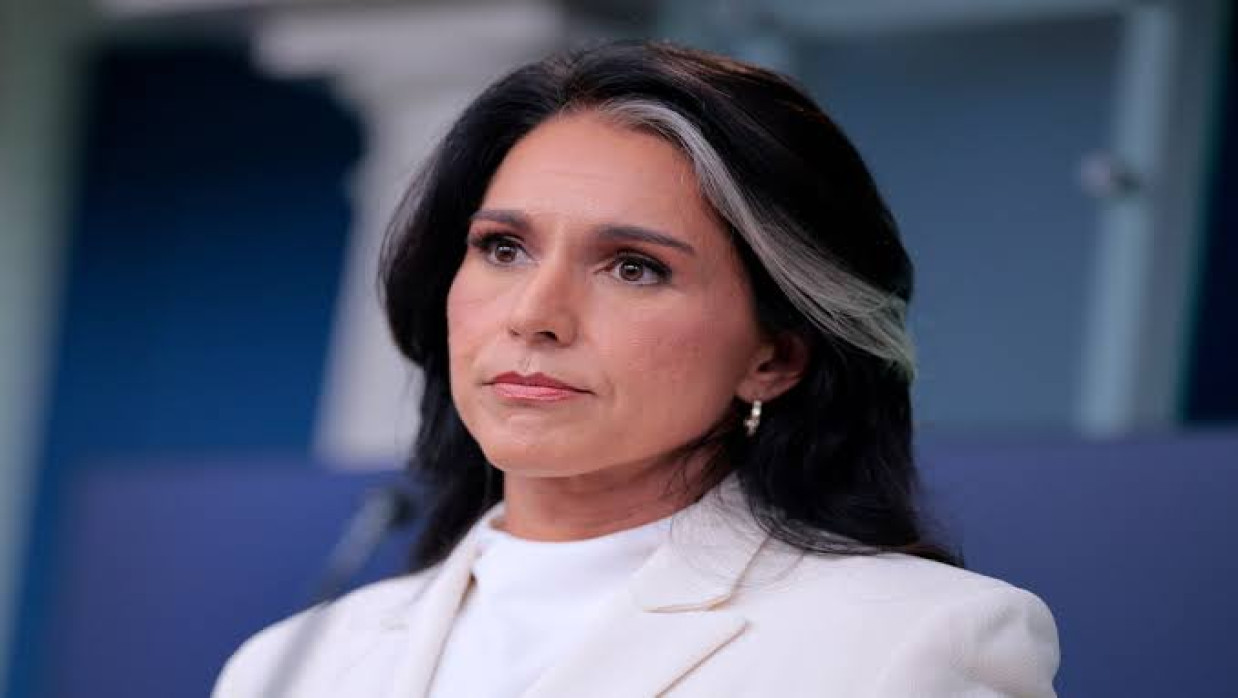
Questions swirled around Tulsi Gabbard’s nomination as United States Director of National Intelligence even before her confirmation in February 2025. Senators raised concerns about her meeting with Syrian President Bashar al-Assad, remarks she’s made about Russia and Ukraine, and prior support for a pardon for intelligence leaker Edward Snowden. One issue got less attention than others: her decades-long ties to people and groups linked to Hindu nationalism in India.
Gabbard was confirmed by a 52–48 Senate vote, with Senator Mitch McConnell the only Republican voting against her. She served as DNI until resigning in June 2026. Her departure, however, does not resolve questions about how political, ideological, and religious networks may have helped her rise to one of America’s most sensitive national-security positions.
The Rashtriya Swayamsevak Sangh, or RSS, is the ideological parent of India’s ruling Bharatiya Janata Party. The organization describes itself as a cultural and social movement devoted to Hindu unity and national service. Its critics, including religious-freedom organizations, accuse it and some of its affiliates of promoting majoritarian politics and creating an atmosphere hostile to Muslims, Christians, and other minorities.
Both descriptions deserve consideration. Membership in Hindu groups is not necessarily proof of foreign manipulation or disloyalty. But when someone is nominated to direct the U.S. intelligence community, deep political and financial ties to any foreign-leaning ideological movement should be scrutinized.
Following the Financial Trail
Investigative reporting by The Caravan documented extensive support for Gabbard from Indian American donors connected to organizations associated with the broader Sangh Parivar. According to its examination of Federal Election Commission records, donations from people identified as belonging to Sangh-linked networks constituted more than 20 percent, not necessarily the frequently repeated figure of 25 percent, of the money raised during an early phase of her 2012 congressional campaign.
This support was politically significant. Gabbard subsequently appeared at events attended by prominent advocates of Narendra Modi and spoke approvingly of stronger relations between Washington and New Delhi. She also opposed a 2013 congressional resolution that criticized religious-freedom conditions in India.
None of these actions, individually or collectively, proves that Gabbard was acting on instructions from the RSS or the Indian government. American citizens are legally entitled to donate to campaigns, advocate policies, and organize around their political or cultural interests. Indian Americans should not be regarded with suspicion merely because they support closer American relations with India.
The relevant question is narrower: Were Gabbard’s relationships with particular organizations sufficiently extensive to create conflicts of interest or counterintelligence vulnerabilities? That question requires evidence, not insinuation.
The Guru and the Mysterious Memos
An analysis published by The Washington Post in June 2026 reviewed hundreds of leaked memos believed to have provided Gabbard insider political guidance while serving in Congress. The documents included talking points, media guidance and, occasionally, quotes she later repeated verbatim in public statements.
The investigation connected this advisory system to Gabbard’s religious background and the spiritual movement led by Chris Butler, also known as Jagad Guru Siddhaswarupananda Paramahamsa. Gabbard has long acknowledged Butler as her spiritual teacher. The reporting raised legitimate questions about who wrote the memoranda, what authority they exercised, and whether voters understood the extent of this private influence.
But spiritual direction, even if politically powerful, does not necessarily equate to “cult control.” Further, a politician using suggested phrasing does not necessarily mean she lacked free will. Campaigns often create talking points. The unusual thing about this situation is the purported secrecy of who wrote them and how long and detailed they were.
Allegations that Butler’s network, intermediary Michael Brannan Parker, and RSS-linked figures jointly cultivated Gabbard as an American political “asset” remain an interpretation, not an established conclusion. No publicly available evidence proves that Gabbard knowingly served a foreign power.
What the Senate Did and Did Not Examine
During Gabbard’s confirmation hearing, senators concentrated heavily on Snowden, Russia, Syria, and her qualifications. Her opening statement rejected suggestions that she was the “puppet” of Trump, Putin, Assad, Modi, or her guru. The hearing record, however, does not publicly establish that the Senate Intelligence Committee possessed a conclusive dossier proving RSS direction of her career and deliberately ignored it.
Such an allegation therefore needs to be made carefully. Vetting remains classified, but opacity itself cannot be considered evidence of a buried counterintelligence verdict.
Still, the hearing highlighted a larger deficiency. Senators tend to politicize intelligence nominations by focusing on issues that fuel partisan debates at home. Connections to diaspora groups, ideological networks, and unofficial religious counselors might not draw as much scrutiny even if their collective weight bears reviewing.
Scrutiny Is Not Religious Bigotry
Opposition to Hindu nationalism should never turn into animosity against Hinduism or Hindus living in the U.S. The RSS is a political and ideological group. Hinduism is an ancient religion with diverse traditions. By framing questions about the RSS as an attack on all Hindus, we don't get to meaningfully discuss the issues and wrongfully group millions of Hindus with one movement.
The same standard should apply to every nominee entrusted with national secrets. Financial patrons, foreign contacts, undisclosed advisers and ideological commitments should be examined without regard to religion or party.
Recent calls by USCIRF for Washington to weigh targeted sanctions against RSS members it deems responsible for religious freedom violations lend weight to these concerns. (The commission is advisory and its report is strenuously denied by New Delhi.) Taken as a whole, the Gabbard episode isn't evidence of a sinister plot. It's a caution that openness in a democracy requires more than surface disclosures of lobbying and campaign finance. When it comes to national intelligence, undisclosed relationships should be neither exploited nor overlooked.


0 Comments
LEAVE A COMMENT
Your email address will not be published