

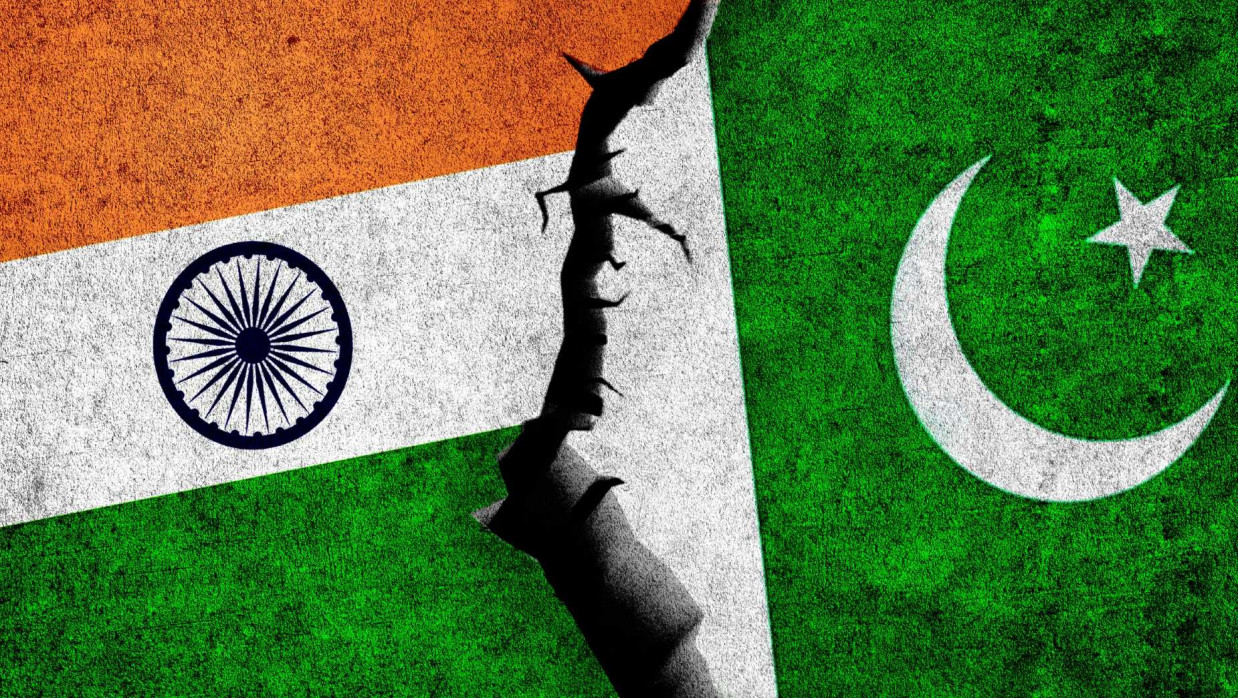
Few relationships in contemporary international affairs are as emotionally intertwined yet politically estranged as that between India and Pakistan. The two countries share languages, cultural traditions, historical experiences and family connections, but wars, territorial disputes, religious nationalism and diplomatic breakdowns have repeatedly disrupted their relationship. In a wide-ranging conversation with Pakistani activists and advocates for peace, Arvind Saharan, a social and peace activist originally from Rajasthan and now living in New Zealand, offers a humane perspective on how these entrenched divisions might gradually be overcome.
Reflecting on his visits to Pakistan and interactions with Pakistanis, Saharan writes, "Pakistan to me was simultaneously foreign yet homely. Dialogues exchanged on personal levels, common vocabulary used, food cooked and traditions celebrated rendered disappointing all that political narratives and the media had fed me... While India and Pakistan may very well be two different countries geopolitically, no international boundary can segregate us culturally."
The Emotional Legacy of Partition
Partition is the dominant historical wound behind India–Pakistan relations. It gave rise to two separate nations but uprooted millions of people, split families and caused communal riots that haunt popular mindsets to this day. In Rajasthan, Punjab, Sindh, Bengal and elsewhere, communities saw the border as more than just a division of rulers- it split up their world.
Saharan notes that the causes of partition are contested. Many Indians and Pakistanis are taught different narratives about Muhammad Ali Jinnah, Jawaharlal Nehru, Vallabhbhai Patel, and other political leaders' actions. The colonial policies of the British, especially their politicization of religious identities and representation, played a role as well.
Blaming each other, unfortunately, will not solve today's issues. We must come to terms with partition as a political reality, while still facing the human ramifications it caused. We shouldn't try to abolish national borders, but instead try to make them less detrimental on a psychological and social level. We can agree to disagree on history, while still bonding over culture, collaborating economically, and respecting one another.
Politics, Media and Manufactured Hostility
One of Saharan's strongest concerns is the role played by political leaders and mass media in perpetuating hostility. Sensationalist television debates, selective historical narratives and inflammatory political speeches routinely present the neighboring country as a permanent enemy. Such portrayals influence citizens who have never crossed the border or personally met anyone from the other side.
These narratives often serve domestic political interests. Nationalist rhetoric can mobilize voters, distract attention from internal problems and silence advocates of dialogue by portraying them as disloyal. A security crisis, terrorist attack or military confrontation can rapidly overwhelm years of patient peacebuilding.
Media establishments in both countries therefore have a particular responsibility. Journalism needs to question governments and policies on security without demonizing whole populations. It should make room for citizens, academics, artists and activists who appreciate the other country's complexity. Peace cannot thrive when every call for engagement is seen as weakness and every difference is construed as evidence of eternal hostility.
Secularism, Religion and Minority Rights
The conversation also explores secularism and the influence of religion on politics. India constitutionally presents itself as secular, while Pakistan was founded as a homeland for South Asian Muslims and later developed a more explicitly Islamic constitutional identity. Nevertheless, neither country has resolved the challenge of ensuring equal citizenship in religiously diverse societies.
Secularism does not mean opposition to religion, Saharan said. Applied correctly, it safeguards faith and bars the state from privileging some citizens over others. Secularism has special significance for minorities, which can otherwise feel vulnerable when religious identity is made into a test of patriotism. Leaders of both communities have sometimes whipped up religious passion at opportune moments to widen the communal divide and further electoral gain. Maintenance of cordial bilateral ties therefore depends, among other things, on pluralism at home. If societies learn to respect their own minorities, they will be far more likely to appreciate the dignity and legitimacy of the people on the other side of the border.
People's Diplomacy as a Path Forward
Diplomacy of the official kind is still necessary, but bilateral government talks have often foundered. As such, Saharan pins a lot of faith in "people's diplomacy": long-term engagement between teachers, students, artists, athletes, merchants, journalists, and civil society groups. Classroom exchanges would be one important type of interaction. Prejudices about the past can become ingrained if kids do not have the chance to question them through experience. Joint study initiatives, virtual classes, and well-structured exchanges can help students understand the gray areas of history while promoting critical thinking over racist nationalism.
Music, books, movies, and cricket bring people together; Sikh-Pakistani socials, poetry workshops, cricket tours, and group vacations could show Pakistanis and Indians that heritage transcends political conflict. These acts won't settle Kashmir or weaken militaries overnight, of course, but they will promote a citizenry more likely to seek compromise. Trade could have a similar effect. Pakistan and India are close enough to each other and economically complementary enough that trade between them can only benefit both. High visa fees, closed borders, bureaucracy, and intermittent bans on trade prevent realization of this potential. Trade would create a class that has profit-based reasons to want peace, and travel would reunite divided families and increase religious tourism.
Giving the Next Generation a Different Future
Saharan's greatest hope rests with younger Indians and Pakistanis. The new generation is connected globally through technology and is less constrained by some of the social boundaries that shaped earlier decades. Yet digital platforms can also amplify propaganda and communal hatred. Education must therefore equip young people to identify misinformation, question stereotypes and understand that cultural, national and religious identities can coexist.
It won't come from moonbeams or a willful ignorance of very real issues. Normalization between the two countries will take political will, verifiable security agreements, protection of minorities and years of hard work. But as Saharan's thoughts show us, it also requires something more basic: sitting together, talking, educating each other, building commerce, and simply acknowledging the stranger on the other side is not that different from you.
India and Pakistan can't go back to before partition, but they can choose whether its legacy will forever dictate their relationship. It's only through political pragmatism coupled with kindness, diversity and continued grassroots contact that India and Pakistan can work to change a history of separation into one of peaceful unity.


0 Comments
LEAVE A COMMENT
Your email address will not be published