

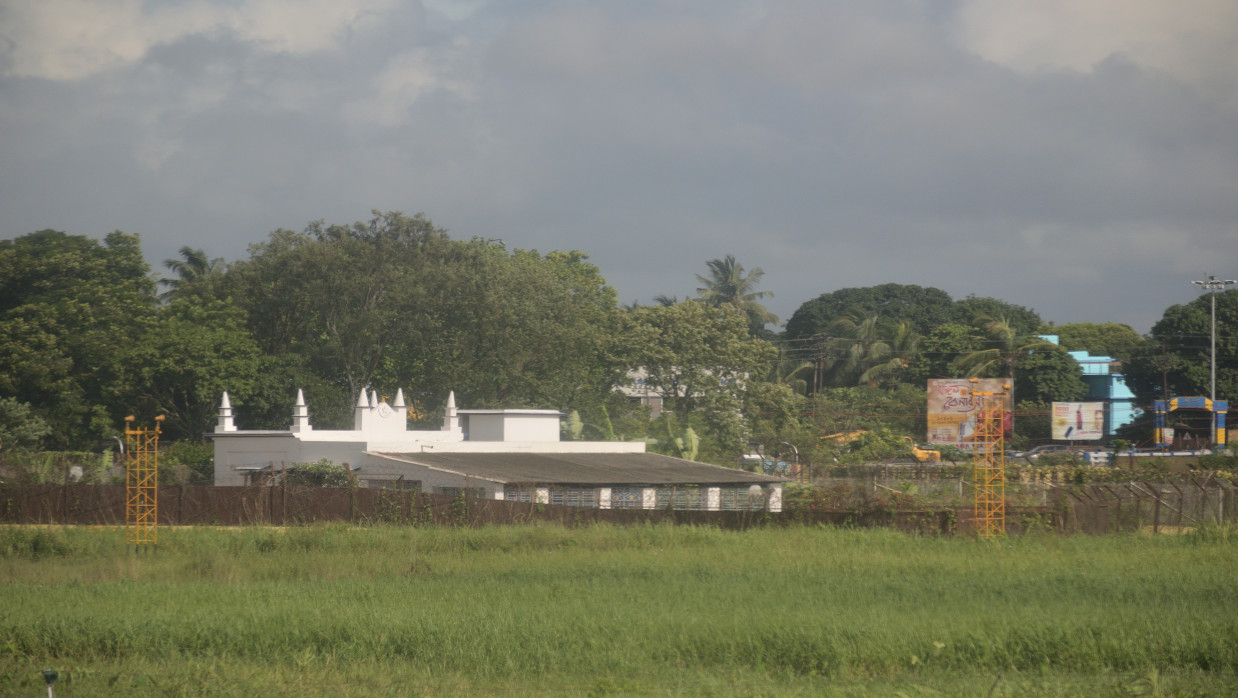
A disagreement regarding entry to a century-old mosque located within Kolkata's Netaji Subhas Chandra Bose International Airport premises has turned into a battle of faith and security versus political drama. Located within the airport's flight operational zone, the mosque in question is the Gouripur Jame Masjid, popularly known as the Bankra mosque. Claiming an existence of around 136 years, allegedly dating back to before the airport was built, is the contention of those fighting for their entry rights.
Located next to the airport's second runway, the mosque has drawn the attention of aviation officials and airport security personnel, who argue that its proximity to airport operations makes their job difficult, especially if pilots are forced to use the secondary runway due to poor weather or other emergencies. Officials have also linked the mosque's relocation to modernization efforts at Logan, runway expansion, and increased restrictions on access to secure airport property. While news agencies have reported that the mosque itself does not hinder day-to-day flight operations, there are concerns over safety if a plane were to undershoot or overrun the runway.
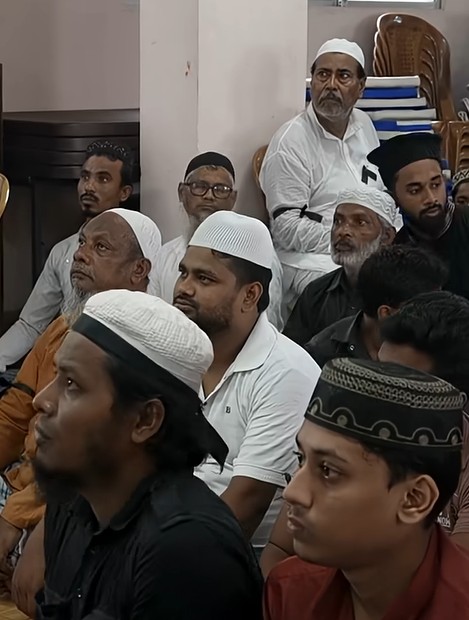
To Muslims in the area, however, the mosque represents more than just a building. It was established hundreds of years ago and is embedded in their religious and cultural identity. Limitations on access to the mosque or demands that it be moved are viewed as punishment of an ancient house of worship. Tensions flared hours after access was suspended, reportedly because authorities were concerned about security on the access road, which needs emergency repairs. Access was then denied, and worshippers were told to pray at home or go to other mosques in the region.
A delegation of local people, along with Siddiqullah Chowdhury, a former minister in the West Bengal government and the state president of Jamiat Ulema-e-Hind, sought permission to offer Friday prayers inside the mosque. When the permission was denied, Siddiqullah asked people to assemble near the mosque in a peaceful protest against the ban on prayers. However, elders of the community are believed to have counseled the worshippers not to provoke any confrontation but to continue their efforts toward dialogue and resolution through legal means. The proposed meeting was called off after the promulgation of prohibitory orders and the massive deployment of police and central forces at the airport. India Today
However, the debate has been intensified by political grandstanding. BJP MP Sourav Sikdar came out in support of the government and criticized Chowdhury for politicizing the issue. Sikdar insisted that the rule of law must be upheld in India and cautioned the protesters against overstepping the bounds of government. West Bengal BJP leader and Chief Minister Suvendu Adhikari too has voiced support for the move, citing national security and airport expansion concerns. Politicized rhetoric of this sort might find favor with those clamoring for strict security rule enforcement, but it also fuels Muslim anxiety that Hindutva politics influence government actions.
The airport controversy is also being contested in this context. Since taking office as Chief Minister of West Bengal in May 2026, Suvendu Adhikari has advocated for roadmaps and for public institutions named after Mughals, Pathans, and other Muslim icons to be redenominated. According to reports, the government established a panel to evaluate those names. Suhrawardy Avenue was one of several roads chosen by the authorities because it was named after Sir Hassan Suhrawardy, a Muslim who was appointed vice-chancellor of the University of Calcutta.
In addition to making disparaging comments about Muslims, he has been criticized for other inflammatory remarks as well. Before taking office as chief minister, he urged Hindus not to travel through Muslim-majority neighborhoods. He also cautioned Muslim migrant laborers in Nandigram that they would be forced to return to BJP-administered states for work someday. Appeals to Hindutva and rhetoric painting Muslims as a unified bloc that votes against the BJP were common during his political pitch throughout the 20 election. For this reason, many see the forced displacement of the Gouripur Jame Masjid as less of an aviation issue and more of an attempt to silence Bengal's Muslim identity and erase Muslim visibility from public spaces.
The government claims to be targeting only unlawful immigration, safety issues, and names that remind people of subjugation. However, its words and symbolic gestures have had little effect on improving trust. As a result, when the government makes a move that could potentially be connected to religion, such as securing an airport, people are inclined to believe it. The state government has therefore done itself in by denying Muslims their right to practice their religion and now has an increased obligation to prove that its actions were taken in the name of aviation safety. This can be done by providing the technical rationale for their decision and opening the conversation to the public.
The fight has also sparked protests in Bangladesh, showing how rapidly a local issue can take on broader regional and religious implications. This development makes responsible leadership and measured rhetoric all the more important. Hyperbolic rhetoric, inflammatory statements, and cross-border incitement will only make it more challenging to find a practical resolution.
Of course, neither religious sensitivities nor aviation safety concerns can be ignored. The government should make public the necessary security assessments that have led to this decision, clarify why potentially less obtrusive measures would not work, and engage sincerely with the mosque committee. If there is no other option and the mosque must relocate, a readily accessible alternative mosque should be built before any shutdown of the existing mosque, with input from the community and legal guarantees for its future use.
Solving this problem in the long-term will require more than police enforcement and political rhetoric. Transparency, communication, and an understanding that public safety and religious dignity can coexist are all needed.


0 Comments
LEAVE A COMMENT
Your email address will not be published