

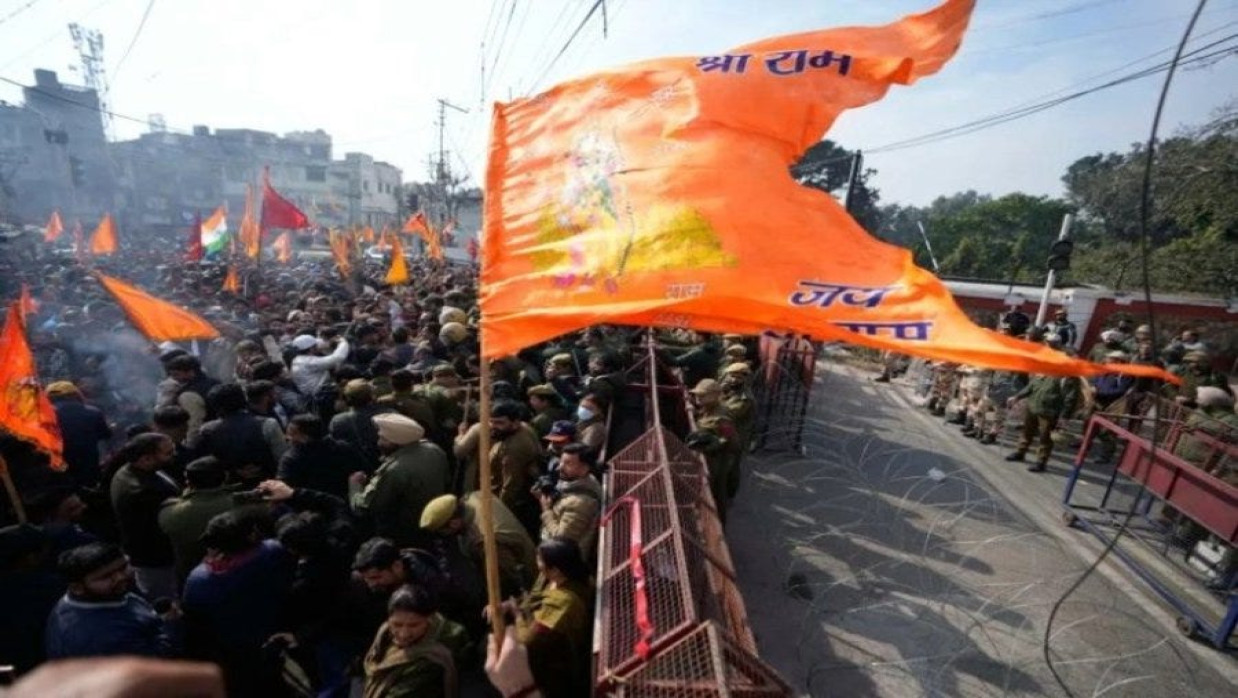
India has long presented itself as one of the world's largest and most diverse democracies. Since independence in 1947, the country's constitutional framework has sought to accommodate extraordinary religious, linguistic, ethnic, and cultural diversity under the principles of secularism, equal citizenship, and democratic governance. Muslims, who constitute approximately 14 percent of India's population, more than 200 million people, form the country's largest religious minority and represent one of the largest Muslim populations in the world.
Over the past decade, however, concerns regarding the political, social, and economic position of Indian Muslims have intensified. Successive governments led by the Bharatiya Janata Party have brought Hindu nationalism from the margins into the mainstream. As a result of this shift in the political landscape, debates over national identity, citizenship, and minority rights have changed dramatically. Proponents of Hindu nationalist initiatives maintain that they will reassert India's indigenous civilizational character and right past wrongs. Detractors of the change argue that Muslims have faced increasing marginalization by being politically excluded, targeted by discriminatory policies, reduced in representation in institutions, and socially polarized.
The widening gap between India's constitutional ideals and the lived experiences of many Muslims has become one of the most significant challenges confronting Indian democracy today.
Constitutional Secularism and India's Pluralistic Foundation
The makers of India's Constitution chose not to establish a religious state. They chose a secular republic in which everyone had equal rights before the law, regardless of religion, caste, ethnicity, or language. Indian Constitution guarantees freedom of religion. Minority educational and cultural rights are legally protected.
For many years, this system allowed great diversity to flourish despite periodic communal violence. Muslims engaged in political life, were bureaucrats, students, businesspeople, lawyers, and even officers in the armed forces. Discrimination occurred, but the power of the secular institutions largely kept the tyranny of the majority in check.
Citizenship in the Constitution was seen as something separate from religion. All Indians, whether Hindu, Muslim, or otherwise, had the same standing in the eyes of the law. They were equal before the Constitution.
Today, this idea is being challenged as questions about what it means to be Indian become increasingly linked to religion.
The Ideological Foundations of Hindu Nationalism
Modern Hindu nationalism derives philosophical foundations from the scholars of Hindutva ideology that emerged in the early 1900s. A key architect of Hindutva philosophy, Vinayak Damodar Savarkar, stated that India was the fatherland of Hindus because Hindus across the subcontinent believed they descended from common ancestors, shared a common culture, and considered the same lands holy. The nationalist philosophy was influenced by European fascism prior to the Second World War.
This definition of nationalism effectively states that national identity is more than legal citizenship; it also includes being Hindu. It is claimed that minorities such as Muslims and Christians are deemed second-class citizens, as they must prove their patriotism to India by accepting that Hindus and Hindu culture truly represent Indian nationalism. Hindu nationalists have denied charges of religious discrimination. Instead, Hindutva asserts that it celebrates India as a cultural nation, not a theocracy. However, secularism continues to decline in India due to nationalism becoming increasingly intertwined with religion.
Political Marginalization Since 2014
The BJP’s electoral win in 2014 and later its massive mandate in 2019 changed the political landscape in India. The party commands majority support in significant parts of the country. Skeptics have argued that over time, Muslims have seen a decline in political representation. The BJP commanded majority rule. Despite accounting for nearly a sixth of the population, Muslims make up a decreasing proportion of members in the Lok Sabha (House of the People). In several state assemblies where BJP governments rule, the Muslim representation has further decreased. Experts believe it is partly due to the BJP offering fewer Muslim candidates and the growing communalization of politics. Diminished representation means minorities have less voice in public policy matters through which legislatures shape institutions like policing and schools, and craft budgets that determine who receives what resources. Less participation also means the voices of minorities are less likely to be heard on issues like education, public safety, job opportunities, and welfare.
This trend has generated concerns that democratic participation alone does not necessarily guarantee inclusive representation for minority communities.
Citizenship, Law, and the Changing Meaning of Inclusion
Legal developments have further intensified debates regarding the status of Muslims within India's constitutional framework.
The Citizenship Amendment Act (CAA), enacted in 2019, provides an accelerated path to Indian citizenship for persecuted religious minorities from neighboring Pakistan, Bangladesh, and Afghanistan. However, Muslims are excluded from the legislation's provisions.
Advocates claim that the Act provides relief to persecuted religious minorities who are non-Muslims in the Islamic countries surrounding India. Opponents view it as discriminatory because religion has never before been a basis for Indian citizenship. Coupled with initiatives like the National Register of Citizens, they believe that it has led many Indian Muslims to fear losing their citizenship status.
The resulting controversy has become one of the defining constitutional debates in contemporary India.
Socioeconomic Inequality and Institutional Exclusion
The challenges facing Indian Muslims extend well beyond electoral politics.
Various studies have shown that Muslims continue to be under-represented among government jobs, the higher civil services, banking sectors, public administration, and other higher echelons of the economy. Average income, levels of education, and salaried job penetration are below the national average. Sachar Committee Report in 2006 highlighted several of these inequalities, and summarized its findings by stating that the backwardness of Indian Muslims was "parallel to the disadvantages suffered by the historically oppressed caste groups, and in some measures, worse". While economic development has undergone rapid change across India over the last two decades, several systemic inequalities have remained unaddressed due to a lack of focus, critics say.
The cumulative effect is a cycle in which lower educational attainment contributes to weaker employment prospects, which in turn reinforces economic vulnerability.
Education as a Battleground
Education has emerged as one of the most important arenas in determining the future prospects of India's Muslim population.
Critics have said that Muslims face increasing structural and social exclusion from schools and colleges. Complaints include a decreasing number of scholarships awarded, perceptions of bias and discrimination, fear of personal harm when attending schools in certain areas, and unequal access to schools with better resources. Solutions to these issues matter because they have long-term consequences.
Joining college is the first step towards government jobs, research careers, medicine, engineering, law, mass media, or any other field of public service. If fewer Muslims enter colleges, there will be fewer Muslims working in those fields in the future. There are critics who believe that Muslim communities have also faced hurdles from within, due to a culture of conservative education and failing to place priority on education in modern science and technology, which has resulted in lagging social development. However, others have pointed out that these factors cannot be divorced from issues of structural exclusion and lack of opportunity.
Representation Within Law Enforcement
Issues of the representation of Muslims in police forces are also a major issue.
Muslims comprise about one- seventh of India’s population, but very few Muslims are recruited into police services in many states. This has led to a trust deficit between minorities, especially Muslims, and the police.
Trust in fair policing can suffer when citizens feel that police forces do not reflect the diversity of the communities they serve. Claims of biased policing, communalism and skewed justice will be hard to tackle if diversity within police forces is not promoted.
Strengthening representative policing has therefore emerged as an important recommendation among scholars seeking to improve relations between minority communities and the state.
Regional Diversity Within India
India is large and diverse. Being Muslim is vastly different in different parts of the country. Kerala, Karnataka, Tamil Nadu, and parts of Telangana boast higher literacy rates and social cohesion along with far less communal violence than much of the north. Communal polarization has grown in Uttar Pradesh alongside decreased literacy rates and educational attainment and lack of participation in political processes. These discrepancies show that marginalization is not uniform or inevitable across Indian Muslims. Variables include state-level political leadership, prioritization of education, participation in civil society, and already-existing social processes.
Consequently, discussions about Indian Muslims must avoid treating the country's vast and diverse Muslim population as a single homogeneous community.
Global Comparisons and the Rise of Ethnic Democracy
Analysts are starting to look more to comparisons between India and debates around ethnic democracy and majoritarian nationalism elsewhere in the world.
While democratic processes like voting remain in place under ethnic democracies, political power shifts to the dominant ethnic or religious majority over time, while minorities find it harder to participate politically. Democracy continues to exist in name only as egalitarian practice erodes.
Nationalists counter this critique by claiming majority ethnic groups are owed political priority due to their status as indigenous people with lengthy histories in the region. Democracies can still exist where the majority rules as long as institutions that protect minority rights are put into place.
Similar conversations about ethnic democracy are taking place in other countries. These include shifts towards identity politics, majoritarian politics and populist nationalism around the world.
Diaspora Politics and International Responses
The Indian diaspora has become an increasingly influential actor in shaping international perceptions of India.
Many overseas Indian communities actively support the current government's nationalist agenda and contribute to lobbying efforts in Western democracies. Others, however, have voiced concern regarding religious polarization and the shrinking space for civil liberties.
International responses have been mostly muted. Allies seldom allow human rights concerns to interfere with strategic ties, economic interests, and geopolitical interests when dealing with India.
Most Muslim nations, too, avoided harsh criticism, mindful of strong economic and geopolitical considerations connected to New Delhi.
For this reason, international pressure has been somewhat limited.
Pathways Toward Greater Inclusion
Muslim upliftment can happen only through long-term development measures rather than short-term political accommodations. Enhanced educational facilities and scholarships, robust enforcement of equal opportunity employment, increased representation in public services, and measures to enforce constitutional rights will help restore minority confidence. Some have called for affirmative action in the form of reservations for backward sections of Muslims, taking into account the model of reservations already in place for Scheduled Castes, Scheduled Tribes, and Other Backward Classes, while some others focus on programs to alleviate poverty among all communities. Initiatives to improve relations across communities, focusing on citizenship rather than religious identity and on constitutional awareness, have also been suggested. Long-term assurance of the health of Indian democracy will require that all Indians be treated with equal respect.
Conclusion
In the last few decades, perhaps no issue has felt more pressing to Indian society than the precarious position of Indian Muslims. Hindu majoritarian politics has reinvigorated public discourse, shifted government policies, and heightened questions about citizenship, national identity, and minority rights. Proponents of these shifts have heralded them as returning India to its natural state, as reflective of Hindu civilization's reawakening and popular demand. Critics, however, worry they signal the unraveling of the secular foundations upon which the Republic was built.
The political marginalization, educational disparities, economic discrimination, and exclusion that Muslims face paint a picture of the difficulties Muslims confront in India today. However, India’s rich diversity also shows us how inclusion is possible when plurality thrives across the country. India was founded on the ideal that diversity should not threaten unity. It is only through maintaining egalitarian citizenship, institutional equity, and democratic practices that India will be able to uphold that ideal. How India resolves this tension between majoritarian impulses and pluralist traditions will define not just the lives of its Muslim population, but the future of Indian democracy itself.


0 Comments
LEAVE A COMMENT
Your email address will not be published