

BJP accused of preventing Trinamool Congress leader Mahua Moitra from leaving office
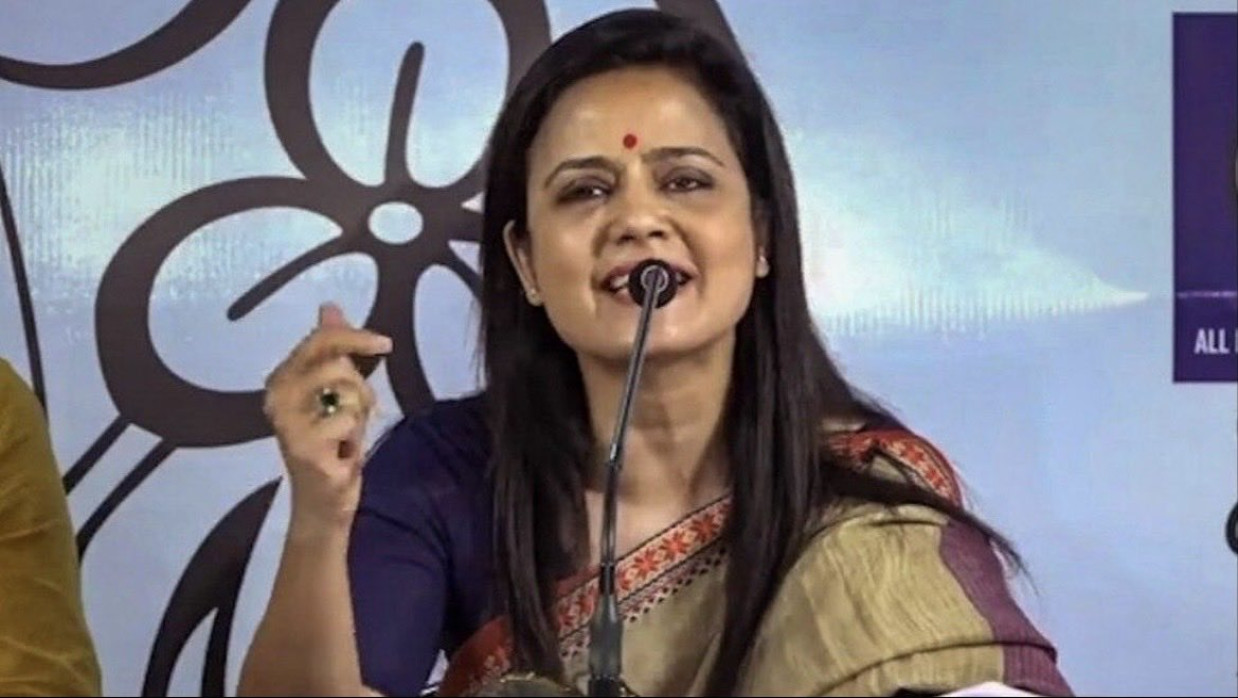
National headlines were grabbed recently by incidents that raise questions about intolerance, impartiality of police forces, and India’s democratic framework. TMC’s Mahua Moitra accused a group of protesters of trapping her in her party office located in Nadia district for hours while they threw eggs and “articles” at her office. She also alleged that police officers manning the site outside the office did not help her despite her requests. BJP quickly dismissed Moitra’s claims, stating that the split within the TMC factions, not BJP supporters, was to blame.
Politics Beyond Democratic Competition
Politics is about contestation, but contestations must take place within the ambit of the law. Democracy has winners and losers; elections decide who gets to rule. They do not give anyone the license to egg someone literally or metaphorically.
Mahua Moitra shared pictures and videos of eggs being thrown at her as she took shelter inside a party office. This has come to symbolize the growing trend of violent street politics in Bengal. Whether all allegations in the case are proven or not, the incident itself reflects a political culture in which dissent is being replaced by public harangue.
Politicians should be criticized, protested against, and defeated at the polls. But they should never have to face lynch mobs.
A Troubling Pattern
This is not an isolated incident. There were instances during this year’s West Bengal Assembly election where votes were being counted and polling officials were attacked. Former Chief Minister Mamata Banerjee also used that incident to say she didn’t feel safe. During rallies, stones and eggs were also thrown at TMC national general secretary Abhishek Banerjee. If the elected representatives or party workers from either side can’t be civil to each other, then that’s how uncivilized the political space has become in the state. It doesn’t matter if it’s under a Leftist regime or a TMC regime.
There was politically motivated violence when they were in power. When the Trinamool Congress took over, there were incidents of violence against the Left. Now, we are hearing of BJP supporters attacking TMC leaders. When one party comes to power, people hope for peace. There are allegations that supporters of the ruling party take revenge on their political opponents.
That’s when people lose faith in the system.
The Role of the Police
More disconcerting than Moitra’s egg episode, perhaps, is the accusation that cops didn’t lift a finger till the whole incident played out. Police forces owe it to the Constitution to protect citizens without bias toward party lines.
If police officers won’t bat an eyelid during attacks that are clearly politically charged, the belief in the effectiveness of the law soon wears thin. What’s also necessary is that charges of inaction be probed without prejudice; let the guilty be called out, not by political harangue but by hard proof.
A democracy functions only when we know that the police truly serve the Constitution.
Democracy Cannot Be Reduced to Public Humiliation
Mockery of this sort may seem like harmless fun compared with lynchings and other forms of political violence. Symbols, however, are important in politics. Mock public humiliation has long been a step in turning political enemies into foes who must be persecuted.
This week, we remember the victims of book burnings. Before Hitler took power, those seen as enemies of the state had their reputations shredded in “mock” trials. The Cultural Revolution featured “struggle sessions” that were a prelude to the rule of law becoming a farce in China. India is nothing like Nazi Germany or Mao’s China, but democracies should take note when fear starts to replace fair play in political competition.
Democrats shouldn’t accept this sort of behavior just because the victims are Republicans.
The Importance of Judicial Oversight
Courts become especially important when there are accusations that executive agencies have dropped the ball. Asking that FIRs be registered in cases of attacks on political workers is meant to ensure a neutral legal assessment rather than a political one.
It shouldn’t matter if the victim is from the party in power or the opposition. Equal Justice Under Law is still one of our constitutional democracy’s bedrock ideals.
Democracy Demands Better
Transfers of power can evoke strong feelings, especially in politically polarized states like West Bengal. But part of democratic maturity is knowing how to treat those who have lost elections.
That’s why the incident with Mahua Moitra ought to be a cautionary tale, not just another scandal du jour. Politics should be played out in parliament, through ballot boxes, and in courts of law, not by mobocracy, by cowing opponents, or by public shaming. And allegations against anyone, from whichever party, should be fairly investigated and dealt with through legal channels.
The strength of India’s democracy doesn’t rest on voting alone but on upholding the rule of law, the neutrality of institutions, and the political rights of all Indians. When this happens, democracy is strengthened. When democracy is weaponized for political gains, future generations pay the price, too.

0 Comments
LEAVE A COMMENT
Your email address will not be published