

Emerging technologies, Artificial Intelligence (AI), the cyber and space domains, autonomy, data-enabled military capabilities, etc., are driving a transformation in the character of war at a scale not seen since the advent of nuclear weapons. In this era of strategic change, it is no longer sufficient for military professionals to be courageous and battle-hardened; they must also have a deep appreciation of technologies, understand their adversaries' capabilities, and anticipate the security implications of a complex geopolitical context.
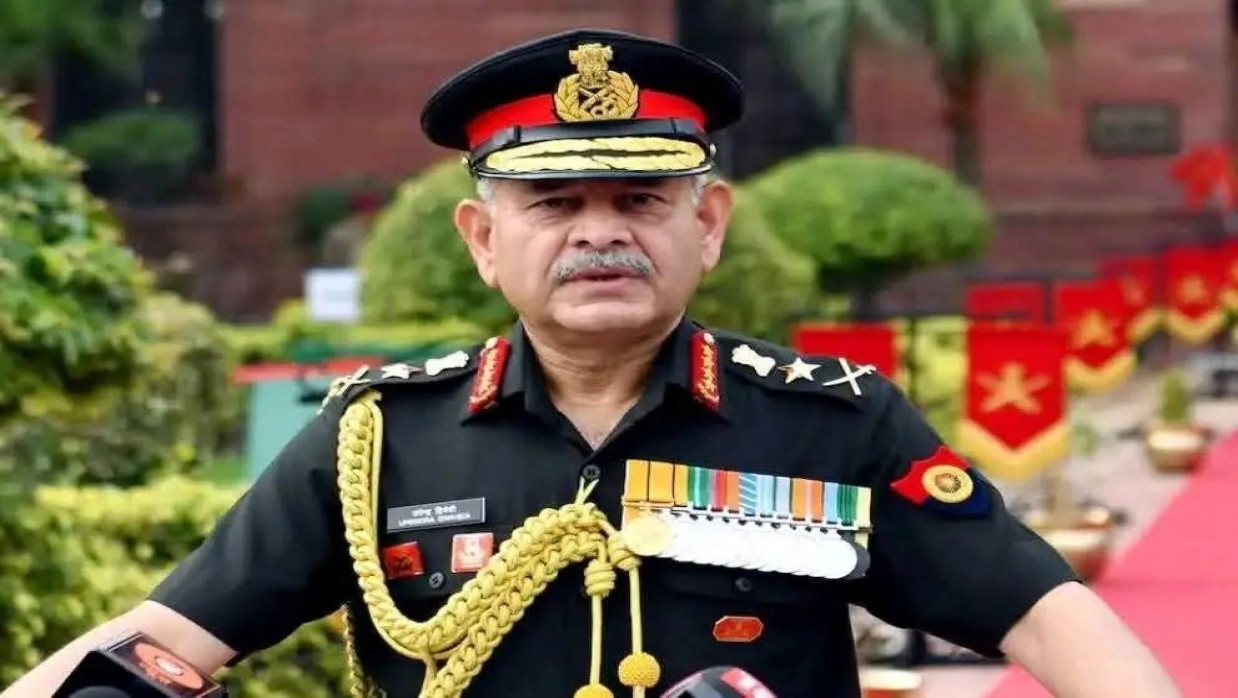
Indian media reported that General Upendra Dwivedi, when asked about Pakistan's future in the event of another war, responded in a manner suggesting that Pakistan would have to decide whether it wished to remain "part of geography or history" if it continued policies hostile to India. However commendable it is to have such stout defenses of the country, Indian military leadership seems to have forgotten the essence of military professionalism, appreciation of war, and the complex geo-strategic context India finds itself in, with such comments. War is much more complicated than simply mouthing hyperboles. Civil-Military Relations and Sino-Pak Military Diplomacy are the other aspects of the conversation that need to be held.
Understanding War Appreciation
"Wartime appreciation" means to assess the situation before planning any military operations. There are two categories of war appreciation: knowledge and experience. Today, knowledge is favored over experience because there isn't enough time to experience everything that is constantly changing in the world.
Knowledge refers to knowing your enemy's capabilities, future tech, doctrine, global alliances, and the future of warfare. Experience is defined by the number of years you have served in the military. The speaker states that we need to know more about how we will fight in the future rather than how we fought in the past.
This perspective reflects a growing global consensus among military analysts that future wars may differ fundamentally from those fought even a decade ago.
The Era Between World Orders
First, we are living "between orders". The post-Cold War international order has been challenged. There is no new world order that has replaced the old one. It is during these "in-between periods" that competition between great powers heats up. This increases the possibility of military conflict.
We've been here before. These "in-between times" have occurred throughout history. The decades before World War I were characterized by shifting alliances and strategic ambiguity. The Cold War saw intense competition short of war between the U.S. and the USSR.
Today, the rise of China, the relative decline of unchallenged American dominance, ongoing conflicts in Europe and the Middle East, and increasing competition in the Indo-Pacific have created a similarly fluid environment. In such circumstances, military professionalism becomes particularly important because miscalculations can have far-reaching consequences.
The PLA and the Evolution of Modern Warfare
China's attempts to modernize its military (the People's Liberation Army, or PLA) have led to claims that it is fast becoming one of the most technologically advanced forces in the world. Warfare in today's PLA, the argument argues, is more than a fight on the ground. Physical warfare will be combined with efforts across cognitive, cyber, electronic, and space-based platforms to confuse an enemy's decision-making. Instead of waiting for war to find you, the plan is to turn off critical components of your country before you can militarily defeat them.
This type of warfare has been termed "cognitive warfare." Instead of shooting bullets at the enemy, you are shooting misleading information into every corner of their system. Distorting thoughts, crippling your command structure, undermining political leaders, and, overall, just confusing your enemy are now the goal.
Cyberattacks that would paralyze communication, transportation, financial institutions, and even military defenses would greatly degrade your opponent's strength before they even know what hit them. Attacks like these make it difficult to distinguish between peace and war.
Integration of Physical and Virtual Domains
The merging of the physical and virtual worlds is one of the biggest changes in how war is fought today.
Wars have always been fought on land, at sea, and in the air. Now they are also fought on cyber networks, in electronic warfare systems, and through space-based systems. Today's military operations increasingly depend on networks that connect sensors, communications, command posts, and weapons.
Success in future conflicts will depend on the ability to coordinate kinetic operations, such as missile strikes and air attacks, with non-kinetic operations, including cyberattacks and electronic warfare. Whoever can operate across all these warfighting domains will gain significant benefits in speed, accuracy, and the ability to take decisive action. That is why many describe war as evolving into a multidomain fight.
The Rise of Intelligence-Driven Warfare
Another major theme is the growing importance of data and intelligence.
Historically, military power was measured primarily by the number of soldiers, tanks, aircraft, and ships. Today, information has become a strategic asset in its own right. Advanced surveillance systems, artificial intelligence, machine learning, and big data analytics allow militaries to process enormous volumes of information and identify patterns that would previously have remained hidden.
China has learned enough from India's military movements and supply lines that it will have the upper hand if war breaks out. There may be disagreement with this conclusion, but the premise holds water: information is the new ammunition.
Armies that can gather, process, and leverage actionable intelligence faster will have an edge over their adversaries, numbers notwithstanding.
Artificial Intelligence and Autonomous Warfare
Perhaps the most transformative aspect of future warfare is the growing role of artificial intelligence.
The PLA has since moved beyond mechanized and network-centric warfare, entering an era that Chinese military strategists call "intelligentized warfare." The concept calls for integrating AI into every facet of the military, including intelligence, surveillance, and reconnaissance (ISR), targeting, logistics, command and control (C2), decision support, and autonomous weapons systems. Chinese defense thinkers see "intelligenceized warfare" as a way to increase battlefield effectiveness, speed up the OODA loop, synchronize military operations, and dominate the information sphere in future conflicts.
Autonomous machines could fight at machine speed. Weapons, drones, and robotic systems enhanced with AI could operate on timescales faster than humans can perceive, decide, or react.
China is actively pursuing AI and precision-strike technologies and has even declared that it hopes to achieve its military modernization goals by 2027, the PLA's centennial.
We could see a future battleSpace defined less by formations of troops and more by webs of sensors, smart algorithms, and autonomous vehicles crossing land, sea, air, space, and the cyberdomain at the speed of light.
China-Pakistan Military Cooperation
The growing strategic relationship between China and Pakistan has expanded significantly over the past decade. Joint exercises, defense technology transfers, intelligence collaboration, and defense-industrial cooperation have become increasingly important components of their relationship.
Focus is also placed on cooperation in areas such as artificial intelligence, cyber warfare, electronic warfare, and advanced air combat capabilities. It is said that Pakistan is profiting from Chinese technology and purchasing multiple systems to fold into its own military modernization. Careful analysis and future planning will be needed for Indian strategic planners as the prospect of Chinese and Pakistani military cooperation becomes more operationally synchronized.
Civil-Military Relations and Operational Control
One debatable point is the idea of civil- military relations prevalent in India. The politicians had been micromanaging military operations over time by stripping the military of its freedom to make strategic decisions and conduct operations independently, a case in point: Operation Sindoor.
Democracies, by definition, have civilian control over the military. This is how all modern-day democracies work. The Issue is not about civil vs. military, but about how to manage civil-military relations by allowing military professionals to advise politicians while keeping them accountable.
Conclusion
The nature of warfare is changing dramatically. Tanks, aircraft, warships, and foot soldiers will remain vital military assets. Tomorrow's wars, however, will be won or lost based on capabilities in cyberspace, artificial intelligence, robotics, space-based technologies, intelligence, and information dominance.
Consequently, twenty-first-century military professionalism must be based not only on how to fight yesterday's wars, but also on how to anticipate and prepare for tomorrow's. The future battlefield is being shaped today, and we must be ready for it, just as we stay vigilant and prepared to fight today's wars.
That is true whether we are discussing Indian, Pakistani, or Chinese generals and policy makers. Army tanks and fighter jets, large standing armies, and nuclear weapons will not be the only means of achieving great-power status. Data, information, digital networks, cybersecurity, and technological edges are rapidly becoming extensions of national power that can be leveraged for political ends. Indeed, in some cases, they will likely be more valuable than traditional military assets.
Those who understand this and adapt will win tomorrow's wars and secure their nation's interests.


0 Comments
LEAVE A COMMENT
Your email address will not be published