

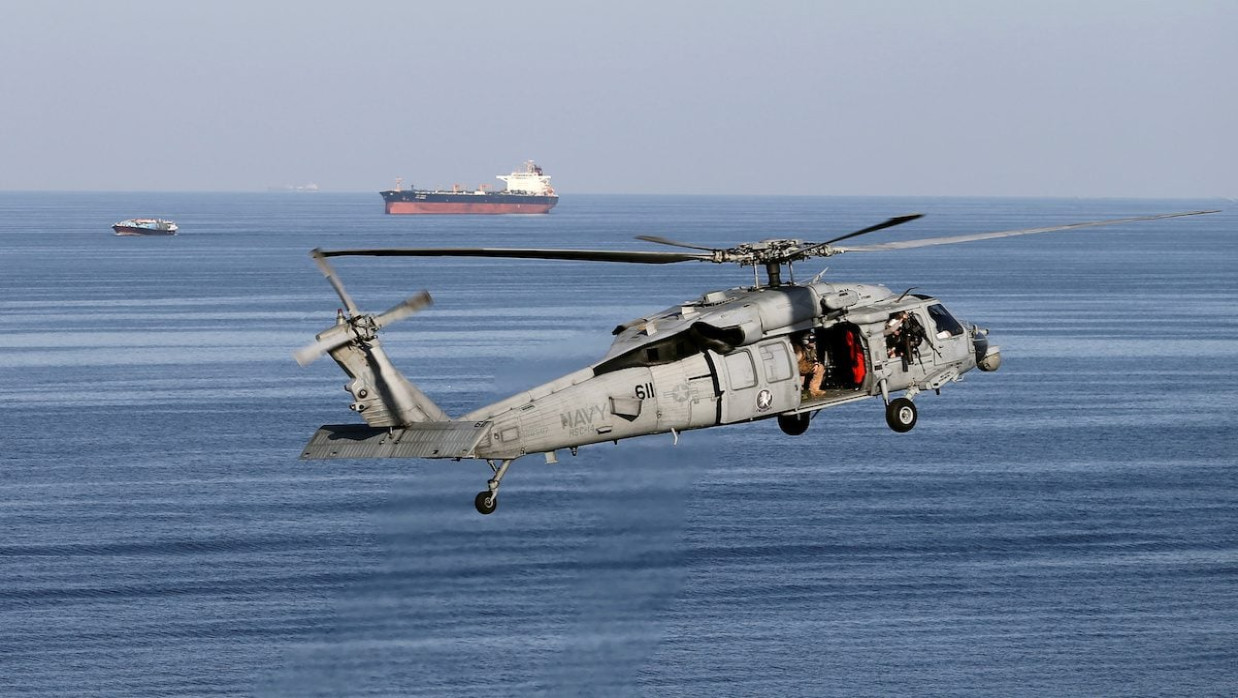
As the 2026 Strait of Hormuz crisis drags into its second month, the international discussion has predictably focused on variances in the price of Brent crude and the status of energy supply chains. But behind the smoke of flaming tankers and the rhetoric surrounding a US-led naval blockade is something much deeper. The conflict is more than a geopolitical “stress test” for the region; it’s an accelerant for a tectonic shift in environmental politics, where the natural world and its life-sustaining resources are being weaponized and reframed as centrepieces of national defense. For decades, the future-proofing of environmentalism in the Gulf was often seen as a post-oil luxury manifested by forward-looking skylines and blue economy initiatives. Today, that vision has collided with a brutal new reality: “Water Warfare. The targeting of desalination plants in Bahrain, Kuwait and Iran’s Qeshm Island has shown that the environment is no longer simply a theater for war — there it sits like an oil well, but one spewing water, not petroleum — in the world’s most water-stressed region; it is now a primary front line. With nations such as Kuwait and the UAE depending on desalination for 90% of their drinking water, coastal infrastructure's vulnerability has made environmental protection a pressing matter of civilian survival.
This crisis is now driving a radical turn in regional policy. We are seeing the emergence of “defensive green investing.” Strategic reserves are being viewed not only in terms of oil barrels, but water basins and treated sewage effluent used to prevent food and water security from depending on the flexibly-trafficked, contested coast. The political calculus is changing: Decentralized solar and wind projects are more than just “green” aspirations; they’re becoming strategic assets, harder for an adversary to take out than a centralized fossil-fuel grid. Moreover, the environmental consequences of this war is testing international legal frameworks. The “black rain” over Tehran — a cloying combination of oil and water after attacks on fuel depots — along with the ongoing release of toxins into the soil, has prompted Iranian officials to categorize such actions as “ecocide”. While structures can be rebuilt, the destruction of the Gulf’s fragile, semi-enclosed marine ecosystem — home to more than 2,000 species, including endangered dugongs and green turtles — is often irreversible. The crisis has also laid bare that the environment is a “silent casualty” of modern warfare, one whose costs are calculated in decades — not fiscal quarters. This environmental degradation has global political ramifications. Nations “sick of oil shocks,” forcing a turn to renewables for citizen resilience as fossil-fuel supplies are disrupted. If the Strait of Hormuz is to remain a “battlefield for oil tankers,” then the legacy of the 2026 crisis may be one of unplanned acceleration in a global energy transition, not driven by ideals but rather by an acute need for energy autonomy.
In the end, this crisis reflects what the future of environmental politics looks like — a consensus that is not born from global treaties but rather becomes available to us when we embrace environmental realism. In a region where nature itself has become weaponized, future politics will depend on which side is best able to protect their “lifelines” —“their water, their air and their coastlines,” from becoming the next battleground. The names on the map may be “Strait of Trump” or “Strait of Hormuz,” but the real battle is between whether there will be something other than an “environmental sacrifice zone” in this region or whether it can forge its way through to create a security architecture that centers and accounts for its most fragile assets.
In framing the 2026 Strait of Hormuz crisis as a defining moment that reshapes environmental politics, one development stands out in its reconfiguration from passive stage to active player: India has become a pragmatic protector. As it moves away from being merely a consumer of global energy and towards guarding its own strategic lifelines. With the crisis making the environment and its resources a new front line, India’s role rapidly crystallized into one of military assertiveness mixed with diplomatic maneuvering — converging on securing what was described as “energy autonomy” amidst the chaos. India’s role was first marked by tragedy. The physical perils of the “Water Warfare” and shipping blockade were driven home when Indian crew members became some of the first casualties of the conflict; two sailors were killed on board the Skylight and another on the MKD VYOM during Iranian attacks. With around 23,000 Indian crew members and 39 Indian-flagged ships stuck in the region at the height of the crisis, New Delhi was put in a position where it had to comprehend the Persian Gulf as not just a trade route — but also an urgent national security site.
Whilst other countries considered a U.S.-led coalition, India featured its own strategic autonomy through independent military operations to safeguard its energy interests such as Operation Urja Suraksha, Operation Sankalp and Operation Muhafiz-ul-Bahr. India’s role also illustrates a unique diplomatic position in the new environmental landscape. While the United States and its Western allies faced what amounted to a total lockdown, India was ultimately one of five nations given permission by Iran on March 26. This “friendly” status permitted multiple Indian-flagged gas carriers, and even a Saudi tanker carrying one million barrels of oil for India, to cross the strait while others were left anchored.
India’s external affairs minister, S. Jaishankar, emphasized the shift, saying that national interests — including energy security and trade flows — would continue to be paramount. This pragmatic perspective shares some of the “environmental realism” mentioned above; India is no longer waiting for international treaties to safeguard its resources. It is using its Navy instead to defend its access and protect itself from volatile price spikes (the price of Brent crude hit $126 per barrel) that propel the case for a faster internal transition to renewables. Taking direct responsibility for its “lifelines” through independent naval escorts, India is the poster child of a world in which even more nations are being forced to militarize their strategies for environmental and energy security just to survive in a world where natural resources have become weapons of war.


0 Comments
LEAVE A COMMENT
Your email address will not be published