

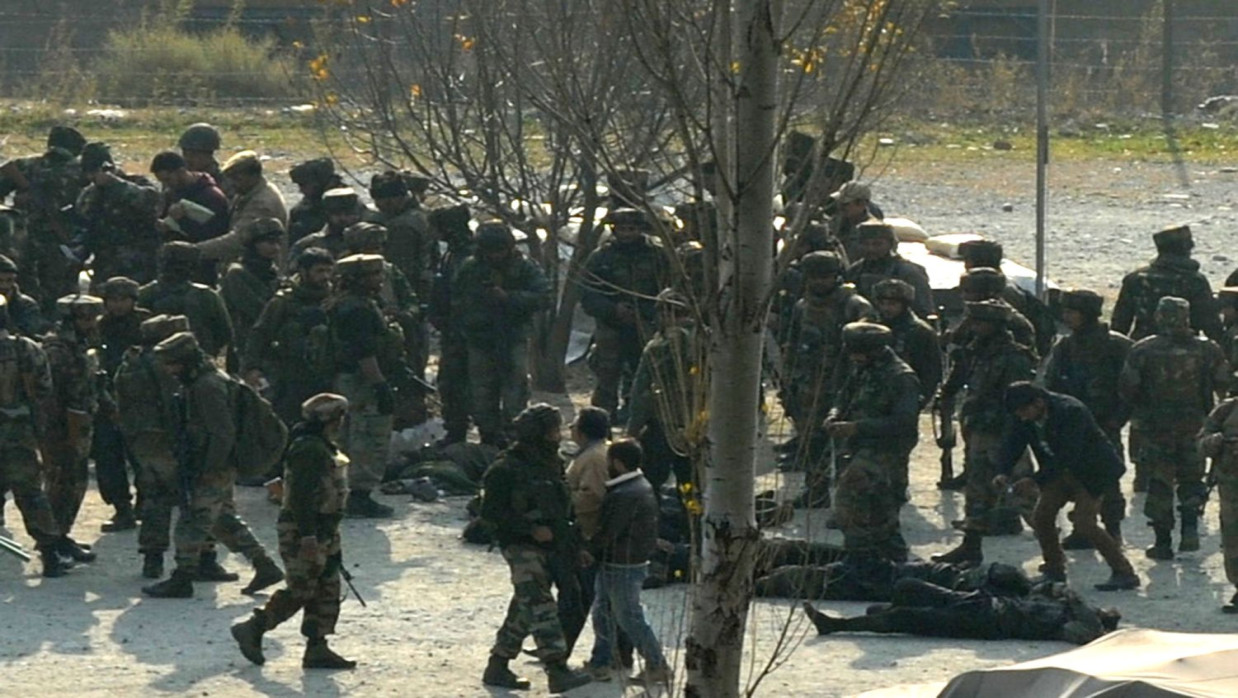
The CIRAC NGO delivered its statement at the 61st Session of the United Nations Human Rights Council on 11 March 2026 to demonstrate a historical fact which has been disputed yet continues to be proven. The intervention establishes that Kashmir constitutes more than a simple India-Pakistan conflict by demonstrating how this diplomatic framework overlooks the essential rights which belong to Kashmiri people.
The region has experienced major political and legal and demographic transformations since Article 370 was repealed in August 2019. The constitutionally recognized autonomous entity has become a centrally controlled territory which now operates under an entirely different system of governance. The critics contend that this transformation has decreased local political power while enabling new policies which would have been limited by constitutional rules. The environment established by multiple human rights reports produces conditions which suppress opposition while the mechanisms designed to protect rights become less effective.
The transformation process faces its most contentious challenges because land ownership and demographic changes remain disputed matters. The International Federation for Human Rights (FIDH) published a report in October 2024 which shows land dispossession patterns that impact local communities through its publication Your Land is Our Land. The research demonstrates that land law modifications enable property rights to move between parties who suffer the most from these changes which specifically target indigenous Kashmiris. The reported eviction cases and land loss incidents which involve thousands of people have created worries about permanent changes in population patterns and the disappearance of cultural traditions. Critics interpret these developments as planned efforts to change the region's population makeup which Indian officials continue to contest.
The human rights violation accusations create a more complex discussion about the issue. Advocacy groups present data which shows that between 2019 and 2025 over 1000 people died during what authorities called "fake encounters." The region still suffers from enforced disappearances which multiple sources estimate to have occurred between 8000 and 10000 times throughout multiple decades. The families of missing persons continue to face confusion while they search for justice and accountability through the available legal procedures.
International observers have expressed strong disapproval of security personnel's use of force because they specifically designated pellet-firing shotguns as their preferred weapon. The weapons which security forces use to maintain crowd control have resulted in severe civilian injuries that include cases of complete or partial blindness. Human rights organizations state that their use in areas with dense civilian populations shows an excessive response to protests which creates major ethical and legal difficulties that violate international humanitarian law.
The Public Safety Act (PSA) has emerged as a primary legal concern for evaluation. The PSA permits authorities to detain individuals without trial for extended times against whom they have no existing legal evidence. Detractors argue that the Indian government uses these laws to suppress dissent and violate basic civil rights while claiming they need them to protect public safety in areas facing conflict.
The world of digital technology has developed into a complex state which presents multiple challenges for its analysis. The Digital Personal Data Protection Act of 2023 together with extensive surveillance systems has created dangers which threaten both personal privacy and freedom to speak. The people of Kashmir have suffered through one of the longest internet shutdowns experiences by any democratic nation which lasted for approximately 18 months after the 2019 constitution changes. The government maintains control over the information space through its ongoing monitoring and restriction activities even though internet access has been restored. Digital expression creates life-threatening risks for journalists’ activists and common people who must navigate through constant times of doubt.
These developments have attracted international attention from various countries. United Nations experts and independent observers have repeatedly expressed concern over potential demographic engineering and the disenfranchisement of local populations. The situation in Jammu and Kashmir requires evaluation according to international human rights law the situation should not be restricted to domestic legal arguments. The issue can only be resolved through national governance systems and diplomatic relations between countries according to this viewpoint.
The essential matter centers around one main inquiry which asks who controls the storytelling about Kashmir. The discourse about Kashmir has persisted for multiple decades because state authorities and their military objectives and boundary disputes have dominated. The Kashmiri population endures their social realities which bring them both unpredictable situations and permanent loss while they display their ability to recover. The Human Rights Council intervention highlights that sustainable solutions must prioritize rights protection and dignity maintenance and the regional inhabitants' future goals.
The forward path presents multiple complicated challenges. Three critical factors which include security threats and historical conflicts and global political disputes determine how decisions about policies get made. The ongoing reports about human rights violations and shifts in population and political disenfranchisement indicate that the existing state of affairs has become both unstable and unfair. The community needs require complete resolution which contains three elements that include public statements and complete inquiries and methods to hold responsible parties accountable and genuine community involvement.
The international community needs to handle its tasks through a careful balancing process. The organization must protect human rights standards which exist worldwide while it maintains respect for sovereignty and non-interference rules. The situation in Jammu and Kashmir shows how these two requirements create a need for diplomatic solutions which require understanding and ethical methods. The people of the region demand to be recognized as human beings who deserve justice and representation and the right to determine their own future as global interest in their area rises and falls.


0 Comments
LEAVE A COMMENT
Your email address will not be published