

Bengal Will Win, Not Delhi: Identity, Power, and the Battle for West Bengal
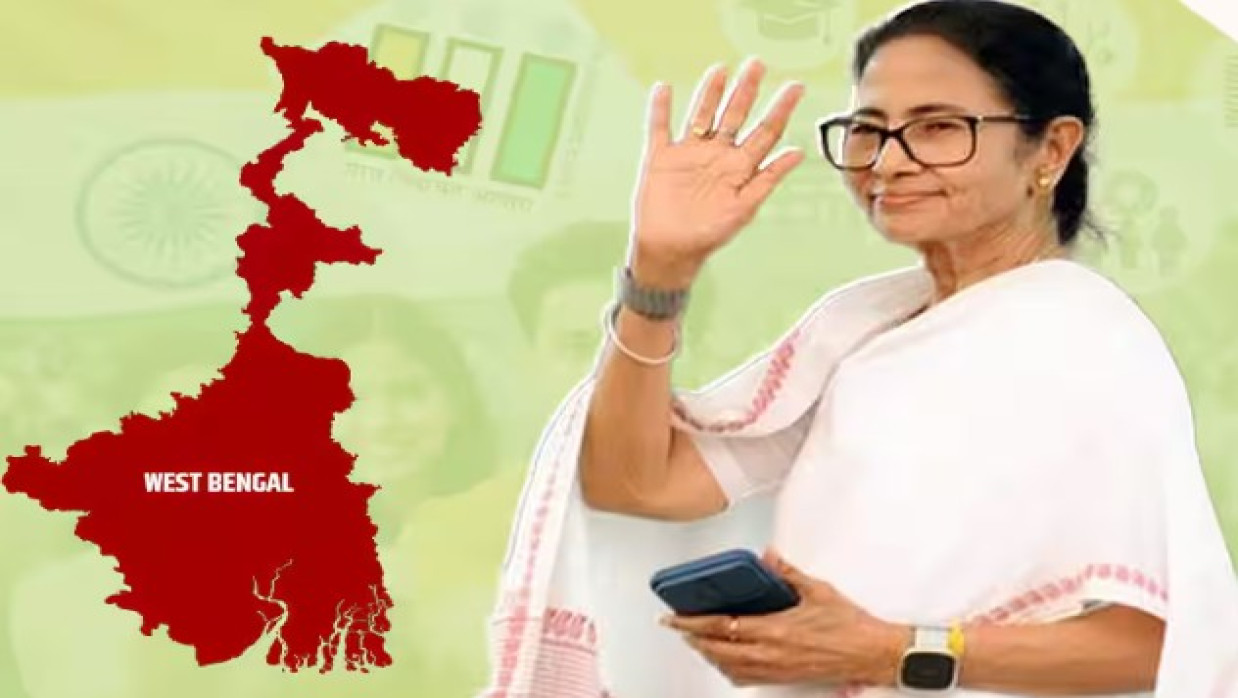
It took Mamata Banerjee's recent statement about fighting the 2026 Assembly polls from Bhawanipore to give politics a symbolic dimension. Otherwise, it was just going to be another exercise in people going to the voting booths and voting their hearts out. Banerjee's statement, "Bengal will win, not Delhi," resonates beyond the war of words between the TMC supremo and the BJP.
A Contest of Identity and Autonomy
This election has been about identity above all else. Banerjee has repeatedly described the elections as a "fight for Bengal's existence", weaponizing deeply emotive aspects of Bengali pride and history. She had earlier rallied supporters with chants of "Maa, Mati, Manush" too, but resorted to similar lines again in 2026. The TMC has tried to portray the BJP's ascendancy as an assault on West Bengal's culture and identity by outsiders coming to take over from Delhi. Understandably so: Bengal doesn't react kindly to being bulldozed by big-brotherly national narratives, emotional appeals to state pride, and linguistic and cultural uniqueness have found much more fertile ground here. Painting the election as a battle between Bengal and Delhi aims to drive home the message to minority, urban, and subaltern voters alike.
The BJP's Expanding Footprint
However, the BJP cannot be ignored. The party has expanded its reach substantially since the last Assembly elections in 2021. Deeply embedded with resources and muscle power at the national level from Narendra Modi and Amit Shah, the BJP has focused on grassroots connect over the past few years, especially in northern and bordering districts of Bengal.
The BJP's pitch has also been different from TMC's. Playing the election on governance lines, the saffron party talks about corruption and issues like law and order in the state. Corruption scandals involving the TMC leadership and promises of development and better economic connectivity through central policies make up the BJP's main pitch. The party hopes not only to hold on to Hindu votes but also to poach marginalized voters who have historically voted for regional parties.
Crucially, the elections have also seen growing tension between state institutions.
Recently, Banerjee has accused the Election Commission of India of bias. The Election Commission's move to reshuffle 19 IPS officers before the elections was justified by the former, who said it was done to ensure that bureaucrats remained neutral. BJP and TMC have both criticized the move, with TMC framing it as poll interference.
It is not uncommon for India's electoral mechanism to witness such friction between institutions during elections. But Bengal's history of muscular elections, marked by violence and the politicization of state administration, means that a lot will hinge on the Kolkata Police commissioner, Ajay Kumar Nand, if elections are to be perceived as fair by citizens.
Social Representation and Political Messaging
A large number of women candidates, along with reserved seats for SC/ST communities and minorities on the TMC's list, signals the party's attempt to position itself as a regional, mass-based party reaching out to important social coalitions, a political game plan Banerjee has pursued for years now.
That said, identity politics can take you only so far. Voters are increasingly aware of and angry about bread-and-butter concerns like lack of opportunity and jobs, and inefficiency in government. If handled correctly by both parties in the coming months, this could become the central theme of the campaign.
Forecast: A close race in which polarization plays a central role
As campaigning will officially kick off in 2026, here are some broad trends we can expect in West Bengal:
Microcosm of the state election: Bhawanipore will be under the national spotlight
If Banerjee can win Bhawanipore with a comfortable margin, she can rest assured that she still has it. If she loses, or if her margin is significantly less than her previous victory, it will be seen as a defeat for the Chief Minister.
Voter turnout will be high.
The BJP- TMC race is becoming increasingly personal, with both sides laying all their emotional cards on the table. Motivated by powerful symbolism on both sides, voters will turn out in large numbers, especially women and minority voters who form the core of the TMC's vote bank.
Increased Kolkata-New Delhi tensions
If the BJP does well in Bengal (and the chances are high that they will), Kolkata and New Delhi will find it increasingly difficult to reach a conciliatory post-poll agreement.
The TMC has an organizational upper hand, but the race is tighter than ever.
In all likelihood, the TMC will win another term, but with the BJP making consistent gains in the state over the last few years, the margin of victory will be underwhelming, leading to a rougher mandate.
Conclusion
April 2021 will mark the first anniversary of the West Bengal Assembly elections. Will Mamata Banerjee retain power in Bengal after the 2026 elections, or will India's largest democracy witness the BJP-led National Democratic Alliance (NDA) cross the river Hooghly for the first time? Banerjee has famously claimed that Bengal will win in the upcoming elections. But what does that mean for Indian democracy?
The 2026 Assembly elections in West Bengal will determine the future of federalism, secularism, and regional identity politics in India. Mamata Banerjee vs Narendra Modi isn't just about two leaders fighting for power in the Indian state of West Bengal.
From roadside meetings to elaborate election rallies, the 2026 West Bengal Assembly elections will witness a political slugfest unlike any seen before in Indian political history.

0 Comments
LEAVE A COMMENT
Your email address will not be published