

The now-deleted video posted on 7 February 2026 by the official Assam BJP X handle should have shocked India’s conscience. Instead, it revealed an uncomfortable truth: in Assam, hate against Muslims is no longer whispered—it is performed, recorded, and briefly broadcast by those in power. The video, depicting Chief Minister Himanta Biswa Sarma symbolically “firing” a rifle at images of Muslim men, complete with captions such as “point-blank shot,” “no mercy,” and the slogan of a “foreigner-free Assam,” crossed a dangerous threshold. It was not merely provocative content; it was an unmistakable act of incitement.
That the video was later deleted does not mitigate its impact. On the contrary, its existence—however brief—exposed the ideological environment fostered under BJP rule in Assam: one in which Muslims, particularly Bengali-speaking “Miya” Muslims, are systematically dehumanized, criminalized, and portrayed as existential threats. Critics were right to describe the clip as genocidal in tone. The simulated gunfire, the religious markers of the targets, and the language of extermination were not metaphorical. They were explicit.
This incident cannot be dismissed as an isolated lapse or “troll material,” as some BJP sympathizers attempted to argue. It fits squarely into a broader pattern of rhetoric and policy pursued by Sarma over several years. Repeatedly, he has framed Bengali-origin Muslims as “infiltrators,” conflating identity, language, and religion with illegality. Calls for “non-cooperation”—urging citizens not to rent homes to Muslims, not to employ them, and not to trade with them—are not administrative measures. They are tools of social exclusion and economic strangulation.
The political response exposed the gravity of the moment. The Indian National Congress rightly condemned the video as a “call to genocide,” warning that such content signals a dangerous escalation. AIMIM chief Asaduddin Owaisi’s decision to file a police complaint against Sarma for genocidal hate speech further underscored the seriousness of the matter. That no confirmed FIR followed only reinforces concerns about institutional reluctance to hold powerful figures accountable.
Assam’s demographics make this campaign especially alarming. Muslims constitute approximately 34 percent of the state’s population, with Miya Muslims forming a substantial segment. Under BJP rule since 2016—and particularly under Sarma’s chief ministership since 2021—this community has faced what can only be described as systematic persecution. Arbitrary arrests, mass evictions, custodial abuse, extrajudicial killings, and mob violence have become disturbingly frequent.
Human rights organizations have repeatedly sounded the alarm. Amnesty International, Human Rights Watch, and UN experts have condemned Assam’s policies as discriminatory and violative of international human rights norms. Since May 2025 alone, more than 300 Bengali-speaking Muslims were arbitrarily detained or pushed into Bangladesh, despite many being Indian citizens. Nationwide, nearly two million people—overwhelmingly Muslims—were excluded from citizenship rolls through deeply flawed verification processes, rendering them vulnerable to detention and statelessness.
Violence has accompanied policy. In 2025, at least 50 Muslims were killed across India in incidents involving communal violence or state action, with Assam featuring prominently. Police firing during eviction drives, including the killing of a 19-year-old Bengali-origin Muslim protester, illustrates how administrative actions are enforced with lethal force. Meanwhile, mob lynchings—often linked to cow vigilantism or petty crime accusations—continue with impunity, reinforcing a climate of fear.
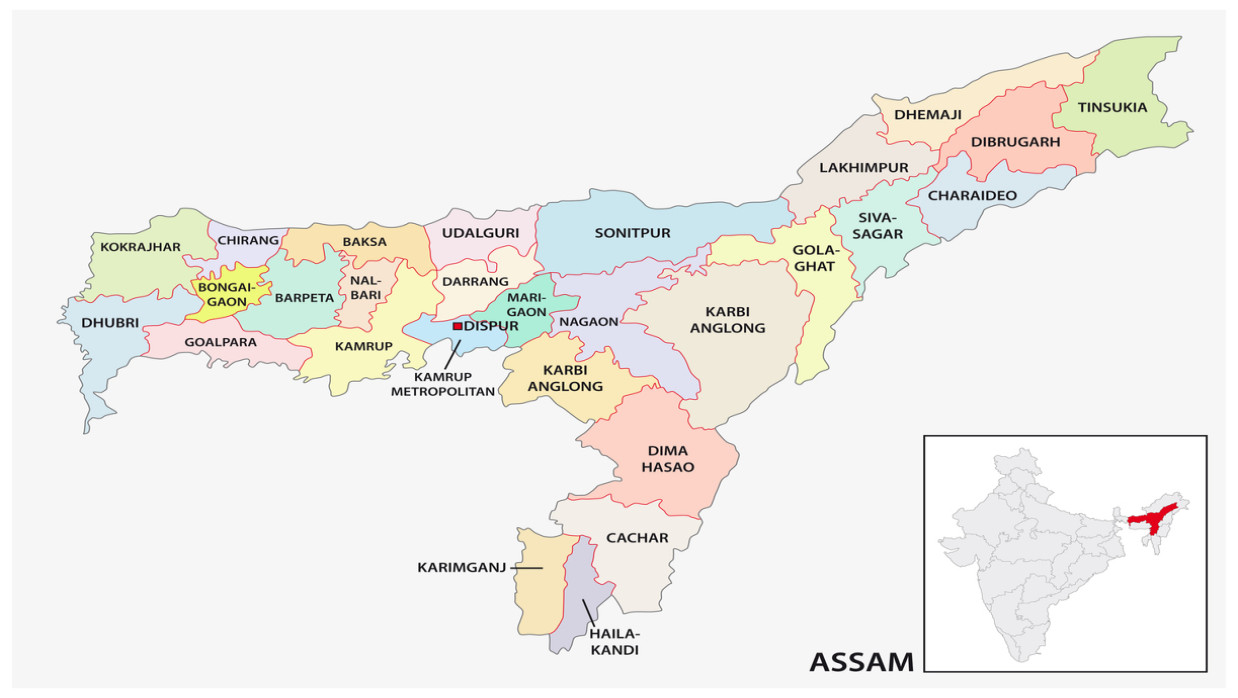
Housing demolitions represent another pillar of this campaign. Since 2016, more than 17,600 families—mostly Bengali Muslims—have been evicted in Assam. Since June 2025 alone, around 5,000 families have lost their homes. Recent operations in Sonitpur and Hailakandi displaced thousands more, frequently in violation of Supreme Court directives requiring due process and rehabilitation. Over 50,000 people have been uprooted from roughly 160 square kilometers of land, turning citizenship into a privilege contingent on religious identity.
What the BJP video laid bare is the ideological logic behind these actions. By labeling Muslims as “foreigners,” the state redefines constitutional citizens as demographic threats. By depicting violence symbolically, it normalizes the idea that force is legitimate. And by framing persecution as national security, it shields discrimination from scrutiny.
India’s constitution promises equality before the law and protection of minorities. Assam today stands as a stark repudiation of those ideals. When a chief minister’s image is associated—even symbolically—with gunfire aimed at a religious community, the danger is no longer abstract. History teaches that genocide does not begin with mass killings; it begins with language, imagery, and policies that strip a group of humanity. The Assam BJP video was not a mistake. It was a mirror. And what it reflected should alarm not just India’s Muslims, but anyone who still believes that democracy cannot coexist with state-sanctioned hate.

0 Comments
LEAVE A COMMENT
Your email address will not be published