

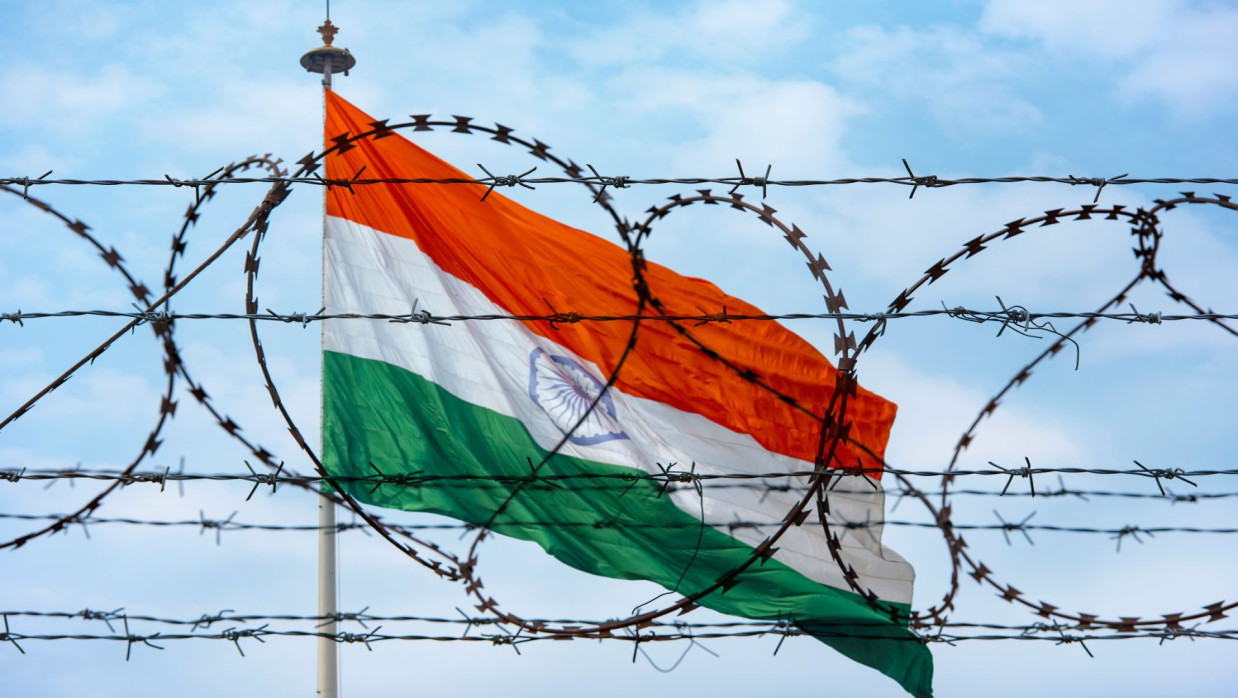
South Asia is witnessing minority representation returning to the headlines after the formation of the new government in Bangladesh. The Bangladesh Nationalist Party (BNP), led by Prime Minister Tarique Rahman, formed a cabinet after its landslide victory in the recent parliamentary elections. The cabinet includes members from minority communities, which is significant at both symbolic and political levels in South Asia, where communal propaganda can sometimes become competitive. However, the BJP governments in India refuse to let go of allegations against Hindu mistreatment in Bangladesh. But why?
Why does the Narendra Modi-led BJP government keep harping about minorities in Bangladesh when its own record at home comes under constant scrutiny for representing minorities? Is there something about Bangladesh that India will not let go of?
Minorities are represented in Bangladesh’s new cabinet, with at least one high-ranking minister from the Hindu community. Bangladesh minorities account for less than 10% of the population, yet several minority candidates won seats during elections, and at least one, senior Hindu leader Nitai Roy Chowdhury, has been brought into the cabinet. Chowdhury is an experienced politician and lawyer. His inclusion in the new government's cabinet sends a signal about its approach to minority inclusion at the highest level. Ensuring minority representation matters in Bangladesh both politically and symbolically, where minority groups often voice their fear of a lack of representation.
Minorities in India, however, do not have the luxury to feel represented by the ruling Bharatiya Janata Party (BJP). India’s Muslim population makes up approximately 14–15% of the country, yet it does not have a single Muslim Minister nor a Muslim BJP Member of Parliament sitting in India’s Parliament who belongs to the party in power. This has never happened in independent India, where at least some Muslim MPs used to be elected from the BJP’s ranks. Muslim representation in Parliament is at its lowest, and they no longer have a Muslim cabinet minister heading the Ministry of Minority Affairs.
Why does the BJP government choose to talk about Hindus in Bangladesh then?
Let’s analyze what would be a strong motivating factor for the BJP. Religion plays an important role in India’s current politics. BJP played the Hindu card effectively to garner votes and continue to do so. India is building a perception that it will protect Hindus across South Asia and beyond. If Hindu people in other countries are being victimized, India (led by the BJP) will come to their rescue. Creating that perception helps the BJP politically at home by consolidating its position with its core vote bank. BJP loves talking about Hindus beyond India’s borders because it fits into its larger political ideology of India being a Hindu civilizational state.
India’s external advocacy on minority rights also provides strategic leverage over Dhaka. Dhaka can be made to feel sufficiently threatened if India keeps reminding it of India’s legitimate concerns over Hindu minorities. For decades, New Delhi has used minorities in neighboring countries as leverage in bilateral relations; it is a pattern other countries follow as well when it comes to leveraging human rights issues with their neighbors. Until India takes care of minority issues within its borders, its advocacy on behalf of minorities in other countries will come across as hypocritical. New Delhi should exercise restraint before unnecessarily meddling in Dhaka’s internal affairs.
Another consideration is electoral politics within India itself. South Asia is known for its “complicated information space.” Narrative often drives policy in the region. The BJP-led Indian government’s reminder of the alleged atrocities against Hindus at the hands of the Bangladesh Muslim majority plays well with domestic and South Asian Diaspora Indian audiences that the BJP targets. The alleged Hindu persecution helps bolster the BJP’s narrative about its Muslim neighbors. Further, by stoking fears about Hindu persecution in Bangladesh, India is able to make a stronger case for its stringent citizenship laws and calls for military presence along the Bangladesh-India border, especially in states like Assam and West Bengal.
Ironically, India has welcomed Bangladesh’s new government so far and wants to keep it that way. India’s Lok Sabha Speaker Om Birla attended Tarique Rahman’s oath-taking ceremony. India’s Foreign Secretary visited several Bangladesh opposition leaders, including the leaders of Bangladesh’s oldest Islamist party, Jamaat-e-Islami. Both countries need each other too much for India to let the rhetoric affect the relationship.
Bangladesh should continue advocating for and protecting the rights of its minorities. Bangladeshis should not be quick to dismiss New Delhi’s concern with minorities, given incidents such as the violence during the Ram Navami procession and the vandalism at the Dhakeshwari temple, in which Hindu properties were targeted last year. Bangladeshis should take pride in the fact that Bangladesh’s Hindu community has not just lent its support to the Sheikh Hasina government, but has also been given government positions. Bangladesh has sent a message to the world that it values pluralism.
India, Bangladesh, and indeed, all countries in South Asia should look inward when it comes to issues affecting minorities within their borders. If countries continue to point fingers at each other when it comes to minority rights while turning a blind eye to the violations within their borders, they will lose all credibility when they try to defend their minorities.

0 Comments
LEAVE A COMMENT
Your email address will not be published