

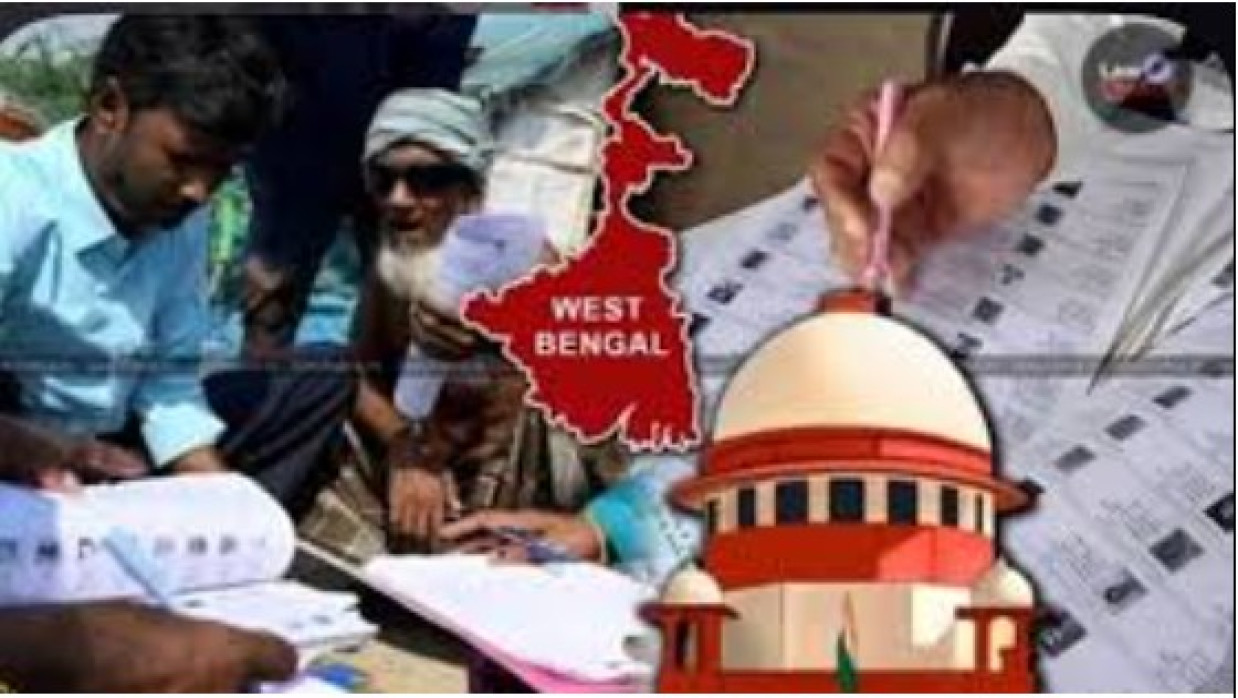
It’s no secret that Bengal’s electoral roll revision, which took place earlier this year, has been one of the most controversial revision drives ever conducted. There are widespread allegations of disenfranchisement, questions on procedure and neutrality, and growing concerns about the exclusionary nature of citizenship validation. While the Election Commission stands by its statement that this was simply part of its constitutional duty to revise electoral rolls from time to time, many activists and citizens have called foul play on what they see as blatant targeting of minorities for political gain.
When electoral democracy comes under question
This electoral roll revision exercise has become much more than simply that; it has come to symbolize the fight over who has a right to citizenship, who has a voice in politics, and who can trust these democratic institutions to function without bias.
Background of Special Intensive Revision (SIR)
Special intensive revision (SIR) is one method the Election Commission uses to verify citizens’ information and update electoral rolls. Revisions are carried out every few years to remove deceased voters and duplicate entries from electoral rolls, and to add persons who have recently become eligible to vote.
Ideally, electoral roll revision through SIR is simply a process that keeps electoral rolls up to date and legitimate.
However, the SIR in West Bengal has raised alarm bells among citizens across the state. Reports suggest that enumeration forms are being used and that the revision exercise goes beyond the usual process of updating electoral rolls. The questions being asked are political in nature and could affect voting rights.
Major Issues With SIR
Fear of Mass Exclusion
Citizens fear that the revision process will lead to mass exclusions from the electoral rolls. Specific complaints that have come up during the SIR revision are that minorities, the poor, SC/ST/OBCs are being disproportionately targeted during the electoral roll revision.
Citizens in many minority neighborhoods have received notices asking them to prove that they are voters. Objectors’ names are even missing on some of these notices. This leads us to question: what due process is being followed? What is the proper procedure? These citizens fear that mistakes have been made and that their names will be removed from the voters’ list come polling time.
Underneath the concern about voters being removed from electoral rolls is the fear of how many people will actually be affected and unable to get their names reinstated.
Suspicion about Legal Validity
A Public Interest Litigation (PIL) has been filed in the Supreme Court challenging the legality of SIR. The petitioners have alleged that there are unconstitutional and ultra vires aspects of electoral roll revision being carried out by the Election Commission of India.
One argument presented in court centers on the use of enumeration forms. While special revisions of electoral rolls can be carried out under Section 21(3) of the Representation of the People Act, critics argue that using enumeration forms to compulsorily collect citizens’ data and information is not supported by the law. Not only is there no requirement for voters to fill out an enumeration form, but asking them to do so places the onus on citizens to prove they are eligible voters. It isn’t the job of citizens to ensure their names are on the voters’ list, so why place this burden on them?
Another argument includes questioning the year of the electoral rolls being used to verify citizens. Field officers have reportedly been told to use the 2002 electoral roll as the base year. The Petitioners question – if that’s the case, why was 2002 chosen when updated electoral rolls are available?
Fear of citizenship being questioned
A greater concern among citizens is what will happen to the data collected through this enumeration process. In recent years, there has been significant political discourse surrounding citizenship. Many citizens are scared that the data being collected will be used to challenge their citizenship status.
Minority groups, especially Muslims, are worried that any discrepancy in their documents can be used to further question their citizenship. Even if this fear doesn’t turn out to be true for citizens, it is completely understandable that they fear their citizenship being questioned because of this electoral roll revision process.
Political/Casteist and Communal Bias Allegations
Critics have also alleged that political parties’ cadres have a field day identifying people to be removed from electoral rolls or objecting to voters who live in certain neighborhoods. These political forces range from party workers at the grassroots level to ideological and data-management organizations.
Citizens are extremely concerned about the possibility of political bias being present in this electoral roll revision. If members of political parties can directly or indirectly influence who is removed from voter lists, that is a dangerous precedent. It is feared that there is communal bias at play since a lot of the areas where electoral rolls are being questioned are Muslim-majority neighborhoods.
The Election Commission’s Stand
As mentioned before, the Election Commission of India has defended the electoral roll revision, stating that it is its duty to revise the electoral rolls from time to time to keep them up to date. While that is factually correct, the Election Commission could do better to allay the fears of citizens who have legitimate concerns.
Standing up for Democracy
Electoral democracy in India will only work if citizens trust the process. There is no denying that the election rolls need to be updated every few years to remain current. But is this revision process fair to all citizens? Is it politically neutral?
What we are seeing play out in Bengal is not just a fight over who gets to vote. It is a fight over who is Indian. It is imperative that we stand up for democracy and what it means to be Indian.
Does the Election Commission send out notices for electoral roll revision?
No, the Election Commission does not reach out to citizens to revise electoral rolls. However, voters can apply for changes or corrections to their own information on the electoral rolls by themselves here.
Can I download the Electoral Roll to check whether I’m registered to vote?
Yes, here’s a detailed guide to downloading Electoral Rolls.
Can I update my address while doing an SDR?
Address changes can be made during SDR. Just follow these steps.
Can I upload documents while applying for SDR?
Yes, supporting documents may be submitted with your SDR application. Accepted documents include:
Proof of Identity
- Aadhar Card
- Passport
- Driving License
- Voter ID Card
Proof of Relationship (If applicable.)
- Birth Certificate
- Adoption Certificate
- Marriage Certificate
Proof of Residence
- Electricity Bill
- Telephone Landline Bill
- Gas Connection Bill
- Water Bill
- Water Connection Bill
- Mortgage Agreement Copy
- Rental Agreement/Cottage Rent Agreement
- Passport Copy
- Railway WLL
- Insurance Policy Premium Receipt
- Loan Sanction Copy
- Bank Loan Sanction Copy
- Correspondence from a Govt. Department/PSU mentioning name and address
It’s important to note that these documents should be less than 6 months old. Documents can be uploaded in PDF or JPG format. Read about the requirements for acceptable documents here.

0 Comments
LEAVE A COMMENT
Your email address will not be published