

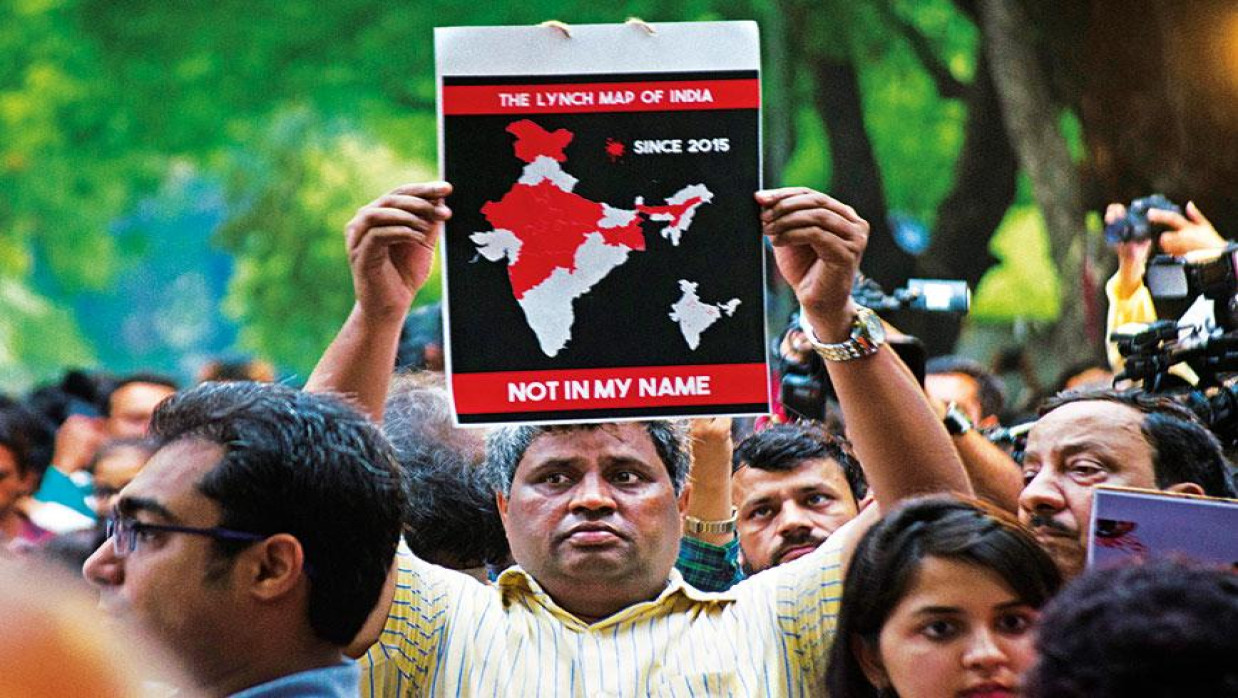
Mob lynching across India gave way to extrajudicial killings, internet shutdowns, mass arrests, and forced deportations in 2025, according to a new report by the South Asia Justice Campaign (SAJC). India Persecution Tracker (IPT), SAJC’s new synthesis report, chronicles atrocities against Muslims across India over the course of the last year. What stands out about SAJC’s documentation is not only the increase in killings, which rose from 36 in 2024 to at least 50, but also “the alarming trends of Muslims being killed extrajudicially by either state authorities or Hindu mobs.” Disturbingly, state-sanctioned violence is increasingly taking place with a “collar,” implying some degree of due process.
Reliable documentation is harder to come by, given shrinking civic space, clampdowns on journalists, and crackdowns on dissent. But the India Persecution Tracker, which admittedly offers conservative estimates, offers evidence of India’s burgeoning crisis. Muslims continued to be killed in each state of India where SAJC collected data in 2025, signaling the normalization of violence across the country. These killings, which include mob lynching, custodial deaths, targeted killings, and fake encounters, have taken on an alarming trend toward systematic exclusion across multiple Indian states.
East Jammu witnessed the highest number of killings, with at least eight Kashmiri Muslim civilians killed by security forces in staged encounters, custodial torture, and deaths under interrogation. Enforced disappearances and illegal detentions were recorded in each of India’s federally administered territories, with Kashmir being “no exception.” Reports of mass arrests and killings, with due process and court hearings taking a backseat, continue to plague Kashmir. Muslims are increasingly being treated like suspected insurgents rather than civilians who are protected under the law.
The human rights abuses that have long been synonymous with Kashmir now characterize life for many Indian Muslims living in other Indian states as well. In India’s most populous state, Uttar Pradesh, what began with Muslims coming together to spread the “I Love Muhammad” campaign ended with prohibitory orders issued by authorities across several districts in September. Shops and homes belonging to Muslims were demolished, and communities were cut off from the internet following anti-Muslim hate campaigns.
In Assam, SAJC recorded mass arrests and forced deportations targeting Rohingya refugees as well as Bengali-speaking Muslims who were targeted under National Register of Citizens (NRC) verification drills. By July last year, at least 1,880 people had been forcibly pushed back across the border, including Indian nationals who were later allowed to return home. Property destruction also continued apace after BJP leaders called on the states to expedite their processes to identify and deport so-called “illegal migrants” from Bangladesh and Myanmar.
The crackdown targeted both individuals from Bangladesh and Rohingya refugees from Myanmar. SAJC found at least 3,016 Kashmiris arrested under preventive detention laws, while more than 2,000 Muslims were pushed into Bangladesh from Assam, and over 450 Rohingya refugees were deported from India between May and August. According to researchers compiling SAJC’s India Persecution Tracker, forced expulsion is “pushbacks” rather than deportations.
Pushbacks do not adhere to bilateral agreements between states and often circumvent safeguards established by due process and international law. One anonymous researcher said that while killings and lynchings have happened every year since 2014, what distinguished 2025 was the large-scale arbitrary arrests and expulsions conducted in “the name of terrorism laws, preventive detention laws, and public order laws.” Kashmir isn’t the only region turning into a law-free zone. Muslim citizens face the same risk of persecution in Uttar Pradesh and Assam.
“The process of questioning the citizenship of Muslims in India, especially those from Assam, Tripura, West Bengal, who speak Bengali as their mother tongue, and Rohingya refugees, is raising serious questions about their sense of belonging,” Indian human rights defender Harsh Mander warned in a conversation with NewsClick. Indian Muslims, once considered citizens by default, are being made to prove their citizenship all over again. Indian Muslims, particularly Muslims who speak the Bengali language and Rohingya refugees, are having their right to belong questioned.
Indian authorities “must act swiftly to end violent attacks targeting religious minorities and immediately reverse discriminatory policies that rely on arbitrary punishments, illegal arrests and detention, and deportations without due process,” Meenakshi Ganguly, South Asia director at Human Rights Watch, urged on Wednesday. As arrests continue to mount and hate crimes increase, meaningful remedies for violations documented by journalists and human rights organizations are nearly nonexistent. SAJC concludes that domestic accountability mechanisms are “largely ineffective and inconsistent with international standards.”
“As senior Indian political leaders legitimize hate speech against minority communities and show disregard for constitutional guardrails,” Mander adds, “it gives license to those in power at the local level to act with impunity.”

0 Comments
LEAVE A COMMENT
Your email address will not be published