

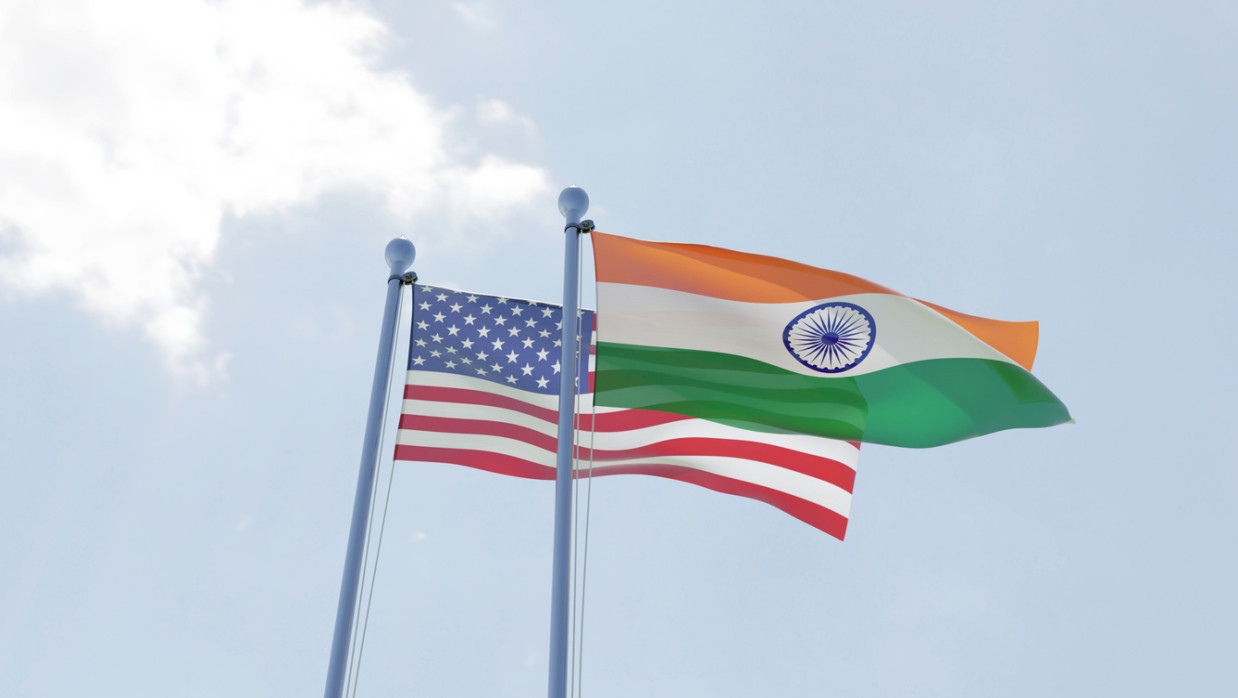
India’s External Affairs Minister S. Jaishankar is scheduled to visit Washington next week, as announced by ANI on X, where he is expected to participate in the inaugural Critical Minerals Ministerial hosted by the United States. This upcoming meeting is designed to increase collaboration on robust supply chains for minerals necessary for modern technology and renewable energy. This announcement marks a significant turning point in India-US ties as well as another official visit. Public discourse wills likely to focus on shared democratic values and growing collaboration in trade, technology, and defence. However, it is better to view Jaishankar's visit as a conflict between opportunity and limitation rather than as a celebration. It illustrates how India maintains strategic autonomy as a top goal while managing its rise in the face of global power imbalance.
At the heart of this cooperation lies the challenge of asymmetry. The India–US relationship is not one of equals in material capabilities, institutional reach, or narrative impact. Despite its large population and rapid economic expansion, India operates within systems controlled by Western power, while the United States maintains its dominance in global politics, security alliances, and technology standards. In this situation, Jaishankar's diplomacy focuses more on controlling uneven reliance to protect India's strategic agency than it does on establishing formal alliances.
Consolidating its position in the Indo-Pacific, where Washington views India as essential to maintaining regional equilibrium in the face of China's aggression, is one of India's most significant prospects. Although India continues to oppose formal treaty commitments that could limit its strategic flexibility, cooperative frameworks like the Quad highlight common interests in maritime security and rules-based order. Washington must take into account this calibrated uncertainty even as it looks for more predictable alignment from partners because it enables New Delhi to engage constructively without being constrained by strict alliance commitments.
Another essential component of participation is technology cooperation. Initiatives to create robust, diverse supply chains have made sectors like semiconductors, artificial intelligence, and clean energy technology crucial to bilateral cooperation. However, the United States maintains dominating control over intellectual property, regulatory frameworks, and essential elements of technical infrastructure even as it pursues "de-risking" methods to lessen dependency on China. Technology cooperation can progress while remaining constrained by these structural dynamics, as seen by India's involvement in the Critical Minerals Ministerial and its growing presence in plurilateral initiatives like the Minerals Security Partnership.
Economic engagement further illustrates dualities in the relationship. Bilateral trade and investment flows have expanded, and both sides have signalled ambitions such as a plan to more than double India–US trade to $500 billion by 2030 though negotiations remain incomplete. Persistent fights over market access, tariffs, data governance, and protectionist measures illustrate that strategic convergence does not immediately alleviate economic friction.
Normative pressure is a less obvious but increasingly significant factor. Parts of the U.S. political establishment associate strategic cooperation with human rights discourse and democratic norms as India's image grows internationally. In the purpose of strategic engagement, current U.S. administrations have moderated public criticism; nevertheless, this constraint is situational rather than principled, and it is subject to change depending on domestic U.S. politics. Therefore, India's foreign policy must manage both bilateral expectations and the potential influence of domestic political narratives in Washington on strategic communication.
India-US relations are still heavily impacted by the Russia-Ukraine conflict. Tension has arisen as a result of India's refusal to support Western sanctions and its preference for communication over punitive actions. This illustrates India's focus on energy security as well as its more general foreign policy tenet of strategic autonomy, which Jaishankar has defined as "freedom of choice" in international interactions. As the conflict persists, New Delhi may face increased pressure to justify its positions within global moral narratives shaped by Washington and its European allies.
Another structural layer of limitation is added by India's ambitions for multilateral reform. Although both the United States and India claim to be in favor of changing global governance organizations, such as the UN Security Council and international financial systems, their actual plans differ. India demands more inclusive representation and a redistribution of power, whereas Washington frequently tries to modify current structures without giving up control. Debates on digital standards, climate finance, and the governance of international financial institutions all highlight this tension, demonstrating that strong power structures cannot be overcome by bilateral goodwill alone.
Jaishankar's straightforward, impersonal, and sovereignty-focused diplomatic approach has made it easier to clearly express India's perspective. However, constraint is not eliminated by clarity. India's foreign policy functions within a framework of unequal power distribution and selective application of regulations. Extracting strategic advantages without internalizing structures that can restrict future policy options is a challenge for Indian diplomacy. In this way, maintaining balance, strategic distance, and optionality is more important for the Washington visit than celebration. India aspires to convergence without surrender, partnership without patronage, and cooperation without reliance. The visit's success will be determined by if New Delhi's strategic leeway is maintained in the face of evolving geopolitical conditions rather than by collaborative declarations or symbolic actions.
In the end, Jaishankar's trip to Washington, which was centered on high-level meetings and press releases, represents the general state of India's development, which is full of opportunities but constrained by structural realities. Power accumulation across demographic, economic, and strategic arenas does not immediately eliminate underlying structural imbalances. Although asserted, India's autonomy is continuously put to the test. Because every opportunity in international politics has an embedded constraint, Indian diplomacy must be mindful of both what is offered and what is expected in return when navigating this terrain.

0 Comments
LEAVE A COMMENT
Your email address will not be published