

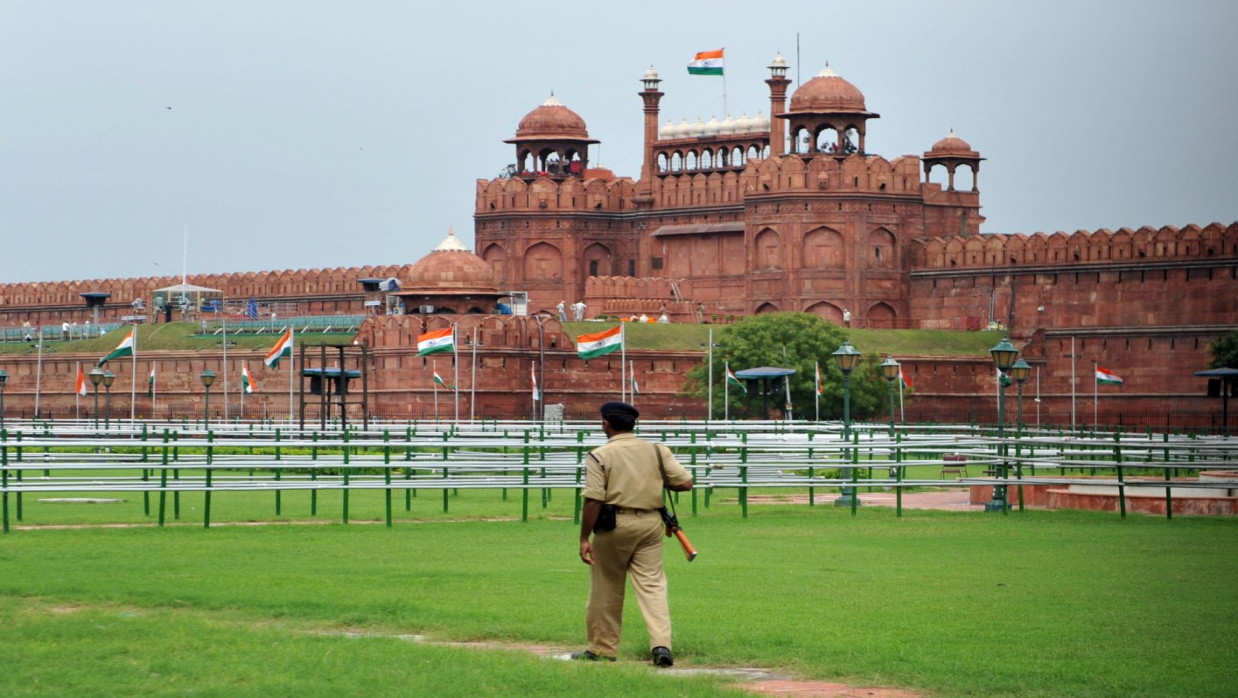
Every year on January 26, India celebrates Republic Day with grand military parades, nationalist slogans, and claims of democratic triumph. The spectacle projects an image of unity, stability, and rising global power. Yet beneath the ceremonial grandeur lies a troubling reality: a republic increasingly fractured by ideological extremism, social polarization, and democratic erosion. India’s Republic Day today is less a celebration of constitutional ideals and more a performance designed to conceal a widening gap between promise and practice.
When India adopted its constitution in 1950, it pledged secularism, equality, and pluralism—principles meant to hold together a diverse civilization-state. The constitution was envisioned as a moral contract between the state and its citizens, transcending religion, caste, and ethnicity. However, over the past decade, the rise of Hindutva ideology under the Bharatiya Janata Party (BJP) and its ideological mentor, the Rashtriya Swayamsevak Sangh (RSS), has steadily hollowed out these ideals. What was once a pluralistic vision of India is being replaced by a majoritarian narrative that equates nationalism with Hindu supremacy.
The ideological roots of this transformation are not new. The RSS, founded in 1925, has long promoted a vision of India defined by religious homogeneity. Its worldview has influenced political discourse, education, and state institutions, normalizing hostility toward minorities. The demolition of the Babri Masjid in 1992, the Gujarat riots of 2002, and the recent Ram Mandir project are not isolated events; they are milestones in a broader project to reshape India’s identity. Meanwhile, the legacy of constitutional architects like B.R. Ambedkar—who warned against Hindu majoritarianism—has been marginalized, and Gandhi’s inclusive vision is overshadowed by the glorification of extremist figures.
India’s crisis is not only ideological but also territorial and political. The narrative of a naturally unified Indian nation obscures a history of coercive integration. Kashmir’s disputed accession, Hyderabad’s forced annexation, Junagadh’s invasion, Goa’s military takeover, and the troubled incorporation of northeastern states reveal that India’s territorial expansion was often achieved through force rather than consent. The revocation of Article 370 in 2019, which stripped Kashmir of its autonomy, marked a decisive shift from federalism to central authoritarianism. Far from strengthening unity, such measures have deepened alienation and resistance.
The plight of minorities exposes the moral bankruptcy of India’s contemporary political order. Muslims face lynchings, mosque demolitions, discriminatory laws, and systemic underrepresentation in political institutions. Christians confront attacks on churches and communal violence, while Sikhs continue to grapple with historical trauma and renewed demands for self-determination. Dalits, despite constitutional protections, remain trapped in cycles of discrimination and socio-economic exclusion. These realities contradict India’s self-image as the world’s largest democracy and reveal a state increasingly indifferent to the rights of its most vulnerable citizens.
The erosion of federalism further exposes the fragility of India’s unity. Persistent inter-state disputes, insurgencies in the northeast, Maoist rebellions in central India, and ethnic conflicts in Manipur illustrate a federation under strain. Rather than addressing grievances through dialogue and decentralization, the central government has often resorted to militarization and coercion. Laws such as the Armed Forces Special Powers Act (AFSPA) and anti-terror legislation have institutionalized a culture of impunity, eroding trust between the state and its citizens.
India’s internal contradictions are mirrored in its external behavior. While projecting itself as a responsible global actor, India has been accused of regional destabilization, aggressive nationalism, and strategic adventurism. Its strained relations with neighbors, unresolved disputes with China and Pakistan, and allegations of extraterritorial operations reflect a foreign policy driven more by ideological ambition than pragmatic diplomacy. Economic vulnerabilities, currency depreciation, trade tensions, and domestic crises further undermine the narrative of India’s unstoppable rise.
The deeper issue, however, is not merely political or economic; it is existential. A republic cannot survive on symbolism alone. Constitutions are not preserved by parades but by justice. Democracies are not sustained by majoritarian dominance but by inclusion. Nations do not remain united through coercion but through consent. India’s current trajectory suggests a dangerous departure from these principles.
Republic Day should have been a moment of introspection—a reminder of constitutional values and democratic responsibilities. Instead, it has become a ritual of denial, masking the realities of repression, inequality, and fragmentation. The more India clings to the illusion of unity through authoritarian nationalism, the more it risks accelerating its internal disintegration.
History offers a clear lesson: empires built on exclusion and coercion inevitably crumble. Whether India chooses to rediscover its pluralistic foundations or continues down the path of ideological extremism will determine not only the fate of its republic but also the stability of South Asia. For now, the Republic Day spectacle may continue, but the republic it claims to celebrate is increasingly difficult to recognize.

0 Comments
LEAVE A COMMENT
Your email address will not be published