

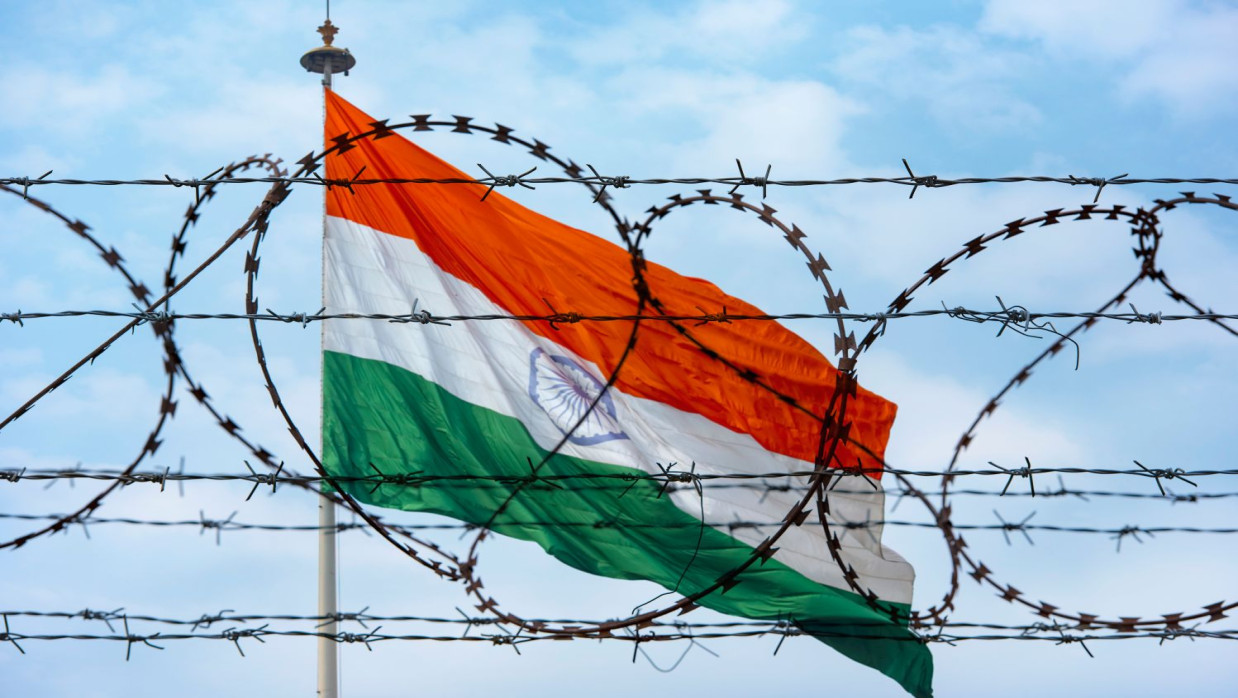
India’s counter-Naxal strategy under Prime Minister Narendra Modi and Home Minister Amit Shah has entered a deeply disturbing phase. The government’s declared objective to “eliminate Naxalism” by March 26, 2026 is no longer a policy goal—it has become a countdown that is incentivizing violence, shortcuts, and alleged extrajudicial killings. What is unfolding across India’s so-called “Red Corridor,” particularly in Chhattisgarh, is not a principled counterinsurgency campaign but a coercive state project that prioritizes body counts over justice, dialogue, and constitutional responsibility.
The Bharatiya Janata Party’s security doctrine rests on a simplistic and dangerous premise: that deeply rooted political and socio-economic conflicts can be resolved through force alone. By framing Naxalism purely as a law-and-order problem, the Modi-Shah leadership has systematically erased the historical context that gave rise to the insurgency—tribal dispossession, land alienation, mineral exploitation, and the chronic marginalization of Adivasi communities. The March 26 deadline has further militarized this approach, turning security operations into quota-driven exercises where success is measured by the number of “neutralized” insurgents.
The consequences have been lethal. Official data itself acknowledges that over 200 Naxalites were killed in encounters in 2025 alone, an unusually high figure that raises serious questions about operational conduct. Human rights organizations, civil society groups, and independent journalists have repeatedly warned that many of these encounters bear the hallmarks of staged killings—operations conducted against unarmed suspects, detainees, or civilians later labeled as insurgents. Entire tribal belts are now treated as hostile territory, where due process is suspended and suspicion alone can become a death sentence.
One particularly chilling allegation involves the reported killing of senior Maoist commander Basavaraju, who, according to multiple accounts, was taken into custody before being killed in what authorities later described as an “encounter.” If true, this would constitute a grave case of extrajudicial execution, a crime under both Indian law and international human rights conventions. Such incidents are not aberrations; they are symptomatic of a security architecture under immense political pressure to deliver results before an artificial deadline.
Amit Shah’s rhetoric has played a central role in legitimizing this violence. By repeatedly invoking the language of annihilation—“finish,” “wipe out,” “eradicate”—the Home Minister has effectively signaled impunity to security forces operating in remote tribal regions. When political leadership frames counterinsurgency as a war rather than a governance challenge, accountability becomes the first casualty. In this environment, Adivasi villages turn into kill zones, and ordinary tribal residents are caught between insurgents and an unforgiving state.
The moral bankruptcy of this approach is further exposed by the government’s blatant hypocrisy. For years, New Delhi has promised a parallel track of development and reform to address Naxalite grievances: secure land titles, protection from forced displacement, employment opportunities, agricultural support, healthcare access, and education. In practice, these commitments have remained hollow slogans. What has advanced rapidly, however, is corporate access to mineral-rich tribal lands, often facilitated by security operations that clear areas of resistance under the banner of counterterrorism.
This contradiction lies at the heart of India’s Naxal problem. The state demands unconditional surrender from communities whose forests are seized, whose leaders are criminalized, and whose voices are silenced. When tribals resist, they are branded as terrorists; when they protest peacefully, they are arrested; and when they are killed, the deaths are justified as collateral damage in the fight against extremism. Such policies do not resolve insurgency—they reproduce it.
International scrutiny is steadily mounting. Reports documenting custodial deaths, enforced disappearances, and extrajudicial killings in Chhattisgarh and neighboring states have tarnished India’s democratic credentials. The government’s attempt to frame all Naxal-linked violence as terrorism ignores the political nature of the conflict and dismisses the lived realities of marginalized communities. Labeling insurgents as terrorists may simplify narratives for urban audiences, but it does nothing to heal the structural wounds that fuel rebellion.
Most troubling is the broader implication for India’s constitutional order. A state that normalizes encounter killings against one segment of its population sets a dangerous precedent for all. The erosion of due process in tribal areas today can easily extend elsewhere tomorrow. Counterinsurgency without accountability is not strength—it is authoritarian drift disguised as national security.
If the Modi government is genuinely committed to ending Naxalism, it must abandon deadline-driven militarism and return to constitutional principles. Dialogue, land reform, political inclusion, and justice are not signs of weakness; they are the only sustainable tools for peace. Until then, the bloodshed in India’s forests will continue—not as a failure of the state, but as the direct outcome of a policy that has chosen repression over reconciliation.

0 Comments
LEAVE A COMMENT
Your email address will not be published