

A Moment That Rekindled South Asia’s Shared Destiny
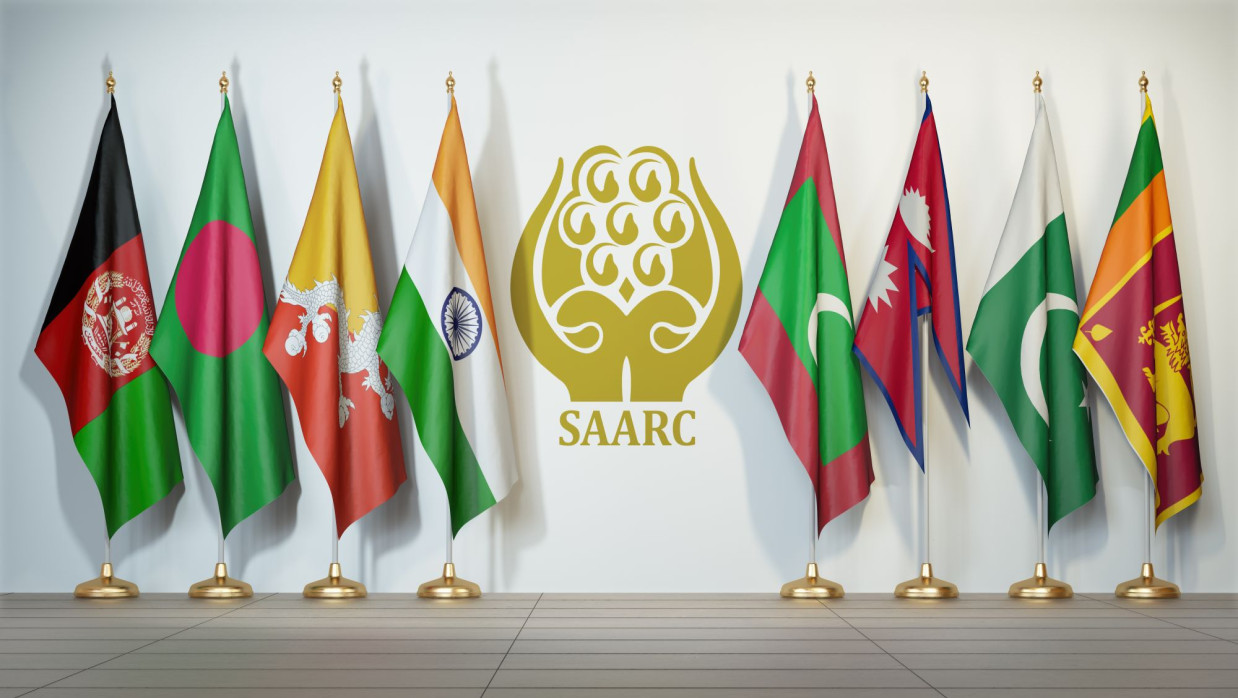
South Asia, a region which has been far too often defined within recent years by a certain cynicism, a certain paralysis, and a certain frustration with regionalization, reminded itself of its ability to come together at a certain symbolic and transformationally potent point in response to the sudden passing of former Prime Minister Khaleda Zia. This particular instance is akin to much, much more than a mere obligatory nod to a loss. It is a remarkable reflection of South Asia's potential to unite, its potential to work at a greatly heightened level when it collectively reminded itself at this decisive point in time that it has been and will ever remain much, much more.
Just how well the significance of this occasion was captured by the Chief Adviser, Muhammad Yunus, when he said, “The attendance of the leaders in the SAARC region is a living proof that the essential spirit of the SAARC is alive, kicking, and politically relevant.” Just as the Chief Adviser interacted with the visiting leaders, the Professor brought out the most fundamental point: “Nothing is lost. It’s been postponed. The spirit of cooperation is not lost. It’s just been put on the back burner. Every time there’s a new leadership, the language of the regions comes back. The Dhaka Moment was not an exception but a catalyst to look back at the region of South Asia, still waiting to be divided. The reason why this is possible is due to a moral-emotional base stratum amnesic, inert on the surface, but replenished every time there’s a new shift in the focus towards the recovery of the language of the regions.
A Rare Combination of Leadership and Respect
The presence of high-level representatives from across South Asia was itself unprecedented in recent years and symbolically significant. Leaders and ministers from Pakistan, India, Nepal, Bhutan, Sri Lanka, and the Maldives gathered in Dhaka to honor a former leader whose political life had shaped regional discourse for decades. Among them were Pakistan National Assembly Speaker Sardar Ayaz Sadiq, India’s External Affairs Minister S. Jaishankar, Nepal’s Foreign Minister Bala Nanda Sharma, Bhutan’s Foreign Minister Lyonpo D. N. Dhungel, Sri Lanka’s Foreign Minister Vijitha Herath, and Maldives’ Minister of Higher Education, Labor and Skills Development Ali Haidar Ahmed.
Beyond protocol, this convergence carried strategic meaning. It demonstrated that South Asian leaders remain capable of engaging one another respectfully even in the absence of formal summits. Such encounters help normalize dialogue, soften hardened positions, and rebuild the habits of consultation that multilateralism requires. Informal diplomacy, often underestimated, can serve as the bridge between paralysis and progress.
From Symbolism to Strategy: Reimagining SAARC’s Purpose
The professor used these engagement forums as a platform to advance his views on the need to make SAARC a problem-solving entity rather than an objective. The professor assumed that the troubles of climate change resilience, disaster management, food security, health preparedness, labor migration, the digital divide, and the energy shift, among many others, are actually problems framed within a region-specific paradigm. Their piecemeal solution, implemented by different nations, would simply be an additional expense.
It would also provide real strategic value for the group. The collective value for the SAARC nations would be to counter the risk of natural hazards that are faced by one of the climates’ vulnerable regions on the globe. Public health sharing and mechanisms would protect the region from the threats posed by pandemics that are destructive to developing countries. The region will have access to trade worth billions of dollars within its own region instead of a non-adjacent region that existed under SAARC previously. The mention of South Asia as a group on the major global forums will help the group bargain on terms on climate change finances, development assistance, and sharing of technologies that are more balanced.
Managing Bilateral Relations without Paralyzing Multilateralism
An extremely important aspect of Professor Yunus’s presentation was the need to separate bilateral conflicts and cooperation. It is evident that the experience in South Asia has shown that it can indeed be counterproductive to have the “bilateral” differences effectively veto actions within the context of a regional grouping. Professor Yunus’s idea of issue-based cooperation, where interested countries can move forward where possible, could be extremely helpful.
This would under no circumstances detract from the idea of sovereignty, but would rather increase it and make it possible for states to work towards a common benefit while negotiating other matters on their own as well, as it is likely that the development of confidence in one relatively non-sensitive area will give enough political mileage to states to progress to other matters as well in the future.
People-to-People Connectivity as Strategic Capital
Another extremely pertinent point mentioned by the Chief Adviser was the “people-to-people” connection, which provides the strongest, enduring foundation for sub-regional engagement. This is because international treaties, summits, and the language of politics have a short half-life; the web of people-to-people connections, on the other hand, is beyond such fluctuations. People-to-people engagement in an academic, cultural, youth, media, or professional capacity provides the level of trust that “no press release or formal communiqué can provide.” This engagement would help build relationships with the neighboring society, break down stereotypes and disinformation, and provide the experience, rather than the ideology, of us versus them.
Indeed, South Asia has large numbers of people with linguistic, cultural, and family ties predating the modern nation-state and could thus naturally meet the criteria for a civilizational space. Institutions of higher learning, carrying out joint research and participating in exchange programs for students and faculty, provide an intellectual climate amenable to the objectives of a civilizational space that transgresses rather than assents to nationalism. Collaborations in media and press, and journalist exchanges, are imperative for recasting misconceptions in favor of a press and media presence more focused on understanding than on hatred.
In fact, the demographic situation in the area makes this vision not only highly desirable but also imperative by every account. South Asia has some of the youngest populations globally, and its digitally savvy, globally aware youth population is expanding exponentially. This generation of youth has already created, through their own initiatives, a networked community transcending the boundaries of nation-states through business, education, and social networking circles. Harnessing this ad hoc networking through institutionalized policies will, indeed, make the proper utilization of the demographic dividend a veritable, tangible, and unique “strength” for this area. These youths, brought up together, studying, working, and creating, will have a much more difficult time living down the politics of distrust that have until now held back the progress of this area.
A rejuvenated South Asian Association for Regional Cooperation (SAARC), with people-to-people engagement as its bedrock, will be an investment in the long term for peace, stability, and prosperity in the region and the world at large. Through the facilitation of the normalization of movement and engagement in its broadest dimensions and parameters, it will be the endeavor of the association to bring about the emergence of a new generation of people for whom the region's integration and not the exception represented by the current situation in the face of a crisis will be the norm and the optimum way of life. The region will be able to tap its most precious asset: its people.
Dignity, Discipline, and Diplomatic Opportunity
According to Shafiqul Alam, Press Secretary to the Chief Adviser, foreign guests from other South Asian countries are hugely impressed by the scale and discipline with which the nation has said its last goodbye to former Prime Minister Begum Khaleda Zia. As quoted by Press Secretary Shafiqul Alam, “It’s a rare experience that the foreign guests had witnessed a huge democratic gathering beyond the actual venues where the rituals were performed; and that too with so much civic responsibility and restraint as the people of Bangladesh displayed at the funeral.” However, this group’s behavior had a larger significance than this. It represented the Bangladesh political system's ability to accept political diversity and maintain a democratic political culture without resulting in chaos or political inflexibility. The funeral thus became a representation of a democratic political culture at work, where the appreciation of the opposition leader's past political life was expressed not only in adherence to political etiquette but also in the people's enthusiasm.
However, of even greater import were the condolences extended to BNP Acting Chairman Tarique Rahman by regional leaders, which underscored the collective recognition of democracy’s transfer of power and political legitimacy in the region. These condolences overrode political blocs and national ambitions, which showcased the region’s recognition of democracy’s transfer of power, political legitimacy, and, more importantly, the human touch of politics always spoken ill of in real international engagements.
As history has already shown, times of collective sorrow can be unexpected gateways to opportunity. When handled in a manner commensurate with their importance, they can ease hardened viewpoints, reintroduce civility into frayed relations, and provide a platform for communication that is sometimes difficult to achieve even in specially convened negotiations. This in Dhaka has already illustrated just how sympathy and respect can be instruments of statecraft to remind South Asia that trust is not only negotiated through treaties and summit-level agreements, but also through experiences that re-anchor politics in respect. The funeral has thus marked the close of an era, which is also the constructive beginning.
Conclusion: Preserving the Spirit, Advancing the Future.
The importance of the Dhaka meetings lies in the SAARC spirit’s having not died out, but in waiting for a vision with which it can resolutely redefine SAARC’s involvement. Prof. Yunus’s call is, after all, strategic because without SAARC’s involvement, the South Asian region will lie bare in the new bloc-order world order. Rather, with SAARC’s involvement, the South Asian region can convert all challenges into opportunities. The resuscitation of SAARC is not merely an inkling of what happened to the stalled SAARC organization. It’s about ensuring the survival of the economies, environment, and relevance in SAARC. The SAARC spirit is alive. It’s about responding.

0 Comments
LEAVE A COMMENT
Your email address will not be published