

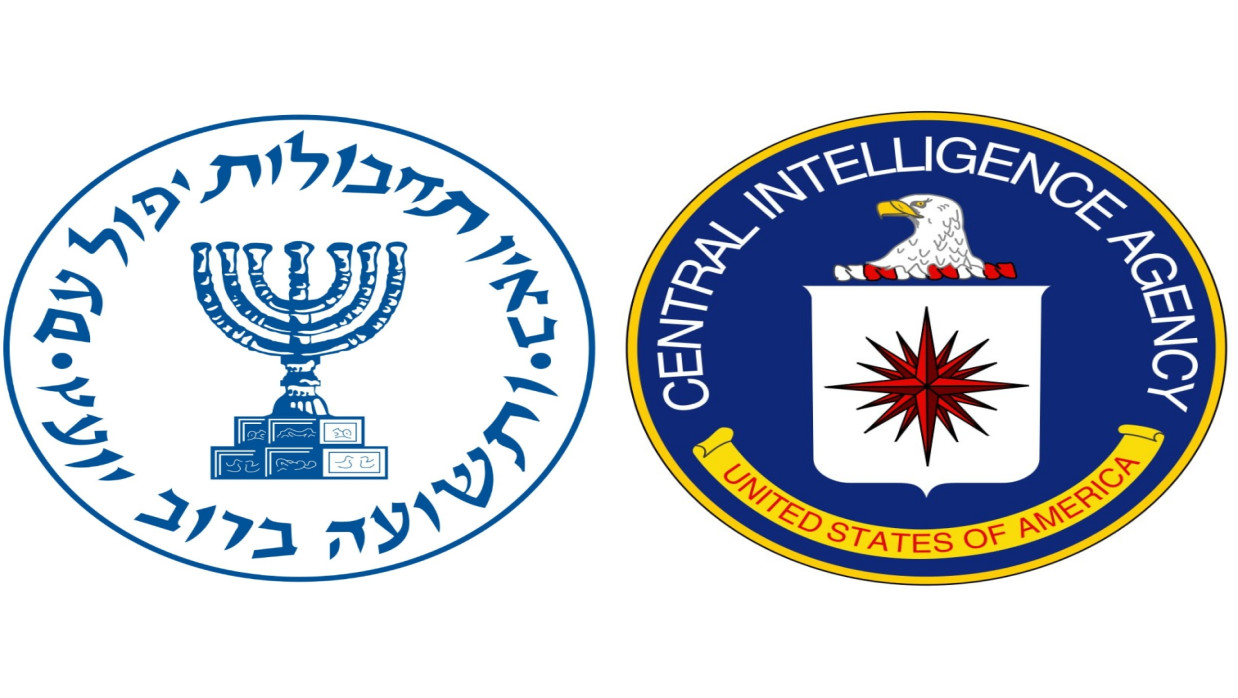
On 26 November 2025, Kumar Ketkar, a Congress leader and former Rajya Sabha MP, has made an explosive disclosure about the political situation during 2014 general elections in India. According to Ketkar, the dramatic collapse of the Congress party from 206 seats in the 2009 Lok Sabha elections to a mere 44 seats in 2014 was not a democratic outcome at all. He made a strong statement by saying that the foreign intelligence agencies, namely the CIA of the United States and Mossad of Israel, were the ones who not only intervened in the Indian elections but also did the mapping of states and constituencies to the micro level to indirectly influence the electoral process. Ketkar claimed that these agencies viewed a stable, independent Congress government as a threat to their policy objectives in India and sought to engineer a political change that would create a more pliable, pro-US, pro-Israel leadership. He further claimed that the ascendance of Premier Narendra Modi was not merely a popularity wave but a political undertaking run by outside powers which aimed at altering the strategic relations of India.
Moreover, Ketkar's claims not only bring into question the results of the elections but also point to a more fundamental institutional decay during the Modi administration. He accused the ruling class in India of having sold out to the intelligence agencies of the West and Israel, thus letting the foreign parties meddle with the country’s political, military, and information spheres. To support his view, Ketkar referred to this "deep-state marriage" as one that has made independent institutions weaker, India’s policy autonomy narrower, and the upcoming voters mainly passive in the political changes that are done behind the scenes and are well organized. Although these allegations are still highly disputed in the political arena and have been rejected by the BJP representatives, they do raise very serious questions concerning the honesty and openness of India's democratic procedure.
India has witnessed a progressive yet constant decay of democratic institutions throughout Modi's governance. The political light has been shifted to judicial authorities, law enforcement and investigative agencies that form the Election Commission of India (ECI), Central Bureau of Investigation (CBI), Enforcement Directorate (ED), and National Investigation Agency (NIA). It has been further stated that the regime has actually engaged in the practice of silencing all critics, while journalists are subjected to close watch and intimidating measures, and the states ruled by opposition parties face forced changes in their political alliances. Ketkar argues that the country's character has turned into what he calls an "algorithm-driven electoral autocracy," whereby the democratic means are only the tools used for the ends of power acquisition and ideological loyalty.
Furthermore, the accusations revolve around the use of technology, especially electronic voting machines (EVMs) and their related software systems. The critics of these systems claim that the advanced data platforms integrated into them have the capabilities to micro-target particular communities, manage results at booth level, and support the organized ways of "vote stealing". These digital means are seen as part of a wider plan to create false electoral mandates, thereby placing power in the hands of a leader who is politically compliant.
The human cost of this manufactured mandate has been significant. As the foreign agencies and the Modi administration become more powerful, the common Indian suffers the most by way of increased inequality, suppression of opposition, and systematic wiping out of minority communities. The rise of Hindu nationalist thinking has divided the society more and more, and the democratic institutions and the freedoms have been gradually undermined. The "New India" that the government is trying to sell, is, in truth, a very insecure state that depends more on propaganda, support of foreign intelligence, and digital manipulation than on the actual people's consent, which consequently puts the citizens out of the political process.
The recent revelations have uncovered a very severe and alarming truth: the transition of power in India since 2014 might not have been a natural political transformation through democratic methods but rather a change in politics with the help of foreigners. The dependence of the Modi government on foreign intelligence sources like the CIA and Mossad, the use of digital tools for manipulation such as electronic voting machines (EVMs), and the draining of power from independent institutions have together deprived democracy of its very essence. This mix has in fact turned India into a caliber of an outside influenced authoritarian regime, which has been subjugating the country’s institutional autonomy and defeating the commonly held view of India being a strong democratic model. The revealing of these weaknesses is a clear indication of the manner in which external powers, technological capacity, and internal institutional decay have determined the course of Indian politics over the last ten years.
India often prides itself as the world’s largest democracy, yet the alleged manipulation of electoral mandates under the BJP regime casts a long shadow over that claim. True democracy is defined not by size or rhetoric, but by respect for the will of the people and the integrity of institutions that uphold it. For India to genuinely earn the title of a democratic state and ensure sustainable progress, it must prioritize the sanctity of electoral outcomes, protect citizens’ rights, and allow governance to reflect the genuine mandate of its people. Only then can the country achieve political legitimacy, social cohesion, and long-term national prosperity.


0 Comments
LEAVE A COMMENT
Your email address will not be published