

The Return of the Diplomatic Stage
A year ago, the United Nations looked exhausted. It was short of money, politically battered, and increasingly dismissed as a relic of a post-1945 order that no longer commanded the great powers' obedience. The wars in Gaza and Ukraine had exposed the paralysis of the Security Council. The humanitarian system was overstretched. The United States, under Donald Trump, seemed prepared not merely to criticize the UN but to disengage from large portions of it. Speculation even suggested that alternative forums, including Trump's proposed "Board of Peace," might emerge as rival centers of international legitimacy.
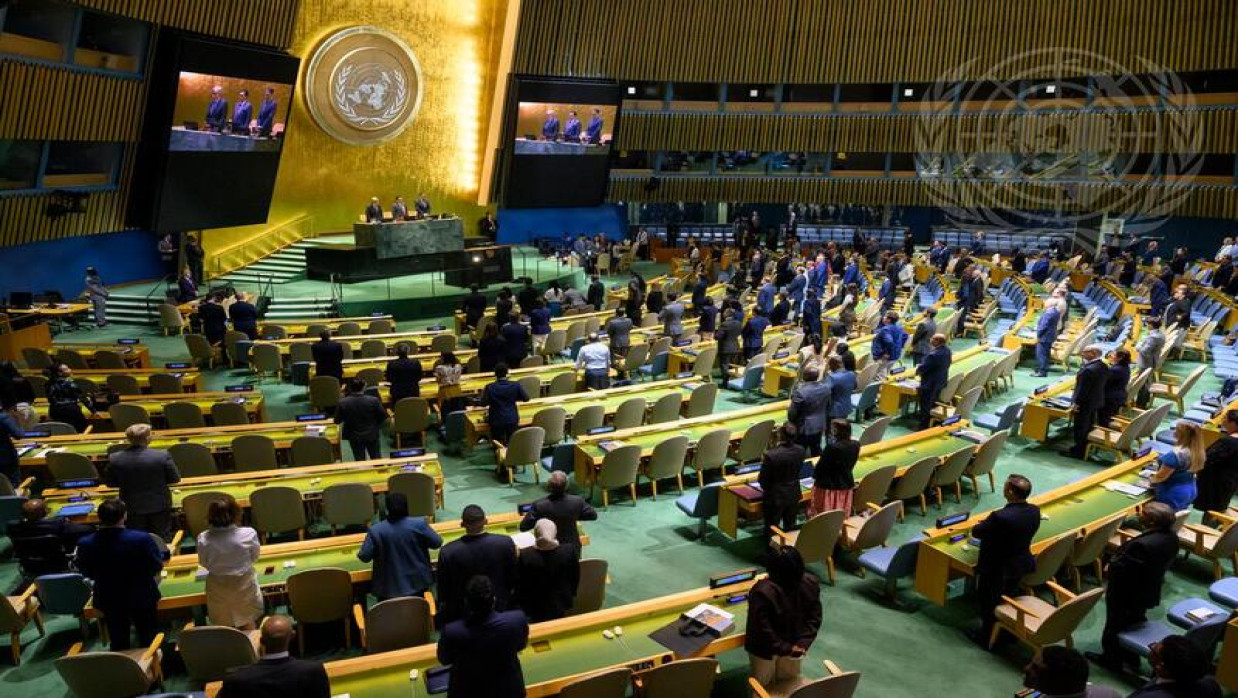
Still, the world's leaders converged in New York this past year to show that maybe the UN isn't finished after all. It wasn't revived, but it didn't die. Presidents, Prime Ministers, Foreign Ministers, diplomats, journalists, NGO leaders, and business magnates all came to the General Assembly. We even saw our first Security Council meeting about Artificial Intelligence, with the likes of Sam Altman and Dario Amodei attending. Which normally would only be about war, peace, and sanctions, or the spread of nuclear weapons. Even Trump used the UN platform like he always has to make threats and deal
That paradox is the essence of the UN today. It is weak where the world most needs authority, but indispensable where the world still needs a common room.
The "World Cup of Diplomacy"
It is called the "World Cup of Diplomacy". I think this is fitting. Almost every country in the world has representatives there. They will meet bilaterally in hotel rooms, mission offices, and hallways. They will meet in side rooms. Smaller countries look for time with bigger ones. Coalitions will try to speak together on an issue. Humanitarian organizations will beg for money. Civil Society will try to push language they hope will make its way into resolutions and documents the world will abide by.
What do we get out of all this? If you go by just enforceable results, then not much. Wars aren't stopped from talking in the General Assembly. When the Security Council deals with issues involving its members or close allies, it deadlocks. Statements are created and broken and lost. There will always be a divide between what is said and what happens.
However, we should never say that diplomacy isn't important. Often, diplomacy means keeping lines of communication open when a solution isn't possible. The United Nations may not be solving our problems, but it keeps us talking. Allows for countries that don't see each other as legitimate to be under one organization. It gives small countries a platform. Can keep the language and information around that could be used if things change.
So calling the U.N. a talking shop is too simple. Talk isn't nothing.
AI Comes to the Security Council
Bringing Artificial Intelligence to the Security Council this year was impressive. Why is that important? For years, the Security Council has addressed threats to international peace and security by using terminology of war and blood. Terrorism, WMDs, and Sanctions. So, by allowing AI to take up space in the Security Council, it shows that technology is becoming a factor that can harm world peace.
Technology such as AI can create autonomous weapons, false news stories, hack elections, and more. We learned at that meeting that countries are still hesitant to put laws on AI. Whether it be the US, China, or Russia. These are three major players in the world of technology, and none want to limit themselves.
This is where the United Nations can be useful and useless. They can discuss these issues and make them a world peace topic. They can sit down with technology companies and speak about these concerns. But when it comes to legislating these topics against powerful nations, we are stuck.
Still, it's good that we are starting to address these issues at the Security Council level.
Trump, Iran, and the Surreal Logic of Diplomacy
One interesting thing about the United Nations is that you can even find your enemy at the building. As seen with the Iranian President coming to New York. It's almost absurd to think that we would provide protection to an enemy country that we may go to war with at some point. But this is how the UN building works. Your host country has to give them entry to its UN building.
This allowed the Iranian president to travel to New York and be surrounded by all the other countries. Showing they can survive. Another example of how we have the power to take down Iran if we wanted to. But also to protect them when they set foot on US soil.
It was said that Trump used strong words towards Iran in his speech. Saying we should wipe them out. One thing he didn't say was that he never threatened the UN. Some people were afraid he might. He stood on the stage and made his statement. Shortly after, American officials met with Iran. Once again, showing us how the UN works. You can stand up and threaten someone, then speak to them afterward.
Not saying what he said is right. But again, it shows why we need the UN.
The Host State Problem
What's wrong isn't just that the US criticizes the UN. Countries around the world criticize the UN all the time, and often rightfully so. What's different about the US is that it isn't just another country that is a member of the UN. It is home to the UN. New York isn't just some city it happens to be located in; it is where the UN takes place.
Through the 1947 Headquarters Agreement, the US should provide access and security to all countries that want to be part of the UN. It should allow all members and their representatives to attend meetings freely. The UN needs to know that the US will do this. Multilateralism isn't just about having agreements and rules in place; it's about allowing people to come together and show up for each other.
Recent events suggest the US may not be doing that. Whether it's preventing Palestinians from getting visas or placing sanctions against those involved with the ICC. The US is showing signs that it may not allow others to have a voice at the UN because of its politics. This is problematic when your country houses the UN.
We need people to be able to physically travel to the United Nations to do diplomacy. Allowing people to show up to a conference or talk to each other in the hallways or at a side event. These are all aspects of what makes the United Nations work.
Executive Order 14199 and the New American Withdrawal
More alarming was Executive Order 14199, signed February 4th 2026, where America decided to pull out of numerous UN bodies. This included 31 different UN organizations. Some are treaty-based, so we need to take more formal steps to leave them. Such as the various climate agreements. Other UN organizations will simply see us cut off relations and funding.
The reasoning is the same as we have seen before. The organization is deemed wasteful and not serving its purpose, or it hurts the U.S. We have seen America pull out of the UN in the past to send a message. In 1984, we pulled out of UNESCO, then again in 2017. Most likely in 2025 as well. Pulled out of the Human Rights Council in 2018. Cut off funding to UNRWA in 2018 and 2024. Many of these decisions came from them being too political or pro-Palestinian/anti-Israeli.
What we are seeing now is taking this one step further. We are pulling out of almost any organization that may not directly benefit America. If it can't give us what we want, then we shouldn't be helping others around the world. It's almost become a right: if an organization isn't giving us something, we should leave.
This can have major consequences on our world. Organizations like the UN exist to help the whole world. Not every problem can be solved by the United States alone. Whether it's climate change, refugees, world hunger, or ocean safety.
Humanitarian Work: The UN's Irreplaceable Role
While we may have issues with the UN's political bodies, we need the organization's humanitarian wing. Whether it's Nepal experiencing flooding, earthquakes hitting impoverished areas, Famine in Sudan, or Palestinians in Gaza who need food and aid. No other entity is like that.
These organizations have aircraft, storage facilities, and outposts worldwide. They have staff on the ground and connections that are hard to come by; if you didn't know better, these agencies could be run better, and they are. But we don't have an alternative.
That is why bashing the UN as a whole can be very detrimental. The UN isn't one entity. Just because the Security Council isn't doing what we want it to do doesn't mean we shouldn't support its humanitarian efforts. People rely on these agencies for help. If America decides to stop donating to many of these UN branches, who will suffer? It won't be the diplomats sitting in New York. It will be those who are affected by these situations.
Could the UN Leave New York?
Legally, the UN is not bound to New York forever. The Charter does not require the headquarters to remain there. The General Assembly established the permanent headquarters in New York in 1946 and implemented it through the Headquarters Agreement with the United States.
Relocating would require a major political push. The General Assembly would have to vote, choose a new location, negotiate a new headquarters agreement, and move from the current location. That would be akin to refounding the U.N. Constitution. We don't see that happening anytime soon.
However, there are other options. We can look to the precedent set by the U.N. when it held its General Assembly on the Palestinian issue in Geneva. The United States refused to grant Yasser Arafat a visa in 1988. Special assemblies have also occurred outside New York. Many of the larger U.N. offices are located in Geneva, Vienna, and Nairobi. We could spread out agencies and personnel to benefit from that.
So the question becomes: should we move the U.N. away from New York altogether? Probably not. But we may want to consider moving some functions related to politics/humanitarian issues and human rights.
Functional Relocation as Leverage
It doesn't have to be grand. Moving parts of the UN functionally is possible. Start with human rights dialogues in Geneva. More development-related topics could take place in Nairobi. Technology discussions can happen worldwide. Emergency Special Sessions can take place away from New York if countries cannot get to the UN.
None of this technically moves the United Nations. But it shifts things. It makes it harder for one country to dictate terms of entry, exposure, and threat to diplomats. And shows that the UN is more than its home location.
The Committee on Relations with the Host Country can begin to identify patterns of obstruction. If the UN is being shut out of certain areas through withheld visas, sanctions, and threats. It should start finding ways to adapt.
Reform Has Failed
The solution to every issue that the UN faces is reform. Reform the Security Council. Limit the use of the Veto. Allow more transparency. Create accountability. Fix the number of UN organizations. Give each organization better definitions. We should reform everything about the UN. But we always run into the same issues.
The Security Council was created for the powers that won WWII. Not for the world we live in today. Africa has no permanent member. Not even close with South Asia. And Latin America has little to no representation at the top. Each permanent member enjoys benefits they wouldn't create for other nations today.
We can keep passing documents like the Summit of the Future and Pact for the Future. These will only do so much. Our biggest problem is that we no longer believe that these laws will restrict powerful nations.
The UN can survive hypocrisy; it has done so since birth. It cannot survive if the world's most powerful states openly abandon the idea that common rules matter.
A Necessary Institution in an Unready World
The UN is not dead. Nor is it healthy. It's a crippled organization that operates in a world with no replacement. It has failed us with Gaza, Ukraine, Sudan, Iran, and so on. We will always fail when power wants to use power. The UN has allowed dialogue between countries to continue. Feed people. Help refugees. Natural disasters: help create norms and provide a platform for all countries to at least hear each other out.
The question is not whether the UN matters. It plainly does. The question is whether member states still believe it matters enough to defend it from slow constitutional decay.
If the host state increasingly treats multilateralism as an enemy of sovereignty, the rest of the world must respond with imagination and firmness. That does not require abandoning New York immediately. But it does require reducing dependence on New York as the almost exclusive center of global political diplomacy.
As we all know, the United Nations emerged from disaster. Countries realized they needed each other because they were destroying each other through unlimited sovereignty. 80 years later, that message seems to be getting lost. We need to look at how we can save what makes the U.N. great. Allow countries to enter, keep neutral ground, allow communication. Have rules and regulations in place for all. If we don't do this, the U.N. could be standing in New York, full of people talking about the same things.
But there will be no more multilateralism in the building.

0 Comments
LEAVE A COMMENT
Your email address will not be published