

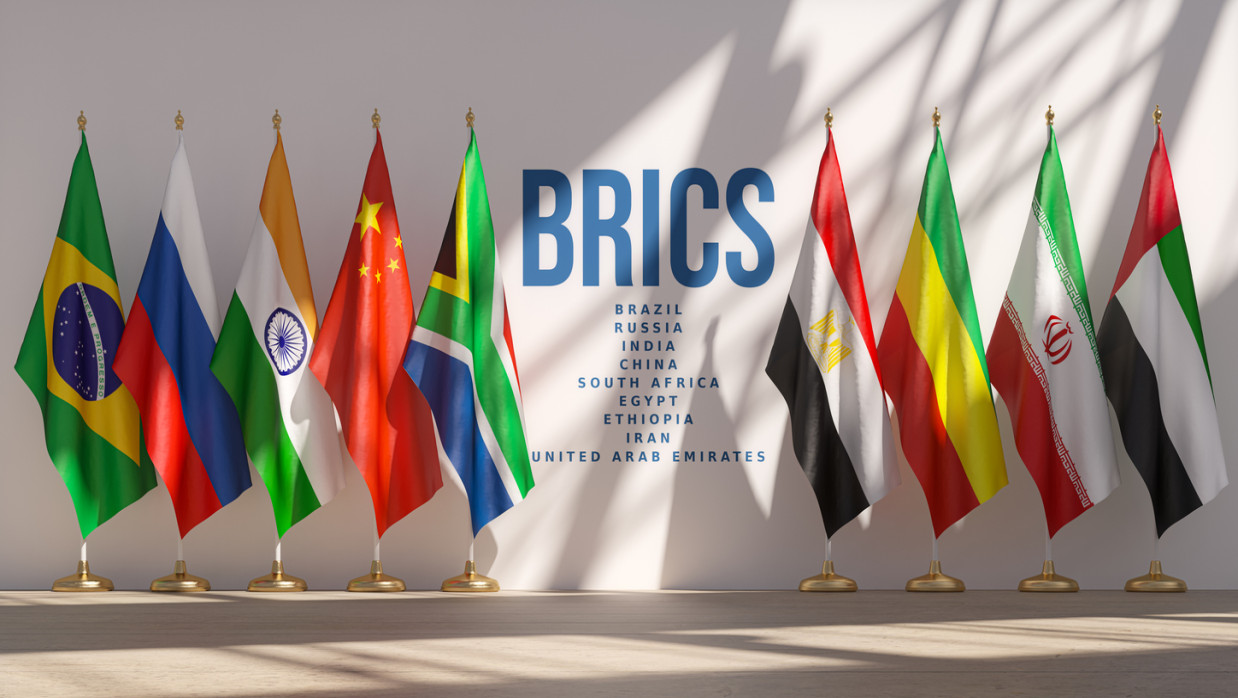
BRICS continues to establish itself as a powerful platform for the Global South as geopolitical rivalries escalate and established multilateral organizations find it difficult to adequately address new global issues. In light of this, the 16th Meeting of BRICS National Security Advisers (NSAs) and High Representatives on National Security, which took place before to the BRICS Summit in September 2026, has importance that goes beyond standard diplomatic discussions. In addition to highlighting the topics that are likely to dominate discussions at the leaders' summit later this year, the conference provided significant insights into the bloc's changing strategic goals.
BRICS was once a coalition of five emerging economies, but with its expansion in 2024, it has evolved into a larger group aiming to have more influence in global governance. The bloc's political variety, demographic reach, and economic strength have all increased with the addition of new members. But it has also made it more difficult for nations with different regional interests and strategic perspectives to come to an agreement. Therefore, before leaders meet in September, the NSA meeting provided a crucial forum for aligning stances and identifying areas of shared concern.
One issue that has dominated discussions in this grouping in recent years is the increasing focus on strategic autonomy. In response to long-standing discontent with institutions thought to be controlled by Western powers, BRICS members reaffirmed their commitment to a more representative and equitable international order. BRICS discourse now frequently includes calls for change of the UN, international financial institutions, and global decision-making processes. However, the contemporary geopolitical and geo-economic challenges of the world have made these demands much more urgent.
Various challenges to global economy with increased fragmentation in world order, growing great power contestation, strict export controls and sanctions have reinforced concerns among BRICS members regarding the vulnerability of developing countries to external pressures. National security advisers discussed ways to make crucial supply lines, trade, banking, and technology more resilient. These discussions are expected to influence the September summit's agenda, where leaders may try to promote doable policies meant to lessen reliance on current Western-dominated institutions.
During the discussions, security cooperation was also a major point. Although BRICS is not a military alliance, the bloc's agenda has grown more focused on security issues. The emergence of new threats with regard to emerging technologies, organized crime, cyber threats, and transnational terrorism has encouraged member states to work together more closely. BRICS has progressively increased collaboration in areas including cybersecurity governance, counterterrorism discourse, and information sharing in recent years. The NSA meeting highlighted an increasing awareness that many security issues cross country boundaries and need for cooperative solutions. At the summit in September, cybersecurity in particular is anticipated to continue to be a major concern. BRICS countries want more control over the standards and regulations regulating emerging technologies as AI, digital infrastructure, and data governance become crucial to both economic and national security. As a result, the leaders' conversations may focus heavily on topics like technology cooperation and digital sovereignty.
Another notable aspect of the meeting was the continued focus on conflicts affecting global stability. BRICS members have continuously supported dialogue, diplomacy, and negotiated solutions, even though they do not always agree on important geopolitical issues. For BRICS nations, the ongoing crises such as in the Middle East, continue to have serious strategic and economic ramifications. Emerging economies within BRICS have been excessively impacted by rising energy costs, interruptions to food supplies, and unpredictability in international markets. As a result, BRICS countries are increasingly framing regional crises as problems with wider repercussions for global security and development rather than just local disagreements. As a result, the September summit is probably going to highlight the importance of inclusive diplomatic processes, respect for sovereignty, and conflict resolution.
Economic cooperation is one of the defining features of this grouping. The bloc's main advantage is still its economic potential, even as geopolitical concerns are receiving more attention. Together, the BRICS nations make up a considerable portion of the world's population, trade, and GDP. Recent initiatives to deepen development funding arrangements, increase the significance of local currencies in trade, and broaden financial cooperation show the group's desire to have a bigger say in how the world economy develops.
For the Global South, the significance of the meeting extends beyond BRICS itself. The bloc is seen by many developing nations as a possible means of elevating their voices in global issues. BRICS has developed into a significant platform for rising nations to coordinate stances on global governance issues, despite the fact that it is still not a fully unified. The group's growth is indicative of a larger trend in international alliances toward diversification and an increasing need for alternatives to established power structures. Expectations should be reasonable, though. There are several internal issues facing BRICS. Attempts to develop cohesive stances are frequently hampered by disagreements among members over matters of regional security, economic objectives, and relations with major powers. The group is now more representative as a result of its enlarged membership, but reaching an agreement has become more challenging. It is still unclear if BRICS can convert common goals into tangible policy results.
As a result, the September summit will be a crucial test of the bloc's capacity to go beyond rhetoric and produce significant results; success will depend not only on articulating a vision for a multipolar world but also on demonstrating institutional capacity and political cohesion. The foundation established during the 16th NSA meeting indicates that member states are aware of this challenge and are looking for realistic areas of cooperation where consensus is achievable. Policymakers worldwide will be keeping a close eye on the path leading up to the September summit as the international system undergoes significant change. The longevity of the BRICS alliance as well as its wider contribution to the changing framework of global governance will depend on its ability to translate its increasing power into significant group action.

0 Comments
LEAVE A COMMENT
Your email address will not be published