

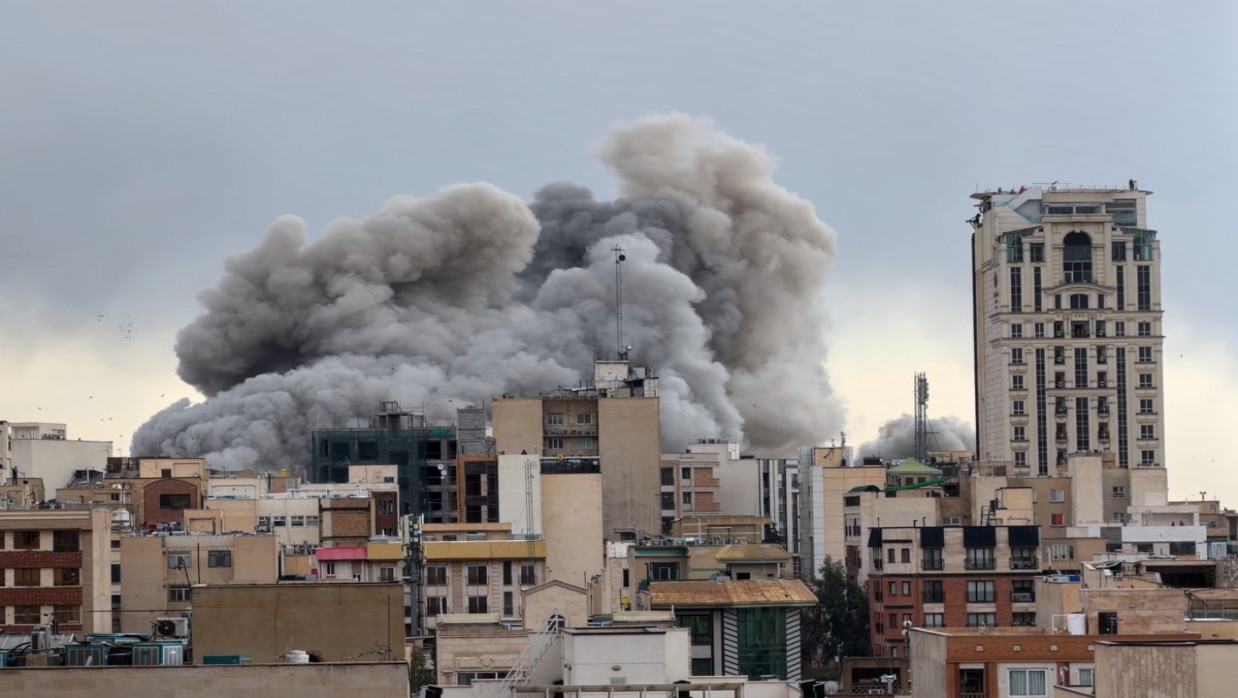
The Iran–US Confrontation and the Reshaping of Global Order
The crisis that is developing between Iran and the US is not just another proxy battle for regional dominance in the Persian Gulf. It is also the manifestation of deeper structural tensions between these countries on the global stage, including military, economic, ideological, and even civilizational ones. Looking ahead, we should also recognize that the outcome of this conflict could hasten the shift from a unipolar to a multipolar world order, one increasingly contested.
For that reason, this crisis should be examined from both a tactical and a strategic lens, analyzing not just the battles themselves but also doctrines, alliances, and global trends.
Divergent Military Strategies
Operationally, we've seen escalation on what feels like old military video game tape: surgical attacks on political leadership, critical infrastructure decapitation, economic punishments, etc., aimed at creating fissures in Iranian civil order. Remember when Shock and Awe was supposed to topple Saddam in days?
Iran's playbook has been decidedly different from the cookie-cutter approach the US and regional allies have taken over the past decades. Rather than meeting fire with fire, Tehran has focused on applying asymmetric leverage against vital pressure points: bases, alliance threads, and energy focal points. Iran has real weapons when it comes to using chokeholds on the Strait of Hormuz, through which all Persian Gulf monarchy tankers funnel. Not only oil, but also their imported freshwater passes through Hormuz. Experts are hoping that Iran understands all too well the global ramifications of cutting off the world's oil supply, and sees maximum economic damage as the best offense.
Geography and Political Will as Strategic Assets
Military strength is not determined solely by technology or airpower. Iran's geographical mountainous terrain, dispersed infrastructure, and internal cohesion create formidable barriers to any large-scale invasion. Estimates suggest that a successful ground campaign would require hundreds of thousands, possibly millions, of troops, an undertaking politically untenable in the United States today.
Equally important is domestic political will. While war fatigue has eroded support for overseas interventions in the United States, external pressure tends to reinforce national solidarity within Iran. Civilian casualties and sanctions have historically strengthened nationalist sentiment rather than weakened it.
This asymmetry in political resilience may prove decisive over time.
The Crisis and the End of Unipolarity
The confrontation also reflects a deeper transformation in global geopolitics. Since the end of the Cold War, the United States has exercised unparalleled strategic influence across Eurasia. Yet recent developments, including Russia's resistance in Ukraine and the consolidation of alternative economic blocs, suggest the erosion of that dominance.
Seen through the lens of the Mackinder "Heartland" thesis, control of Eurasia remains central to global power. Preventing the emergence of a unified Eurasian coalition linking Russia, China, and Iran has long been a cornerstone of Western strategy. However, growing cooperation among these states indicates that the unipolar moment may already be fading.
In this context, the Iran confrontation becomes less a regional dispute and more a symptom of systemic transition.
Vulnerabilities of the Gulf Alliance Structure
One of the most significant consequences of prolonged conflict could be the weakening of the US–Gulf Cooperation Council (GCC) security framework. Gulf monarchies depend heavily on uninterrupted energy exports and desalinated water infrastructure, both of which are vulnerable to disruption in wartime conditions.
If Washington is unable to reassure its regional allies about maritime safety, accommodation with Iran becomes an option. As realistic as it may sound, this would mean a shift in the power equation in West Asia.
It would send shockwaves through energy markets, sea lanes, and global monetary currents.
Economic Shockwaves and the End of Cheap Energy
Energy remains the central axis of the conflict's global impact. Rising oil prices—already approaching critical thresholds could trigger cascading effects across industrial production, transportation networks, and food supply systems.
Countries most dependent on globalization and inexpensive energy inputs, including the United States, China, and Germany, are particularly vulnerable. As supply chains fragment and transportation costs rise, regional economic blocs may increasingly replace global integration.
Such shifts would mark a structural transformation comparable to the oil shocks of the 1970s—but on a wider scale.
Nationalism, Remilitarization, and Fragmentation
Apart from economic consequences, the war will likely hasten political changes already underway. Heightened insecurity will embolden nationalist sentiments and expand military budgets. Nations dependent on economic cooperation may shift their focus to self-reliance.
The result could be a world characterized by regional security systems rather than global alliances, a return, in some respects, to pre-globalization geopolitical patterns.
This trend is visible not only in West Asia but also in Europe and East Asia, where defense budgets are rising, and supply chains are being restructured along strategic lines.
Ideology, Religion, and Strategic Calculations
One less-discussed aspect of the conflict has been ideological and theological motivations. In certain political spheres within the region and internationally, there is the belief that this struggle goes beyond territorial or political concerns. Some view the conflict in zero-sum terms as part of a historical or even apocalyptic battle.
Beliefs such as these make it more difficult to attain peaceful solutions. If parties to the conflict view themselves as actors in a larger battle between good and evil, the room for negotiation diminishes and the potential for escalation increases.
This reality helps to explain otherwise perplexing policy choices.
A Turning Point in Global History
The Iran–US showdown is more than another Middle East crisis. It marks an acceleration of four long-term trends: diminishing unipolarity, strengthening regional blocs, energy insecurity, and the return of nationalism.
If it escalates or stabilizes, the showdown's impact will be felt for years. The emerging world order is unlikely to resemble the one that dominated the late twentieth century. Instead, it may be defined by competition among regional powers, contested trade routes, and shifting ideological alliances.
In this sense, the confrontation is not merely a regional event; it is a marker of transition in the structure of global power itself.

0 Comments
LEAVE A COMMENT
Your email address will not be published