

MELISSA CONLEY TYLER
A year ago, one of the first acts of the incoming US administration was to gut America’s foreign aid.
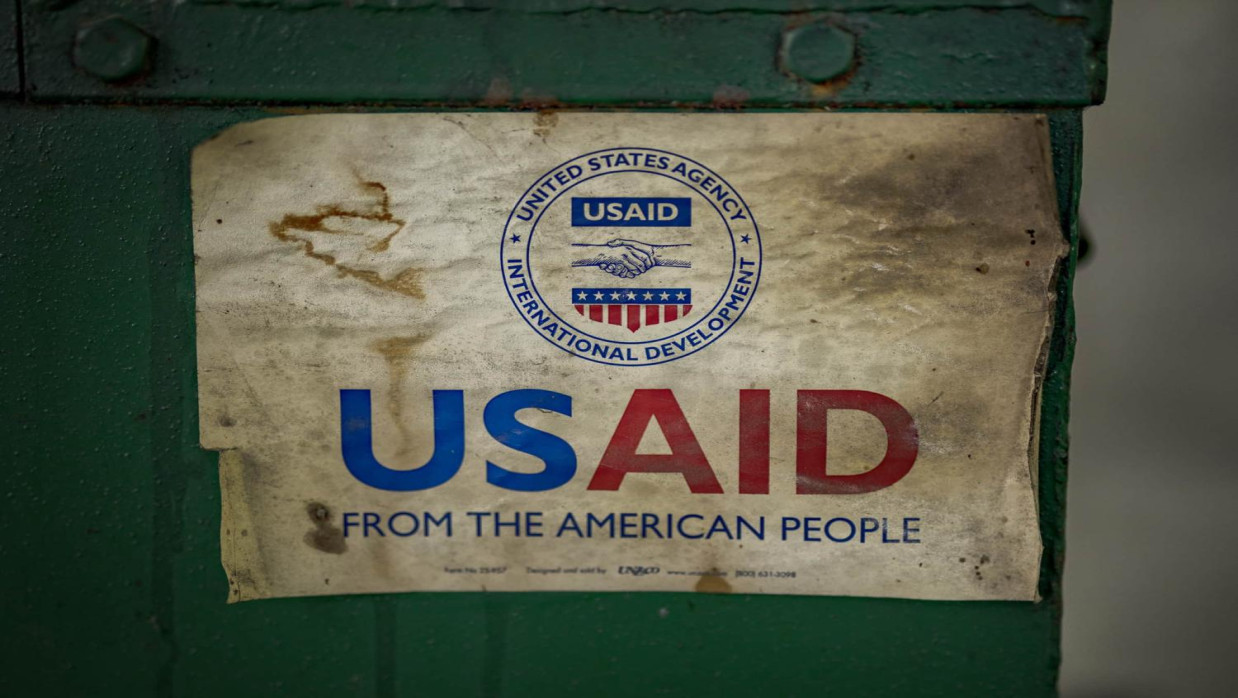
From the prior Trump administration, cuts to areas like climate change and reproductive health were expected. But President Trump went much further, signing an executive order on 20 January to freeze foreign assistance. Stop-work orders were issued and, following review, more than 80% of programs were cut and the US Agency for International Development (USAID) was closed.
At the time, I predicted three things: that people would die, that the world would become less fair, and that US soft power would suffer. So, has this happened?
First, we know that the sudden withdrawal of foreign assistance caused deaths and suffering. Programs that delivered food, clean water, antiretroviral medication and vaccines stopped, affecting the most vulnerable. The first fatality documented by Western media was a woman in a US-funded hospital on the Thai–Myanmar border. A study published in The Lancet estimates there could be more than 14 million additional deaths due to USAID cuts.
Second, we know that inequality has increased, with a dramatic impact on individual lives. I saw this in person when visiting Timor-Leste, where the United States had funded a school lunch program. In a country where one in two children under five is stunted – not getting enough nutrition to grow in their early years – cuts will have ripple effects through generations, in lifetime health, education and productivity. The same ripple effects will follow from cutting US programs on malaria control in Myanmar, tuberculosis in Indonesia or landmine removal in Vietnam.
These long-term impacts mean that aid cuts are not just a problem now. The cuts are also storing up problems for the future. Broken health systems lead to drug-resistant diseases and pandemics. Climate and government collapses lead to migration crises. Cumulatively, the impact of aid cuts is greater instability. Dealing with a full-blown security crisis is far more expensive than the small amounts of development funding that help prevent it from happening – which is what makes these cuts so self-defeating.
What I didn’t predict a year ago is that the US cuts would seemingly make it easier for so many other countries to follow.
Third, we know that the Trump administration’s demolition of its development program has affected perceptions of the United States, eroding decades of trust and partnership. Because it has vacated the field on the issue that poorer countries care most about – development – the United States has less influence on issues it cares about, such as technology adoption, trade partnerships and voting in international fora. The impact of this self-inflicted damage will be long-term.
More broadly, in vacating the field the United States has played into narratives about the unreliability of the West promoted by countries such as Russia and China. However, this doesn’t mean that other countries have stepped in to take on the US role.
China was never going to fund the sort of programs the United States supported in areas such as women’s rights, democracy promotion or a free press. But it also doesn’t appear to have stepped up to fund other programs to any great degree, with the China International Development Cooperation Agency not publicising any takeover of former USAID programs. China works through different mechanisms, but the absence of the United States helps it be seen as a trusted partner.
What I didn’t predict a year ago is that the US cuts would seemingly make it easier for so many other countries to follow. In the last year, there have been massive cuts by the United Kingdom, France, the Netherlands, Belgium and others, continuing Europe’s turn towards cutting development for defence. This makes as much sense as taking money from preventive health care to fund emergency units.
It is to Australia’s credit that it has not followed the US lead, with sensible policymakers seeming to recognise that, as a nation surrounded by low- and middle-income countries, Australia cannot cut its development budget without enormous reputational, diplomatic and strategic damage. Instead, Australia is projecting itself as a reliable, steadfast development partner to the region.
I also didn’t predict that the collapse of the system of international development would be two-speed: first sudden, then slow. When the stop-work orders were issued, local organisations that were already owed funds reacted immediately, sacking staff or ceasing operations. But we haven’t seen many international development NGOs go out of business, even though they have terminated the contracts of thousands of staff. So even though we are living through a transformation – with a projected reduction in global aid of 25–50% – this is less visible.
In terms of the transformation, perhaps the clearest indicators were at the 2025 United Nations International Conference on Financing for Development, held only once a decade. Unlike previous events, its focus had moved away from official development assistance to innovative financing, such as mobilising private sector finance for development, and to issues of demands for system change including debt relief, global tax reform and stemming illicit financial flows.
So, a year after Trump’s freeze on foreign assistance, we are all losers. Immediate victims include US soft power, aid workers who dedicated their careers to international development and, most of all, those in developing countries whose lives were already so difficult. In the longer term, we’ve stored up future insecurity for all in the form of countries that are poorer and more unstable.
It’s a cautionary tale for anyone who thinks that foreign aid cuts are “costless”.
The article appeared in the lowyinstitute.
0 Comments
LEAVE A COMMENT
Your email address will not be published