

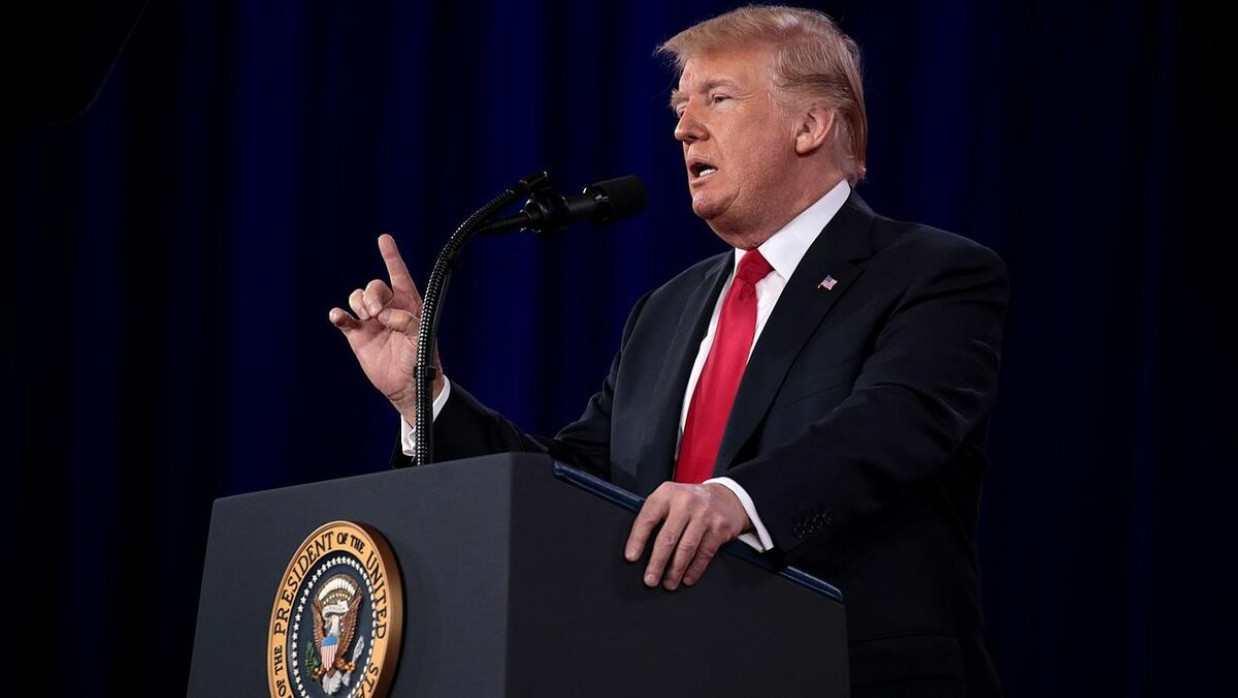
Donald Trump did not emerge from a vacuum. He is not an aberration, nor an accident of history. He is a reflection of an exposure of a deeper American psyche forged over centuries of conquest, exclusion, and selective democracy. To understand Trump is not merely to examine a man or a movement, but to confront the long and often uncomfortable history of how power has been defined, defended, and exercised in the United States.
America tells itself a comforting story: that it was born out of freedom, equality, and democratic ideals. But history, when read honestly, tells a far more complicated and troubling story. Trumpism is not a betrayal of American values; it is a product of how those values were historically limited, conditional, and enforced through violence.
The Origins of American “Freedom”
“Freedom” is perhaps the most powerful word in the American political vocabulary. It has inspired revolutions, justified wars, and shaped national identity. But from the very beginning, freedom in America was never universal. It was selective, racialized, and closely guarded by elites.
Before independence, Indigenous peoples were dispossessed, displaced, and often exterminated to make room for European settlers. Their humanity was denied in both practice and law. This foundational violence was not a side effect of nation-building; it was a prerequisite.
After independence, the contradiction deepened. The Declaration of Independence proclaimed that “all men are created equal,” yet the society that embraced those words denied freedom to women, enslaved Africans, Indigenous peoples, and the poor. Freedom was defined less as dignity or security and more as freedom from interference, especially interference with property and wealth.
Democracy Contained: Fear of the People
The American Revolution did not immediately produce a strong federal government. Under the Articles of Confederation, power was decentralized and weak. This arrangement suited elites, but it did not suit ordinary people, especially farmers and veterans burdened by debt and heavy taxation.
In 1786, only five years after the Revolutionary War ended, Massachusetts farmers, many of them war veterans, rose up under the leadership of Daniel Shays. They forcibly shut down local courts to prevent debt collection, tax enforcement, and the foreclosure of their farms. This was not a polite protest; it was a direct disruption.
The ruling class's reaction was fear. The lesson drawn by elites was not that the system had failed the people, but that the people themselves were dangerous.
The next Constitution did not attempt to unleash democracy. It was designed to contain democracy. The Electoral College, the Senate, and lifetime judicial appointments were designed as dams on popular will. Voting rights were limited to white men with property. Women did not vote. The poor did not vote. Enslaved people were counted to give the South more representation in government. They were not given rights.
It was not an accident. It was a design.
Expansion for Some, Destruction for Others
The limits on suffrage were chipped away at in the early 19th century, but expanded first and foremost for poor white men. The “democratization” of the American political system was built on bloody violence against other groups. Andrew Jackson “democratized” America for some by forcibly displacing Native American nations from their lands, subjecting them to a campaign of ethnic cleansing on the Trail of Tears.
Freedom, once again, was not universalized. It was redistributed. The expansion of political power for one group required the violent destruction of another.
Democracy, with teeth
Following the Civil War, the United States came closer to realizing a real democracy for a moment during Reconstruction. Black men were voting. Nearly 2,000 Black Americans served in public office at the local, state, and federal levels.
That progress was reversed within a decade through lynching, terror campaigns, voter suppression, and coordinated white violence. The federal government stood on the sidelines for the most part. Democracy was fragile. And those who were its enemies learned something important that worked: violence worked.
When coups are called “history.”
In 1898, white elites in Wilmington, North Carolina, overthrew a democratically elected, interracial government through a violent coup. Black citizens were murdered. Elected officials were forced out of office at gunpoint. White newspapers promoted the legitimacy of the bloodshed. The federal government did nothing.
The message could not have been clearer. Democracy could be overthrown. Violence could be normalized. And history would roll on. There would be no reckoning. There would be no accountability. Power that had been taken through terror would be quietly written back into legitimacy.
This playbook was not retired. It was repurposed in the violent crushing of labor movements, the FBI surveillance and assassination of civil rights leaders, and the regular use of the tools of the state to police and punish dissent. Rights were inscribed on paper. In practice, they remained always conditional, always revocable when they started to challenge concentrated power.
The myth survives as the substance erodes
By the end of the 20th century, America was propelled into the modern era, with the myth of democracy intact but its substance hollowed out. Economic power consolidated upward. Billionaires gained political power far beyond their share of the population. Lobbying groups representing corporate, military, and foreign policy interests rewrote the rules governing legislation and elections.
Voting rights and protections were whittled down. Districts were gerrymandered. Courts rewrote rules to favor the influence of money and power. Citizens could vote, but in practice, their votes counted for less.
Democracy was not overthrown in the streets. It was hollowed out institutionally.
State power and disposable lives
This context matters. It matters because episodes of state violence are not aberrations. They are part of a long tradition of state violence. When federal agents conduct aggressive operations on civilian streets, when accountability is either absent or delayed, when victims are spoken about as if their humanity is secondary to “law and order” or not valued at all, then history resonates.
Reports that Renee Nicole Good was killed by a federal (ICE) agent in Minneapolis this month, described by eyewitnesses and the family’s legal advocacy team as an unjustified, close-range shooting, fit into that pattern. The legal case may go either way in court. A more important moral question is how lightly and how frequently state power turns lethal. And how often are marginalized lives treated as disposable?
America has always been grappling with that question: freedom for whom and at what cost?
Trump is a symptom, not the disease
Into that weakened, distorted system stepped Donald Trump. He did not create American authoritarianism. He inherited it. He stoked it.
Trump did not shatter American democracy on January 6, 2021. He tested a structure that had been hollowed out for decades. The assault on the Capitol was not a break with history. It was a continuation. Certification of the vote was not stopped. But the moment cannot be undone. It revealed how close the system really was to the breaking point.
You do not need tanks if you control the institutions. You do not need to cancel elections if you can decide which votes count and which do not. You do not need to abolish democracy if you can redefine it.
Trump’s flouting of the law, norms, and international order is a mirror of a long-standing American hypocrisy and willingness to bend rules when power and interest demand it, whether in other countries or here at home.
Editing history to preserve comfort
So much of American history has been edited to preserve comforting myths. Violence is sanitized into “order.” Coups are relabeled “incidents.” Exclusion is normalized into “tradition.” Once the cracks appear in that history, one can never return to the previous comfort of ignorance.
This is not about hating America. This is about refusing to defend illusions at the expense of truth.
Democracy was never something the United States simply inherited from the founders. It was always something fought over, resisted, suppressed, taken, and re-taken over and over again. Every expansion of rights was a struggle, often paid for with blood.
Telling the truth is a democratic act
If democracy is to survive in the United States, it will not be saved by nostalgia or slogans. It will be saved if at all by truth. By telling history honestly. By recognizing that freedom has often been weaponized against others instead of shared with them.
Trump is not the culmination of a story. He is a mirror held up to it.
The question is not whether America can go back to an imagined past. The question is whether the country is willing, at long last, to deliberately build a democracy. Built not on myth. But on dignity, accountability, and equal humanity.
And that begins with telling the truth.


0 Comments
LEAVE A COMMENT
Your email address will not be published