

 History often speaks not only through wars and treaties but also through carefully staged performances of states. These performances tell the story of struggle, sacrifice, evolution and resistance. This September, China demonstrated its power to the world in two different versions. The first version was in the language of cooperation and multipolarity, and the other version emphasized the steel of missiles, jets, and marching columns. The 25th Shanghai Cooperation Organisation (SCO) Summit in Tianjin and the Victory Day Parade in Beijing were not simply events on a calendar; together, they represented China’s progressive philosophy of statecraft with a delicate blend of soft power and hard power in managing international politics.
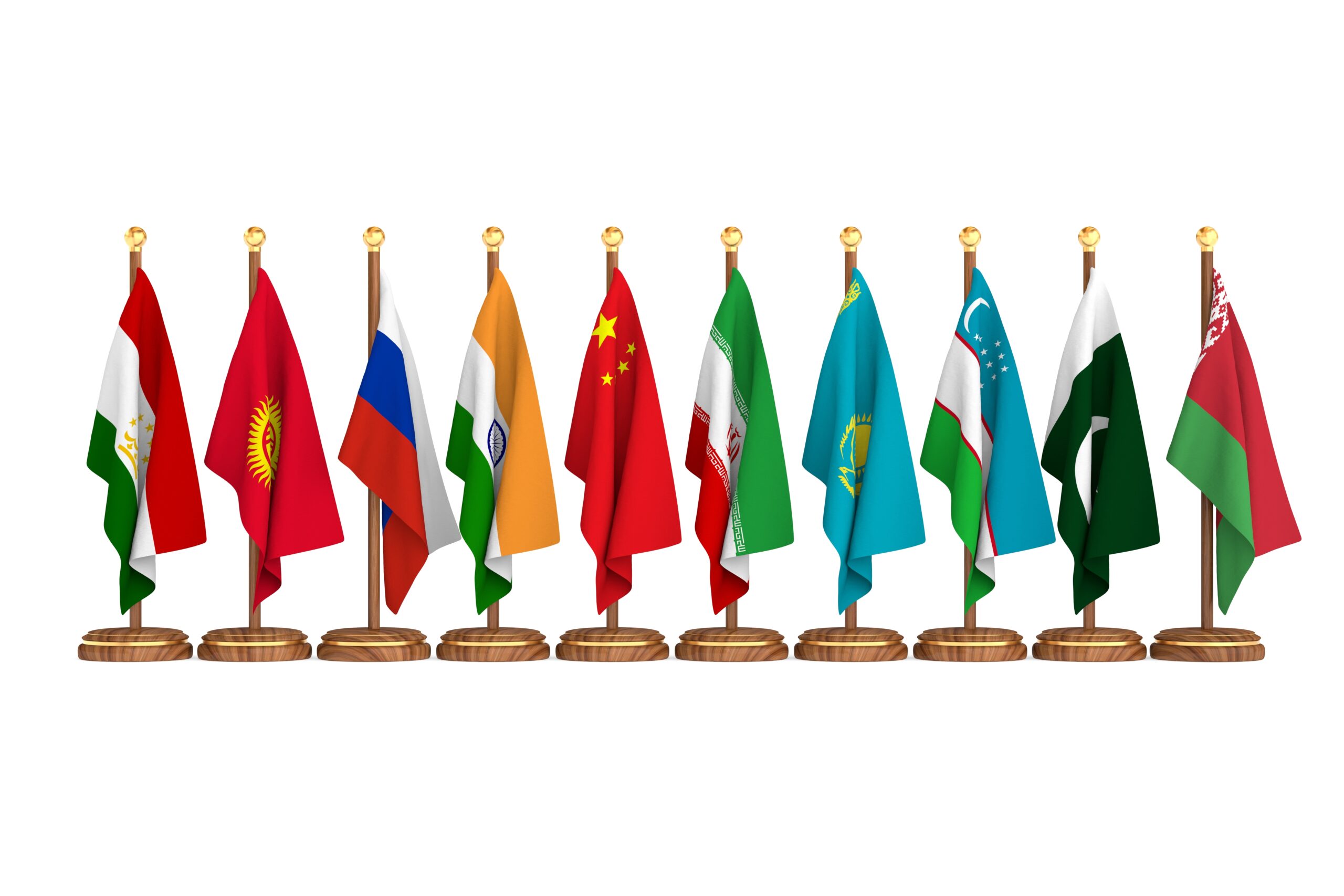
The soft power version of China was depicted through the 25th SCO Summit in Tianjin, which hosted more than 20 heads of state across Asia, Europe, and Africa, along with members of different international organizations. The SCO started its journey in 2001 as a regional organization of six member states, and within a quarter of a century, it expanded into one of the world’s largest regional organizations with an economic output of approximately $30 trillion. Through this inclusivity, the summit tried to project something larger, which is the possibility of an alternative governance model outside the Western dominance.
China’s hosting of SCO 2025 was all about trade, development, cultural exchange, security cooperation, and an eastern alternative to the Western-dominated global order. This ambition has been outlined through the adoption of the Tianjin Declaration and a development strategy until 2035, reflecting the organization’s goals to expand its presence across Eurasia through developing economic, security, and technological frameworks. SCO Development Bank, along with the proposal of the Joint SCO Bond, aims at reducing dependence on the Western dollar, which is quite an attractive option for many nations of the Global South, particularly after the increased Tariffs by the U.S administration. Furthermore Information Security Centre and the Anti-Narcotics Coordination Mechanism are a few other examples of practical agendas to build resilience through cooperation.
A shift in diplomatic configuration has also been witnessed in this summit through Turkey’s participation. Being a NATO member, Ankara’s approach showed the agility of states in a multipolar order where alignment is fluid, not fixed. For China, Turkey’s engagement legitimized the SCO as more than a regional club; rather, it became a platform where Euro-Atlantic and Asian worlds intersect.
Putin, too, seized the stage to reframe the Ukraine crisis not as Russian aggression, as the western countries called it, but as a Western provocation, reminding the audience of the SCO’s role as a counter-narrative to Euro-Atlantic discourse. In this sense, the Tianjin summit was not only about cooperation but also about intellectual resistance to Western monopoly over defining global crises.
Military parades are theater, but in China, they are also philosophy and turned them into living symbols of national strength, institutional confidence, and global ambition. This year’s parade on 3rd September continued a tradition that began with the 2015 commemoration of the World War II victory, carried through the 2017 PLA anniversary at Zhurihe, and consolidated in the 2019 National Day parade. Each event has been more than ceremonial. They showcased China’s evolution from an importer of foreign arms to a producer of indigenous systems ranging from stealth fighters to intercontinental ballistic missiles and spaced based assets.
The 2025 parade left no ambiguity. By showcasing all three legs of the nuclear triad (land, sea, and air-launched nuclear forces), China has signaled consolidation of its nuclear capability. The spectacle included air-based long range missiles, submarine-launched intercontinental missiles, and land-based intercontinental missiles along with showcasing conventional capabilities hypersonic anti-ship missiles, unmanned underwater vehicles, and cyber-enabled defense systems demonstrating not only deterrence but also the capacity for offensive operations. The parade hosted more than 25 foreign leaders, including Vladimir Putin and Kim Jong Un, who were seen at the center of the event with President Xi. Many other Southeast Asian, and European leaders also attended this event. This imagery was choreographed crafted to showcase China’s Influence.
Both the SCO Summit and the Victory Parade represent two facets of China’s diplomatic posture. The first emphasizes multilateral dialogue, economic cooperation, and development as shared good; the second reemphasized this cooperative posture with formidable force. In Tianjin, China, invited nations to imagine a world where institutions are not dollar-dependent and rules are not Western-centric. In Beijing, it displayed the weapons that could complicate U.S. dominance in the Pacific. In terms of strategy, both developments (SCO expansion and China’s military modernization) are not detached from each other but complementary. The SCO gives China a diplomatic forum that could be supportive in other international forums, and the military parade represents national confidence rooted in institutional stability. The juxtaposition of summit and parade crystallized the era of multipolarity.
For countries like Pakistan, Iran, and Central Asian Republics, these two events provide reassurance in China’s capability as a reliable partner while causing unease for the U.S partners in the region. For the U.S, this signaling is less about balancing and more about actively reshaping the global order in China’s favor. One of the reasons for this anxiety is that in the past, China kept its military profile relatively low; however, in 2025, the blend of hard power and soft power was quite explicit and it will more likely set the tone for QUAD summit which will be hosted by India this year.
China’s execution of summit and parade poses a question to the world: can power be both cooperative and coercive at the same time? The answer, perhaps, is that it already is. International politics has never been about the absence of force but about how force and legitimacy are balanced. Rome offered bread and circuses; the U.S. offered Marshall Plan and carrier groups. China now offers development banks and missile parades. China’s twin displays in September are not coincidental. They are deliberate, crafted signals of how Beijing envisions its place in the 21st-century order. The SCO Summit embodied the soft power of convening and cooperation, offering the Global South an alternative path. The Victory Parade embodied the hard power of deterrence and discipline, warning rivals of the costs of resistance. In the end, it is clear that China has mastered the art of sending two messages at once: one to the mind, the other to the nerves.


0 Comments
LEAVE A COMMENT
Your email address will not be published