

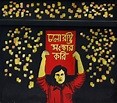

In recent times, the liberated and a much-buoyed BNP, has filled the air, demanding election in December 2025 for they are somehow convinced that an election in December 2025 is a guaranteed victory for them. BNP fears that a late election would tear into their self-perceived notion of “popularity.” Coincidentally, Bangladesh’s neighbour India, which is taking more-than-normal interest in the internal affairs of Bangladesh is echoing BNP and demanding early election in Bangladesh.
However, other major political parties such as the Jamaat E Islam are more flexible – they prefer an election a little later, in June 2026. Others, especially the ordinary citizens prefer the Yunus-led Interim Government (IG) to stay longer, if necessary, for another five years.
Buried under these debates on election date and the tenure of the IG is the key issue of the circumstances that brought in the seat of the government the Yunus-led interim government and their expectations.
To appreciate the “expectations” vis-à-vis the IG it may be helpful to explore the backdrop against which and/or, the processes that contribute formation of governments.
Processes of Formation of Governments and Expectations
Broadly speaking, governments are formed in two ways – constitutional and circumstantial.
We all know that the ‘constitutional’ governments that are formed through constitutional means such as elections are expected to implement pre-determined mandates/pre-election pledges.
Whereas ‘circumstantial’ governments that are the products of unique circumstances such as revolutions, uprisings etc. are not tied to any pre-determined pledges but are installed to fulfil aspirations of those who steer the change and install post-change governments.
Yunus-led Interim Government and Aspirations for a “Better Bangladesh”
In the context of the above it is imperative that the Yunus-led Interim Government, a ‘circumstantial’ government, a product of an uprising that does not have a predetermined mandate to implement. Instead, the leaders of change aspire to journey from an autocratic to a democratic, from a kleptocratic to a corruption free “better Bangladesh.” More specifically, Uprisings aspirations include but not limited to: (i) re-invention of democratic norms, values and practices; (ii) corruption free society; (iii) restoration of full spectrum of human rights including freedom of speech; (iv) equitable distribution of resources; (v) resurrection of degraded moral values; (vi) a rule based society; and (vii) fair trial and conviction of those who committed crimes against humanity.
The IG has since commissioned and produced six reform reports and if implemented properly, these reports/proposals have the potential to improve democratic practices including free and fair elections, greater gendered participation in legislature and thus in governance, and improved transparency and accountability and thus curb corruption in the public sector etc. in the country.
In addition, IG has also initiated trials of leaders of the deposed government including that of the deposed Prime Minister Shiekh Hasina on charges, of crimes against humanity and corruption – a key expectation of the Uprising.
These are steps in the right direction, but question may still be asked as to whether these are enough to fulfill the key aspiration of the July/August 2024 uprising – creating conditions that would help Bangladesh to journey to an abuse free and corruption free, moral Bangladesh? Maybe not.
Prevent crooks: the unmet correction
While improved accountability measures including the free, fair and competitive elections would most certainly guarantee a more accountable democratic transition, by no means are a guarantee that the political parties and the politicians – the future guardians of governance – would be men and women of integrity and uphold the highest standards of democratic norms, values and norms in governance.
For example, a recent UN study on corruption has revealed that world’s best systems fail if the systems are not run by people of merit and of integrity.
The said UN study has further revealed that regardless of how good a system is, if crooks are running the system, the system will be crooked.
Thus, reforms for free and fair elections for democracy and good governance must also include special measures that have the potential to ensure that political parties themselves adhere to the highest standards of transparency, accountability and morality and that the party leaderships are made of people of highest moral values and of merit.
In the context of the above, it is important that IG’s good governance reforms also include measures that would keep the system clean and more importantly, prevent crooks from entering the political system, for example by making it: (i) mandatory for all registered political parties to share information of financial and material assets including sources of funding, annual budget and expenditure through their websites and subject the party finance and transactions to yearly independent audits and audit findings made public; and (ii) secondly, introducing provisions whereby, the office bearers of the political parties, virtually the future governing leaders of the country, are made to go through rigorous integrity checks, financial and otherwise prior their election/selection to these positions, thus ensuring that only the men and women of integrity make up the leadership of the political parties and thus the future governing leaders – both in government and in opposition – of the country, .
Thus the reforms listed above that are key to maintaining the integrity of political parties and their leaderships and thus the future governance of Bangladesh are a sin qua non keep politics and political leadership abuse and corruption freest and must be put in place before the general elections, which as per the Chief Adviser, is due in April 2026.


0 Comments
LEAVE A COMMENT
Your email address will not be published