

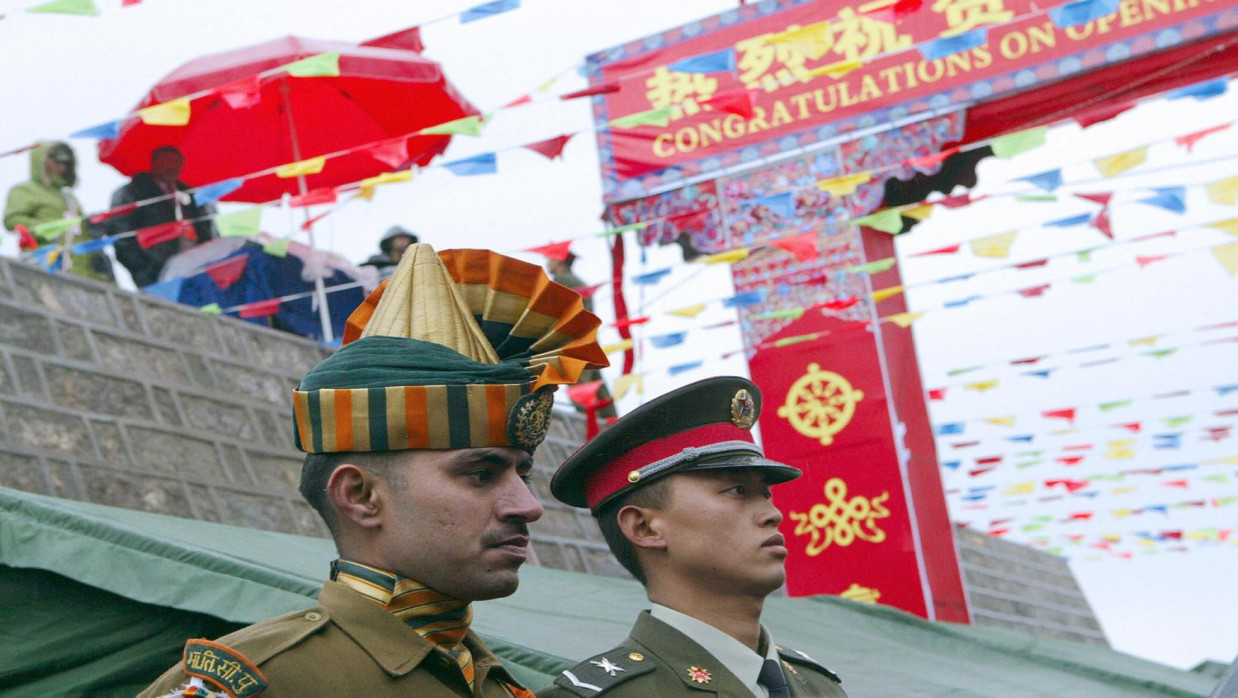
While there is much discourse on the China–India relationship in New Delhi, such debates are rarely heard in Beijing. Hence, a visit to Beijing last month to discuss China’s role in South Asia was revealing. All this indicates entrenched friction in the China–India relationship, despite the ongoing reset.
The bilateral relationship between China and India has been undergoing a reset since October 2024, when a border agreement was announced following clashes in 2020. Since then, leaders of the two countries have had several interactions – notably, Prime Minister Narendra Modi’s visit to China in August to attend the Shanghai Cooperation Organization summit, his first to the country in seven years. This will likely be followed by President Xi Jinping visiting India this year for the BRICS summit.
People-to-people ties have strengthened with resumed direct flights, relaxed visa rules, and the revival of a Hindu pilgrimage to Tibet. The Special Representatives framework, resumed in December 2024, has renewed efforts to resolve the longstanding border dispute.
And yet a competitive and confrontational dynamic remains. My visit to China came days after the detention at Shanghai airport of an Indian national from the state of Arunachal Pradesh, which Beijing claims as “South Tibet”. Other faultlines include a dispute over China’s construction of the world’s largest hydroelectric power project across a river that traverses both countries, and China’s “all-weather/iron-clad” relationship with Pakistan in the context of recent India–Pakistan hostilities. Several interlocutors in Beijing noted that China would not abandon its relationship with Islamabad, with one saying Pakistan, as a bridge to the Islamic world, was more important to Beijing than its relations with India. Tibet is also a point of renewed friction, one interlocutor calling it a “live issue” amid growing discussion about the succession of the Dalai Lama, who turned 90 last year.
Beijing tends to see China–India relations through the prism of its more consequential relationship with the US. One interlocutor said the “changing logic of the US–India relationship” (a reference to the recent deterioration in relations between New Delhi and Washington) presented an “opportunity” to improve China–India relations. New Delhi does not see its relations with Beijing and Washington in such zero-sum terms. Interestingly, Washington embraces the idea of an India–China–US triangle, and the Pentagon’s most recent annual report on China refers to Beijing’s efforts to “capitalize on decreased tension” with New Delhi to “prevent the deepening of U.S.-India ties”.
One of my Chinese counterparts noted that the “changing global context” offered an opportunity for India to “re-embrace strategic autonomy” in its foreign policy, even though India has never abandoned strategic autonomy. While the 2020 border clashes prompted New Delhi to tilt more towards the US, India has avoided being seen as too closely aligned with the US-led regional and global architecture. It has not participated in US-led freedom of navigation patrols in the South China Sea and Taiwan Strait, for example.
India now faces a superpower that is both its leading economic partner and its most significant security threat.
Most surprising was that my Chinese counterparts felt differences between the countries had deeper philosophical roots. One located the root of misunderstanding in their “differing understandings of modernisation”, with China seen as a more rational actor than “emotional” India. This patronising language was supplemented with a view that China sees India through the prism of three “isms” – Buddhism, colonialism, and opportunism – amid claims that New Delhi was to blame for periods of hostility including the 1962 war and 2020 conflagration.
All this indicates entrenched friction in the China–India relationship, despite the ongoing reset.
India faces an increasingly challenging global environment. Aside from dealing with a less India-friendly government in Washington under the Trump administration, New Delhi must navigate a more polarised international system in which its commitment to strategic autonomy is becoming harder to sustain.
An added challenge is a world order in which China is a superpower. Unlike the Cold War, when India–US relations were aloof rather than adversarial – with no territorial disputes or confrontations (aside from a brief moment during the 1971 India-Pakistan war when the Nixon administration deployed the Seventh fleet into the Bay of Bengal) – India’s relationship with China involves both territorial disputes and Beijing’s growing presence in India’s neighbourhood. China is also a key party to debates about nuclear stability in South Asia.
Compounding this, Beijing exercises significant leverage over the Indian economy as a leading trade partner. While China recently lifted restrictions on exports of rare earths, fertilisers, and tunnel boring equipment to India, it continues to employ coercive economic power elsewhere, such as limiting Chinese workers’ travel to India in strategically important sectors . These actions show Beijing can undermine New Delhi’s ambitions to be a global manufacturing hub.
India now faces a superpower that is both its leading economic partner and its most significant security threat. Navigating this challenge will require a far more comprehensive, whole-of-government approach than employed so far.
The article appeared in the lowyinstitute
0 Comments
LEAVE A COMMENT
Your email address will not be published