

JOHN BERTHELSEN
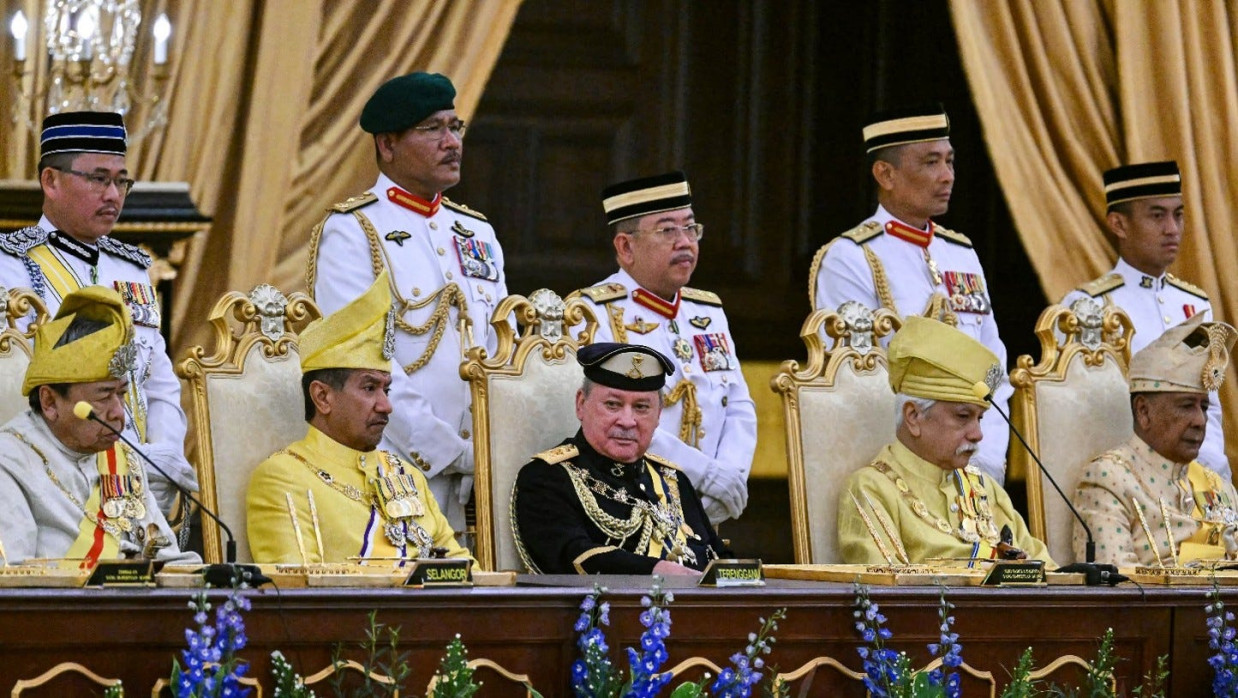
Reported interference by royal families, infuriating members of his government, could force Malaysia’s Prime Minister Anwar Ibrahim to call for an early general election by year-end despite holding a 68 percent super-majority in the 222-seat parliament.
The issue is very sensitive, given the power of the royal families, particularly from Johor, and a descending attitude toward the press in Malaysia, with editors and reporters frequently being brought in by authorities to answer for their reporting. However, the current crisis is said to have been triggered by Johor Crown Prince Tunku Ismail, currently the state’s regent and acting ruler, who forced the state to dissolve its assembly and call for fresh elections this weekend. The outcome of the election, plus another one in August in the state of Negeri Sembilan, could dictate whether Anwar has to call general elections later this year.
Beyond that, the Selangor ruler has banned pig-farming in his state, causing an uproar among the non-Muslim Chinese who form about 22 per cent of the population and giving Anwar problems in trying to undo the situation. The regent of Pahang and the ruler of Johor are both demanding more share of the federal revenue. Negeri Sembilan has been plunged into constitutional and political crises in a squabble for power between rival wings of the royalty, forcing the dissolution of the state assembly two years ahead of its five-year term and adding to Anwar’s electoral problems.
The 78-year-old Anwar himself is fighting a popularity decline for failure to keep his electoral promises, making him a tempting target for the squabbling royal families. He came to power at the behest of the previous king, the Sultan of Pahang, who ordered him into a “unity government” with the archrival, deeply corrupt United Malays National Organization, after weeks of stalemate from a hung parliament in 2022, when for the first time since independence in 1957, no single political party won the requisite minimum 112 parliamentary seats to form the government. That led the king to offer it to Anwar, who hastily cobbled to gather an ideologically diverse coalition to form a government.
Technically, it is a “strong government” with more than a two-thirds majority, enough to pull off major constitutional amendments. But in reality, vested interests and ideological differences, many created by UMNO, which continues to seek power in its own right, have prevented Anwar from doing that. In the three and a half years he has been in power, he has always been a whisker away from having his government collapse.
Powerful states like Sarawak, which controls 26-parliamentary seats, and the once powerful UMNO which also has 26 seats, have exerted pressure on Anwar and extracted major concessions. But at the same time, some of the rulers – sensing Anwar’s weakness – have started flexing their muscles, in particular the rulers of Johor, Selangor and Pahang, albeit to a lesser extent.
The situation is a far cry from the interactions of one-time Prime Minister Mahathir Mohamad, who took on the royalty, emasculating their political and legal sway, fomenting a major constitutional crisis in 1983 and following that up with sweeping 1993 constitutional amendments to strip them of the blanket legal immunity conferred on them during the British colonial reign. In 1994, the federal constitution was further updated to remove the king’s remaining power to delay bills, firmly establishing legislative and executive supremacy over the hereditary royalty.
While these moves directed executive power away from the sultans, the monarchy has occasionally seen renewed importance during national and political instability, of which Malaysia has had plenty over the past two decades. There are nine monarchs, each elected king every five years, meaning each gets to be the wearer of the king’s hat, a quite ornate affair, rather than for a lifetime.
Malaysia’s political system is based on the Westminster parliamentary system in combination with features of a federation. Nine of the states are constitutionally headed by traditional Malay rulers, collectively referred to as the Malay states. Of these, seven are hereditary monarchies based on primogeniture, and in Perak and Negri Sembilan. While they are supposed to be constitutional monarchs, the Malaysian rulers wield more power than that and have a large influence on the administration of the country – including in choosing the democratically elected prime minister and chief ministers of the state.
All rulers, except those of Perlis and of Negeri Sembilan, use the title of Sultan. The ruler of Perlis is styled the Raja, whereas the ruler of Negeri Sembilan is known as the Yang di-Pertuan Besar.
While the sultans are publicly venerated as guardians of Islam and protectors of the people, in fact, historically, they were basically warlords selected by the British as representatives to deal with the colonial government. Many have gotten in trouble with gambling and other debts and had to be bailed out by their respective state governments. The Johor royal family partly precipitated Mahathir’s 1994 constitutional move when the then sultan allegedly assaulted a hockey coach amid other allegations of royal interference in politics,
The Johor family, which controls the populous, wealthy state directly across the strait from Singapore, historically has wielded political, economic, and social influence extending far beyond that of Malaysia’s other monarchs. The current Sultan Ibrahim Iskandar serves as the country’s 17th Yang di-Pertuan Agong, or king. The current crisis has partly been created by the family’s demands for a larger share of state tax revenues to remain in Johor despite the fact that Sultan Ibrahim is a billionaire with highly diversified business interests, spanning real estate (including involvement in mega-projects like Forest City Johor, infrastructure, and telecommunications.
Last November, Tunku Ismail Sultan Ibrahim, the 41-year-old Crown Prince of Johor, managed to embroil the country in an embarrassing scandal when, frustrated with his country’s decades-long lacklustre performance in the international league tables, he came up with the idea of drafting international players and giving them heritage passports identifying them as Malaysian nationals. The scheme was uncovered by FIFA, and Malaysia was booted out of the World Cup competition.
It was hardly the first time Johor royalty had acted outside Malaysian social norms. Members of the family have frequently been embroiled in nightclub violence and other problems. A Johor Sultan four decades ago allegedly shot and killed a man walking on the Johor beach as a trespasser. He was never prosecuted, although the incident caused a major stir in the country and played a role in Mahathir’s campaign to break the power of the royalty.
Whatever the royals are up to, however, Anwar is fighting a popularity decline stemming from his own problems, compounded by growing disloyalty among the ranks of his coalition. He looks likely to be unable to hold the fort and may be forced to dissolve Parliament soon and call for fresh elections. The prognosis does not look good.
The article appeared in the asiasentinel

0 Comments
LEAVE A COMMENT
Your email address will not be published