

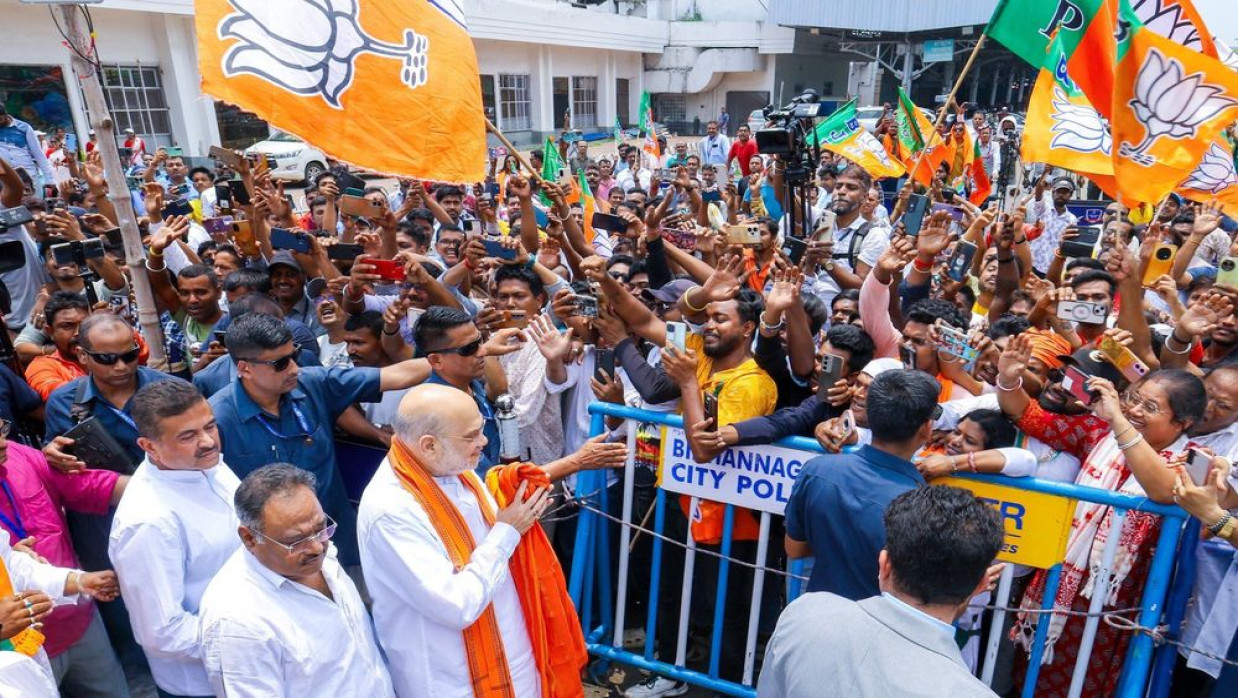
As little as two weeks after assuming power by ousting the long-serving Mamata Banerjee, the BJP government in West Bengal found itself in hot water. By announcing a controversial ruling banning cow slaughtering in the wake of Eid al-Adha, the Muslim’s second largest religious festival, the ruling has a boomerang effect on the Hindus, who apparently were supposed to be the beneficiaries. According to the BJP government, the cow is a goddess or go-mata. Hence, Indian Muslims cannot offend the Hindus’ sentiments by slaughtering cows. According to some critics, this is a tactic for the government to tighten its grip on Muslims. But the effect is far greater and far more devastating for the Hindu farmers and milk producers who raise cows. A vast majority of the lower-caste Hindu poor families, including the Das and the Ghose, raise cows to sell them to Muslims in the Eid market. Raising cattle is the backbone of the Indian rural economy. Many even borrow money in lacs from banks and other sources just to raise cows. What is the effect of the ban now? The Muslims have united and are saying, “We won’t buy cows from Hindus”, and “It's no problem if we don’t eat beef.” Large Qurbani markets in rural areas, which used to be crowded with cow buyers and sellers, have no buyers now. No one is interested in buying. Now, the poor rural farmers are stuck with their large loans and collection of cows.
Emotional scenes and massive protests are featured on social media all the time. Farmers and their families are sobbing and pleading with the government and Muslims to buy their cows. Farmers' wives exposed their naked bodies as a mark of protest in front of the police. Two farming families have already committed suicide. Others are mocking suicide by putting a noose around their neck; some are holding poison bottles in their hands. They are saying that they have nowhere to go except to commit suicide. The government is yet to change its stance, even now, only a few days before Eid al-Adha. Even if the government overturns its ruling, it is very unlikely that Muslims would buy for fear of facing harassment and reprimand from religious extremists.
India was founded as a secular country. Apart from 213 million Muslims, it has other minority groups such as Sikhs, Jains, and Christians. Under Modi’s leadership, the country is heading towards Hindutwabaad or religious extremism by the day. Some senior BJP leaders even chant the mantra that only Hindus have the right to live in India. This will tear India’s social fabric. Its relationship with neighbouring Muslim countries, such as Bangladesh and Pakistan, is coming under stress.
A closer look at the logic of the ban suggests it is self-contradictory. The West Bengal BJP government is saying that cows older than 14 years are permissible to be slaughtered. Suddenly, the government is saying each cow must have a birth certificate in a country where not every citizen has one. Some Hindu farmers are asking, “So does it stop being a goddess at the age of 14?” Moreover, India is the second-largest beef exporter in the world.
The ban on cow slaughtering for Qurbani is a classic example of how religion-based political decisions can destabilise a society and destroy an economy.


0 Comments
LEAVE A COMMENT
Your email address will not be published