

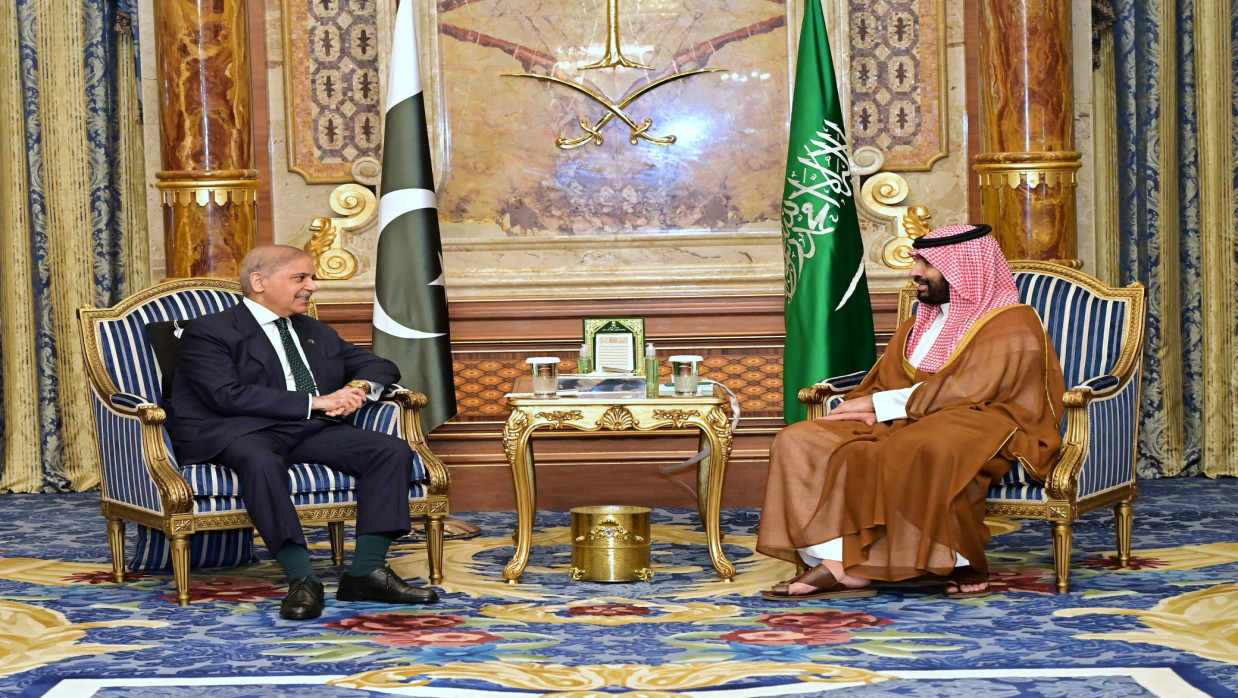
The Saudi Arabia and Pakistan recent diplomacy is a timely reminder that dialogue is still the best means of peace in a time when the Middle East is teetering on the brink of further turmoil. How both Saudi Arabia and Pakistan are taking the escalating tensions in the Middle East seriously was underscored by the phone call Saudi Foreign Minister Prince Faisal bin Farhan had with Pakistan's foreign minister on mediation efforts to resolve the crisis. Their focus on diplomatic efforts and regional stability is timely as military escalation poses a threat to the region and global peace and economic security.
The Middle East has been a particularly volatile area in the world for a long time. The region has been on the brink of instability on several occasions, due to the conflicts between regional actors. The prospect of a greater confrontation is on the horizon once again in the Gulf and region today. In this context, the part of the countries that are prepared to advance dialogue instead of division takes on a crucial significance. Saudi Arabia and Pakistan seem to be aware of the devastating humanitarian, political and economic repercussions of another major war in the Middle East.
Islamabad's engagement in prospective mediation between U.S. and Iran has been an instance of playing a constructive and balanced diplomatic role. In contrast to other states that openly take a side, Pakistan has tried to communicate with various sides. This balance has made Pakistan a unique country to be a connecting link in times of trouble. Islamabad's diplomatic efforts show that only military action won't resolve regional conflicts.
Mediations are not just for Pakistan's international prestige. The stability of Middle East also impacts on economic investments. Millions of people from Pakistan are employed in the Middle East and the Pakistani economy is closely tied with the Gulf countries in terms of trade, remittances, and imports of energy.
Saudi Arabia's role in the efforts of supporting diplomacy is even more important. In recent years, Riyadh has been gradually transitioning to a foreign policy that emphasizes economic modernization, regional co-operation and long-term stability. The Kingdom knows there is a danger of endless conflict, not only at the regional level, but also at the economic level, which the country sees as connected to its aspirations to Vision 2030. Saudi Arabia's backing of mediation is a testament to its growing recognition of the importance of diplomacy and stability for sustainable development and regional prosperity.
Saudi-Pakistani talks also underscore the role played by Muslim-majority countries in achieving the desired outcome of diplomatic solutions in the region. In too many instances, Middle East crises are dominated by outside powers with their own geopolitical agenda. The involvement of the region's own actors, such as Saudi Arabia and Pakistan, clearly shows that they are able to make a meaningful contribution to peacebuilding and crisis management. This opens the door to solutions more attuned to regional sensitivities and concerns.
Further, the focus on diplomacy is a strong sign in a more polarized international system. Military rhetoric has been used in much of the world in lieu of meaningful negotiation. Many conflicts require only confrontation and not dialogue, and confrontational behavior is considered a sign of strength. But the history of wars is that they seldom yield lasting political solutions. Negotiation is slow and tedious, but negotiation is much less damaging than fighting.
Also Pakistan's mediation activities have a positive impact on the country's international image. Islamabad has at times found it difficult to come across as a big diplomatic player due to its strategic position. Pakistan's involvement in regional peace initiatives shows its capacity to be a responsible player in the region beyond its immediate vicinity. Through this diplomatic effort, Pakistan can bolster ties with regional stakeholders and project itself as a proponent of international stability.
Meanwhile, the mediation process is fraught with many difficulties. Tensions between neighbours are strong and the cycle of violence is contributing to anger and polarization. There are also conflicting interests outside that hinder peace efforts. However, a certain amount of diplomacy is better than no diplomacy at all. The continued open communication among key actors is a positive indicator.
The humanitarian aspect of the crisis is also not to be overlooked. With each next step up in the Middle East, ordinary people, who suffer the most from war, experience suffering. Families are uprooted, economies are paralysed and future generations bear the brunt of instability and trauma. Diplomatic solutions are therefore not only strategic necessities but they also are moral obligations. Those nations that are able to lower the tension must pursue peace in a serious and urgent manner.
In short, the recent Saudi-Pakistan talks highlight a fundamental yet crucial point: stability in the Middle East can only come through dialogue, restraint, and cooperation. While military escalation could provide short-term political dividends, it can have long-term consequences of destruction that impact the entire region and beyond. Saudi Arabia and Pakistan are doing mediation and diplomacy, which advocates a peaceful approach other than confrontation.
These are the kinds of initiatives that should be acknowledged and promoted in a world of heightened geopolitical tensions. There is no need for more wars in the Middle East. It requires leaders who are prepared to have tough conversations, think in terms of compromise, and will not stand down from averting further bloodshed. Saudi Arabia and Pakistan's commitment towards the diplomatic engagement is a reflection of that responsibility.


0 Comments
LEAVE A COMMENT
Your email address will not be published