

Islamabad does not feel ordinary these days.
There is a quiet tension in the air, not the kind that comes from crisis, but the kind that signals something is actively unfolding behind closed doors. Conversations are happening, messages are being relayed, and somewhere within the capital’s corridors of power, the possibility of a breakthrough, however fragile, is being kept alive.
Over the past few days, I have been tracking reports coming in from Reuters and echoed by other major outlets. The message is consistent that American and Iranian delegations may be preparing to return to Islamabad. The window being discussed is immediate, Friday through Sunday. No formal confirmations yet, but enough movement to suggest this is not speculation anymore.
Then another layer is added.
In a conversation reported by the New York Post, Donald Trump says what many here are already beginning to sense, that talks “could be happening over the next two days.” He does not speak in diplomatic ambiguity; instead, he points directly toward Islamabad. Sitting here, watching how quickly narratives shift, that statement lands differently. It feels less like a possibility and more like confirmation of momentum already in motion.
What stands out even more is his reasoning. Trump questions why negotiations should move elsewhere, why go to countries “that have nothing to do with it?” In that moment, Pakistan is no longer just a venue. It becomes part of the logic of the process itself. His remarks about Field Marshal Asim Munir, calling him “fantastic” and crediting him with stabilizing past crises, add a personal dimension to what is otherwise a highly strategic calculation.
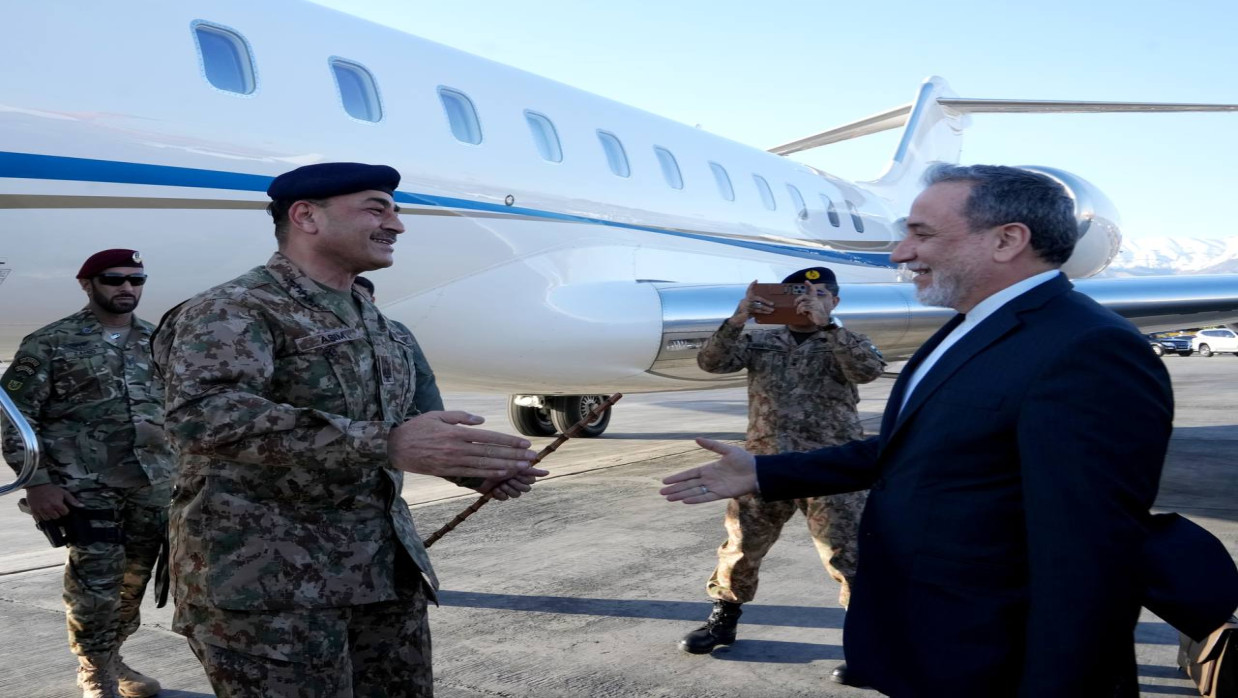
This personal endorsement gained fresh weight today as ISPR confirmed that Field Marshal Asim Munir and Interior Minister Mohsin Naqvi have arrived in Tehran with a delegation as part of Pakistan’s ongoing mediation efforts. The high-level visit underscores Islamabad’s deepening role, not merely as a host, but as an active bridge-builder shuttling between capitals to sustain dialogue and explore pathways forward.
From where I stand, this endorsement and hands-on engagement matter. In diplomacy, locations are chosen carefully. They reflect trust, access, and influence, and right now, Islamabad is being treated not as neutral ground, but as relevant ground.
Now step slightly closer, and the complexity becomes clearer.
The first round of talks, those long, sleepless hours over April 11 and 12, ended without resolution. I have heard them described as intense, even productive at moments, but ultimately constrained by familiar sticking points. The United States remains firm on preventing Iran from acquiring nuclear capability. Iran, represented by figures like Mohammad Marandi, is equally firm, uranium enrichment is not something they are willing to abandon.
Yet, despite that deadlock, neither side has walked away.
Pakistani officials, from what I can gather, are still engaged, quietly but persistently. Messages have been exchanged. A proposal for reconvening has been put forward. Iranian responses, described as “positive,” do not signal agreement, but they do signal openness. In diplomacy, that distinction is everything.
Adding to the sense of cautious optimism, President Trump has stated in recent interviews that the war with Iran is “very close to over” and “very close to being over.” He described the coming days as potentially “amazing,” signaling that momentum toward de-escalation and a deal remains strong even amid ongoing pressures like the U.S. blockade of Iranian ports.
There is also a broader choreography at play.
Pakistan is not operating in isolation. There are indications of outreach to regional actors, Saudi Arabia, Türkiye, ensuring that whatever happens here does not exist in a vacuum. Watching this unfold, it becomes clear that Islamabad is not just hosting; it is actively shaping the conditions that make dialogue possible.
Still, there is no illusion here.
The issues on the table, nuclear policy, sanctions, regional security, the Strait of Hormuz, are not the kind that dissolve over a weekend. History lingers in every exchange, from the Iranian Revolution to the rise and fall of the Joint Comprehensive Plan of Action. Each side carries its own red lines, its own domestic pressures, its own version of what a “win” must look like.
Yet, sitting here in Islamabad, what feels significant is not resolution, but return, and the persistent, high-level movement keeping the process alive. The fact that both sides are even considering coming back, so soon after a stalled round, tells its own story. It suggests that the alternative, escalation, instability, uncertainty, is something neither is ready to accept just yet.
There is also noise, of course. Rumors of high-level visits, speculation moving faster than facts, but on the ground, the reality is more measured. This is still delegation-level diplomacy. Still careful. Still uncertain.
However, it is alive, and that, perhaps, is Pakistan’s real achievement at this moment, not forcing outcomes, not claiming victories too early, but simply keeping the door open when it could have easily shut.
As I watch this unfold, one thing becomes clear that Islamabad is the main character in global diplomacy. For now, at least, it is where the conversation continues. Whether that conversation leads to something lasting, or fades into another near-miss, remains to be seen, but for the moment, the story is still being written, and it is being written right here in Pakistan.


0 Comments
LEAVE A COMMENT
Your email address will not be published