

DAVID VALLANCE
It seemed like things were finally settled. Deals had been struck, approval sought and granted, and final discussions scheduled. Enter the President of the United States:
“This land should not be taken away from the U.K. and, if it is allowed to be, it will be a blight on our Great Ally. We will always be ready, willing, and able to fight for the U.K., but they have to remain strong in the face of Wokeism, and other problems put before them. DO NOT GIVE AWAY DIEGO GARCIA!”
Donald Trump’s statement – issued overnight, hours after the State Department gave its backing to the deal, and a just few weeks after Trump himself stated that the arrangement was best that the United Kingdom could make – is not only a blatant self-contradiction, it flies in the face of US and UK diplomacy and interests.
But first, it is worth recalling how we arrived at this point.
The Chagos Archipelago, situated in the middle of the Indian Ocean and home to the highly strategic base on Diego Garcia, has been administered by the British since the Treaty of Paris in 1814, after the UK seized the Isle de France (now Mauritius) and other French possessions in the Indian Ocean during the Napoleonic Wars.
The handover has become another line of attack for British right-wing populists.
Though a long distance from Port Louis, the Chagos was administered from Mauritius for much of the 20th century. But as the process of decolonisation took hold across old imperial possessions, the UK decided to detach the Chagos from Mauritius, creating the British Indian Ocean Territory (BIOT) in 1965. Harold Wilson, then British prime minister, implicitly made this detachment a condition for Mauritian independence, achieved in 1968.
The BIOT’s creation was controversial at the time, condemned by the UN in December 1965 as an act which would violate the Mauritian territorial integrity in the context of decolonisation.
This did not faze the British or the Americans. The US wanted to use the archipelago’s strategic location as a means to project power into the Middle East. To achieve this, Chagossians, descendants of slaves brought to the islands by the French centuries before, were forcibly deported and charmingly described by the British diplomat DA Greenhill as “some Tarzans or Men Fridays”.
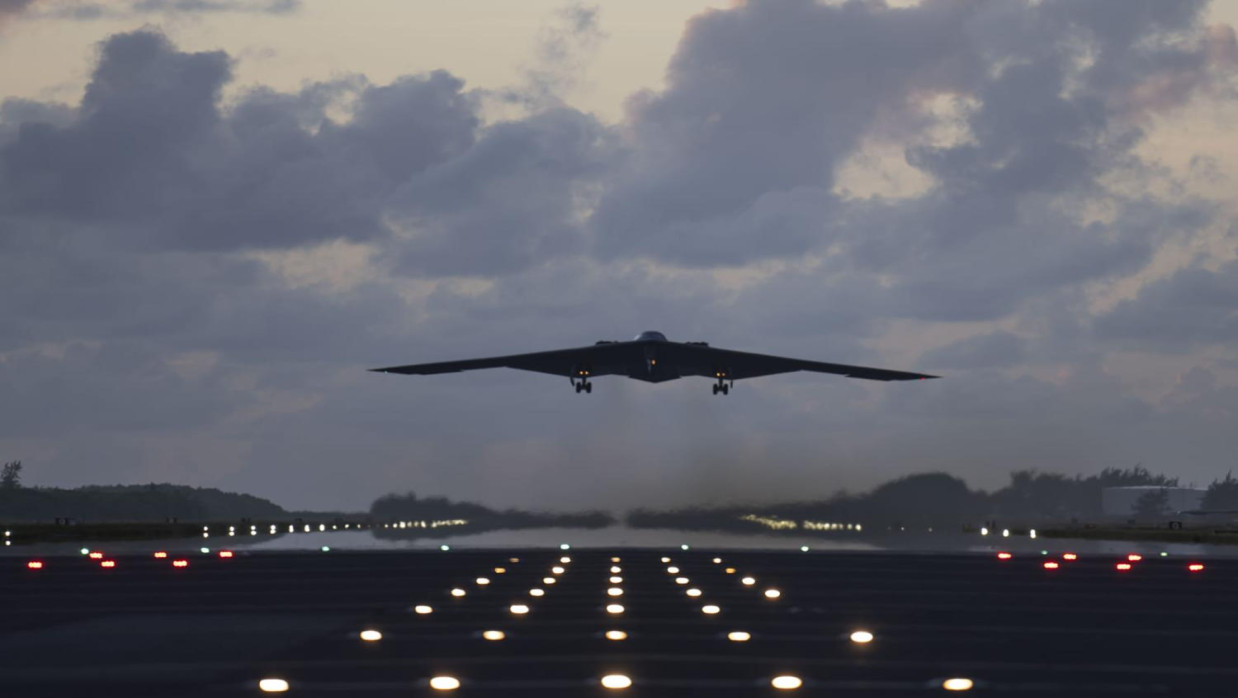
The British then allowed the US to operate from a base in the archipelago – Naval Support Facility Diego Garcia. This facility was of great importance during the Cold War, supporting carrier operations and strategic bombers in the region, and in the 21st century allowed the US to mount some of the longest bombing missions in history in the opening days of its war in Afghanistan.
The US wants to keep access to this base, particularly as it seems unable to extricate itself from involvements in West Asia.
Thus, there would have been some trepidation in Washington in 2019 when the International Court of Justice handed down an advisory ruling that the UK’s creation of the BIOT was unlawful, and that it should be handed to Mauritius. This was needless. The Mauritian government had – and has – no intention of closing the base on Diego Garcia. This issue, for Mauritius, is far more about its domestic politics than its international affairs.

When the UK agreed in 2024 to transfer sovereignty to Mauritius, the deal struck involved a 99-year lease to the base on Diego Garcia, ensuring continued access. Even before this occurred, some discussion in the UK, veering into both strange post-imperial identity politics and a simplistically Manichean view of the world, decided that this small island nation would hand over the base to China. Never mind that the vast majority of Mauritians trace their heritage to India, that nearly a quarter of foreign direct investment into India came through Mauritius from 2000 to 2025, and that during the Cold War a Mauritian Prime Minister asked Indira Gandhi for a military intervention to suppress a political rival.
The handover has become another line of attack for British right-wing populists. Nigel Farage, leader of the Reform Party, has labelled the transfer an “act of treachery” and has lobbied the Trump administration to sink the deal. Presumably this is why Trump believes that the deal is somehow related to “Wokeism”, the favourite amorphous bugbear of the contemporary right.
This deal should come to fruition. Mauritius will not suddenly become an ally of China, as some British Conservatives insist it already is. This deal is a piece of hard-nosed realism. Its primary importance is unfortunately not in demonstrating respect for international law, or – sadly – allowing the Chagossians to return to Diego Garcia, which has been ruled out by Mauritius.
This deal allows the US and UK to keep access to a vital base while shielding themselves from accusations of modern-day colonialism from countries like China. As Beijing continues to make inroads into Africa, denying it this propaganda tool is a useful step.
This deal is not weak or woke. It is good strategy.
The article appeared in the lowyinstitute

0 Comments
LEAVE A COMMENT
Your email address will not be published