

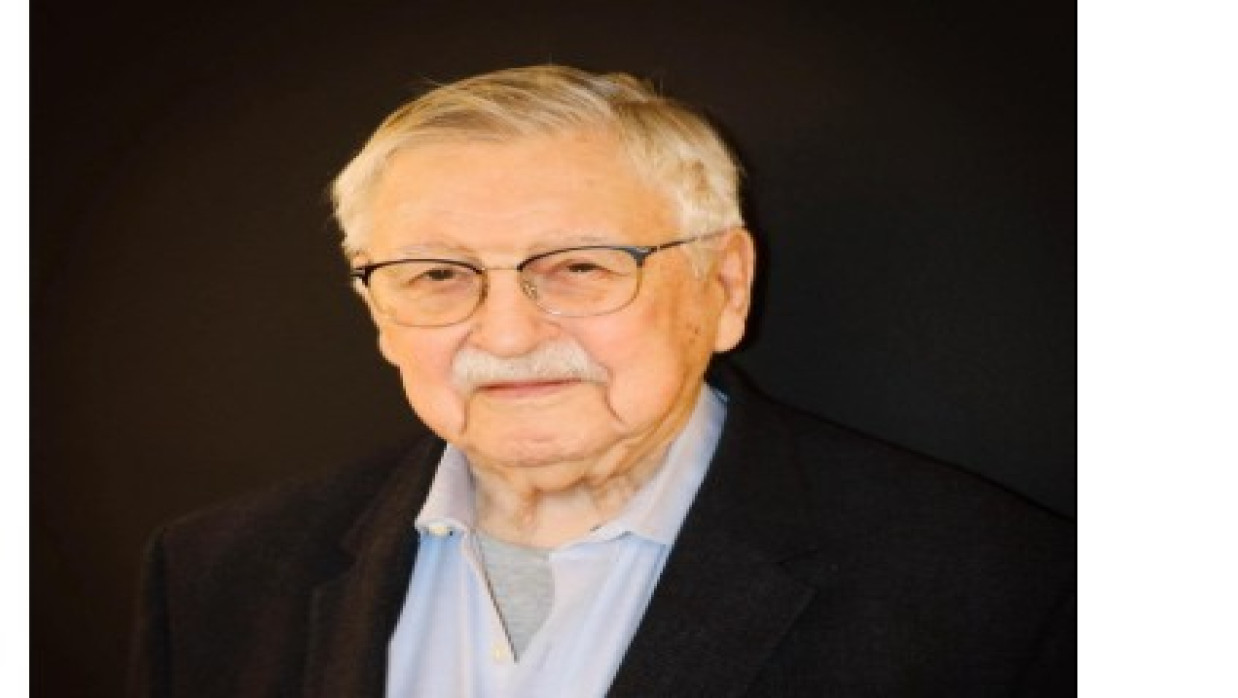
Mr. William B. Milam, Former United States Ambassador to Bangladesh, died on February 17, 2026. Although we knew that the end was near, as his health had been declining over the past couple of months, we were not quite ready to say goodbye to a towering figure whose life of almost 9 decades was devoted to public service, scholarship, and upright causes. He was a friend to so many of us from around the globe, and his passing leaves a big hole in our lives.
Ambassador Milam’s son, William Bryant Milam, shared the unfortunate news with members of the “Right to Freedom” mailing list and asked that we remember not only his father’s many years of diplomatic service but also his considerable impact as a citizen-scholar and advocate for democratic principles worldwide. In his last years, he was especially concerned about Bangladesh's prospects and the democratic opportunities available to the Bangladeshi people following the August 2024 political crisis.
The poignancy of his passing on the same day that Prime Minister Tarique Rahman took the oath of office following the historic February 12 elections adds a symbolic dimension to his final chapter. Few foreign diplomats cared for Bangladesh as deeply or as consistently as Bill Milam. He followed developments in the country until his last days, determined that the sacrifices of its citizens in pursuit of democratic renewal would not be squandered.
I was privileged to be appointed to Right to Freedom, a nonprofit organization founded by Ambassador Milam and his friend and colleague, Ambassador Mushfiqul Fazal Ansarey, along with Jon Danilowicz, a former diplomat. Milam built RTF around advancing freedom, accountability, and responsibility in democratic societies. With special attention paid to Bangladesh, Bill championed RTF’s mission in continued support of those whose voices could not be heard in their own country and raised awareness of democratic erosion in Bangladesh with Washington. When politicians threw criticism his way and spread false narratives because they didn’t appreciate Bill’s candor, he never let them silence him. Bill was a man of integrity who always spoke his mind, whether it be privately, publicly, or through his writing. Whether it was an op-ed in the US or Bangladesh or Pakistan or elsewhere, Bill wrote on the topics of human rights, institutions, and democracy, because Bill knew that when done right, diplomacy is for the people.
I consider Bill not only a mentor but also a friend. As a Bangladeshi American involved in maritime, academia, and publishing, I would frequently reach out to him when there was news of importance happening in Bangladesh. When I traveled to Washington, I would meet up with him frequently, sometimes for just a coffee or a sandwich to talk over. He was always well-read, but enjoyed hearing my take on what I had read. He also sent me many articles he wrote over the years for the South Asia Journal, where he, once again, kept focus on Democracy and Human Rights in Bangladesh.
Before Bangladesh’s discredited December 2018 election, Bill facilitated a special event for SAJ on Bangladesh. Held at the Wilson Center in Washington DC, Bill convened several former ambassadors to Bangladesh, SA experts, think tank experts, and officials from the U.S. State Department to discuss democracy in Bangladesh. Bill graciously chaired the event, keeping everyone on track and focused on the issues at hand. Speakers at the event included Professor Ali Riaz, Michael Kugelman, and several other experts on Bangladesh and the region. It was one of those “timely” discussions where no punches were pulled. For Bill, it was about empowering others through education and thoughtful advocacy.
Jon Danilowicz is a colleague and fellow Foreign Service Officer who has known Bill for decades. Jon put it best when he wrote of Bill:
“When Bangladesh came up in conversation or in his writings, Bill never framed it as a foreign policy challenge or spoke of the intrepid leaders of Bangladesh as if they were characters in a geopolitical game. He spoke of Bangladesh with affection and respect for its people and their dreams and determination. For me, he was a Statesman. For many of us, he was a friend.”
Ambassador Milam served in Dhaka from 1998 to 2001, during a critical period in Bangladesh’s development as a young democracy. He was always a stalwart supporter of free, fair, and credible elections, transparency in institutions, and the strengthening of democratic norms. Bill arrived at the tail end of the Ershad period and witnessed Bangladesh's democratic transition, along with its many fits and starts since then. He always maintained a realistic perspective on the challenges Bangladesh faced and was hopeful about what Bangladesh could become. I had the opportunity to read many of his published works and listen to him speak on Bangladesh over the years.
Bill remained active in Bangladesh even after he left the government. He traveled to Bangladesh last year to meet with many in the current interim government and to reconnect with old friends across the political spectrum. If anyone knew Bangladeshi politics and leaders inside and out, it was Bill. He was always cautiously optimistic about Bangladesh.
Bill was of that rare generation of Foreign Service Officers who carried out their duties with excellence and professionalism while maintaining kindness and a moral center. Bill was America’s friend in Bangladesh, and Bangladesh was Bill’s friend. He will be missed by many of us who looked up to him as a mentor.
His passing marks the end of an era, but his legacy endures in the institutions he strengthened, the ideas he championed, and the friendships he nurtured across continents.


0 Comments
LEAVE A COMMENT
Your email address will not be published