

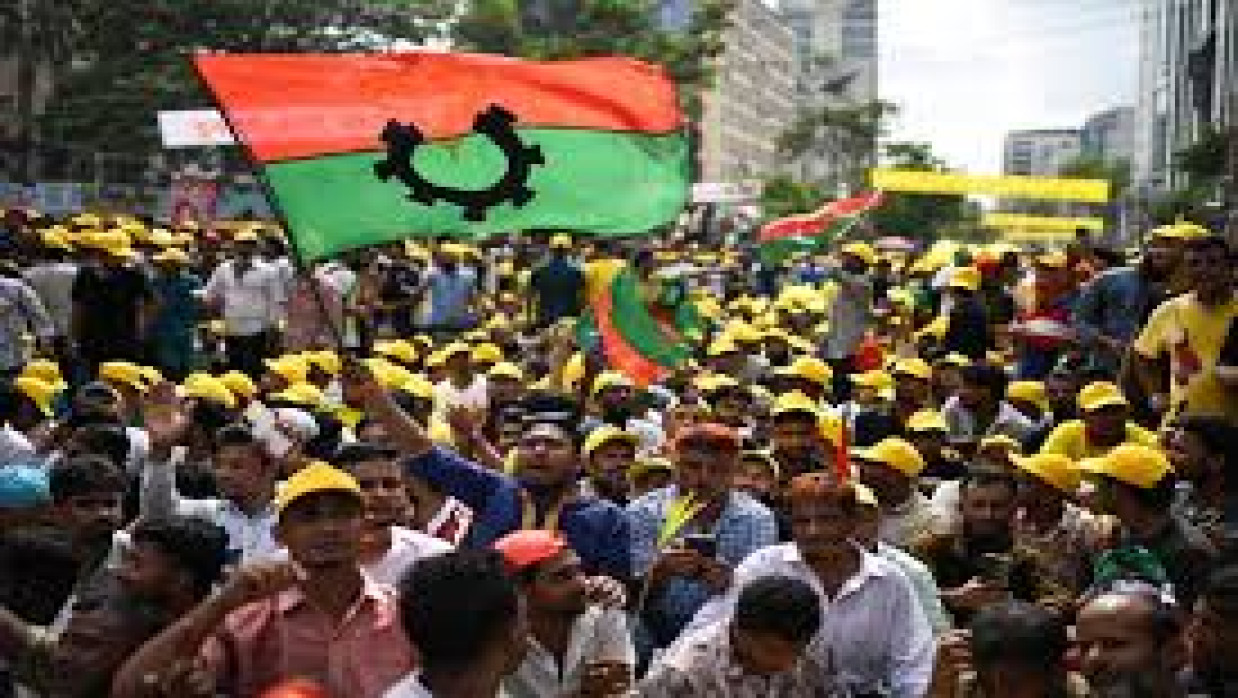
For many observers, there was one major storyline that dominated political coverage around Bangladesh’s February 12 national election for most of the past year: Bangladesh Nationalist Party (BNP) confidence. Awami League fatigue, public frustration with economic pressures, rising costs, institutional degradation, and creeping authoritarianism were all expected to add up to one electoral certainty by February: that voters would oust the incumbent party from power after fifteen years in office. The election was positioned as a done deal.
Now, just days away from polling day, such assumptions seem moot.
BNP's actions leading up to the election have showcased a party that feels anything but confident. Needy, defensive, and increasingly paranoid about both the voting process and their competitors, what many in Dhaka once heralded as a certain “cakewalk” has turned into a nervous three-way contest defined by demographic shifts, credibility crises, and an opposition landscape in flux.
Voter Skepticism: Bangladesh’s “Critical Generation” and the Opposition Deficit
At root, many of the problems facing Bangladesh’s mainstream opposition parties stem from a failure to understand just how skeptical Bangladesh’s voters have become.
An increasing number of voters see very little difference between the Awami League and the Bangladesh Nationalist Party. For decades, synonymous with patronage politics, murky deals, and cozy relations with extra-state actors and influencers, allegations of BNP leaders being “India-friendly” or having tacitly colluded with the Awami League establishment in years past, even if some of these stories are exaggerated or untrue, have resonated with voters who have grown cynical of Bangladesh’s political elites.
Compounding the narrative, there have been numerous stories of BNP activists participating in the very sorts of vote extortion and intimidation tactics that voters most closely associate with AL-run governments.
Polling beyond fear: Bangladesh’s Forty Million Wild Cards
If there is one wild card facing every prognostication about next week’s election, it is generation.
A full 40 million voters will be participating in this election who did not have the ability or opportunity to vote in past elections for 15 years. A mix of Gen Z voters and younger millennials who have been politically socialized not through partisan contests, but through protest politics, online activism, and the lived experience of creeping authoritarianism over the past decade and a half.
Unlike older generations of voters, this demographic will have no rose-colored nostalgia for BNP-era rule; no memories of Khaleda Zia’s early or mid-2000’s governance; and low tolerance for political rhetoric that feels recycled or disingenuous. Younger voters are also less susceptible to ideological appeals to fear intractable instability, religious extremists coming to power, and loss of autonomy to India. Instead, they are motivated by issues first, ideology second.
And where credibility is concerned, they haven’t got much.
Image Problems and Electoral Disruptions: Jamaat-e-Islami’s Moment in Bangladesh
It is no surprise, then, that Jamaat-e-Islami has begun to carve out a space for itself in the conversation around next week’s election, even if the party itself hasn’t fully capitalized on its opportunity yet.
To an increasing number of voters, especially but not exclusively younger ones, Jamaat is viewed as the “less corrupt” option. More honest. Better disciplined. Far removed from the web of nepotism and rent-seeking that has characterized both mainstream parties for decades. Again, this is not to say Bangladesh is swinging Islamist, far from it. But faced with a choice between Bangladesh’s established political brands, Jamaat offers a viable third option for voters motivated more by protest than by ideological solidarity.
That is not to say voters are unaware of Jamaat’s own credibility problems, especially when it comes to women’s rights, personal freedoms, and the party’s ideological leanings toward instituting Sharia-based laws and punishments. The older generation of Jamaat supporters may want to impose Frankenstein versions of Islamic governance on Bangladeshi society, but most voters don’t want a theocracy. They want reliable institutions. They aren’t interested in rolling back female education, participation in the workforce, or hard-fought rights.
But faced with secular parties that have weaponized the state while hollowing out governance from within over the past decade and a half, ideological extremism is a far weaker electoral liability for Jamaat. Because the party feels “cleaner” relative to Bangladesh’s establishment political parties, Jamaat benefits from a powerful contrast effect.
Fear vs. Fragmentation: What Really Scares the BNP
Make no mistake: if there’s one thing that the Bangladesh Nationalist Party DOES fear heading into election day, it is not vote rigging. It is vote splits.
Jamaat’s resurgence over the past year has been effectively capitalized on by the upstart National Citizens’ Party (NCP), led by 26-year-old Bangladeshi student activist Nahid Islam, disrupting longstanding assumptions about Bangladesh’s opposition voter base. For years, the BNP has taken its voters for granted: if voters don’t vote for AL, they vote for BNP. The Awami League is banned from running this election.
This, more than anything else, is why we are seeing the BNP lodging increasingly frantic objections to EC appointments over election observers, security forces deployments, and procedural nuances at this late stage of the game. Some of their complaints are legitimate; Bangladesh’s electoral institutions have struggled to cultivate public trust over the years. Other concerns feel preemptive and manufactured by the BNP, creating a narrative they can exploit should February 12 not go their way.
More concerningly, there are increasing reports that Bangladesh Nationalist leaders at the grassroots are beginning to panic. If election results do begin to look unfavorable, how far will local leaders go to “correct” outcomes? Will we see the violence and vote manipulation that Bangladeshis thought we had grown past? Sectarian attacks have been on the rise these past few weeks, justified by senior BNP leaders as “defensive” measures against an authoritarian state. Will months of cautious optimism come crashing down in a wave of aggression and intimidation from parties who had nothing to do with laying those foundations?
Leaders Before Legislatures
The sad truth is that, like much of South Asia, Bangladesh’s elections are less about policies and programs than they are about leaders. Despite token attempts to position younger faces for future electoral contests, both mainstream parties have been defined by the personalities at the top: Khaleda Zia for the BNP, and the gargantuan shadow of Sheikh Hasina for the AL. Campaign manifestos and platforms have all but vanished from serious discussion.
And where policy fails to move voters, personality-driven campaigns will. That presents an opening for emergent parties who can position themselves as exempt from the traditional vote narrative, even if their policy programs are lacking.
Leave India Out of It
All of this brings us to India. Far from a partisan or strategic issue on the campaign trail, India looms over Bangladesh’s elections as a hypertext for domestic political messaging.
Bangladeshi political parties have taken turns weaponizing India as both a villain and shield for decades. Attacks against the BNP’s closeness with New Delhi have energized nationalist voters, while India, understandably wary of being seen as “supporting” one party or another, is quietly but deliberately engaging with all sides.
From Delhi’s perspective, having a relationship with Bangladesh’s leadership is far more important than ideological alignment with them. India can buy, maybe not love, but at least access, from Myanmar’s military. It can do the same in Bangladesh. That priority, which some have called a post-ideological recalibration of New Delhi’s neighborhood diplomacy, means no party in Bangladesh will go into election day with implicit Indian backing.
Closing Thoughts
As Bangladesh approaches its national election on February 12, what was once a certainty has given way to one overarching question: Will voters trust the BNP enough to hand them power?
The simple answer is no. The Bangladesh Nationalist Party is not doomed. Far from it. But their path to victory is narrowing by the day.
BNP fears the wrong thing. Vote-rigging will be less of an issue than vote-splitting. And voter skepticism is deeper, broader, and more consequential than they expect.
BNP leaders would do well to listen to campaign workers on the ground: calm down, focus on what you can control, and turn out the vote. Anything less risks not just next week’s election, but the loyalty of forty million new voters whom the BNP has yet to win over. Loose ends forgotten in the moment may come back to haunt the party longer than anyone cares to admit.

0 Comments
LEAVE A COMMENT
Your email address will not be published