

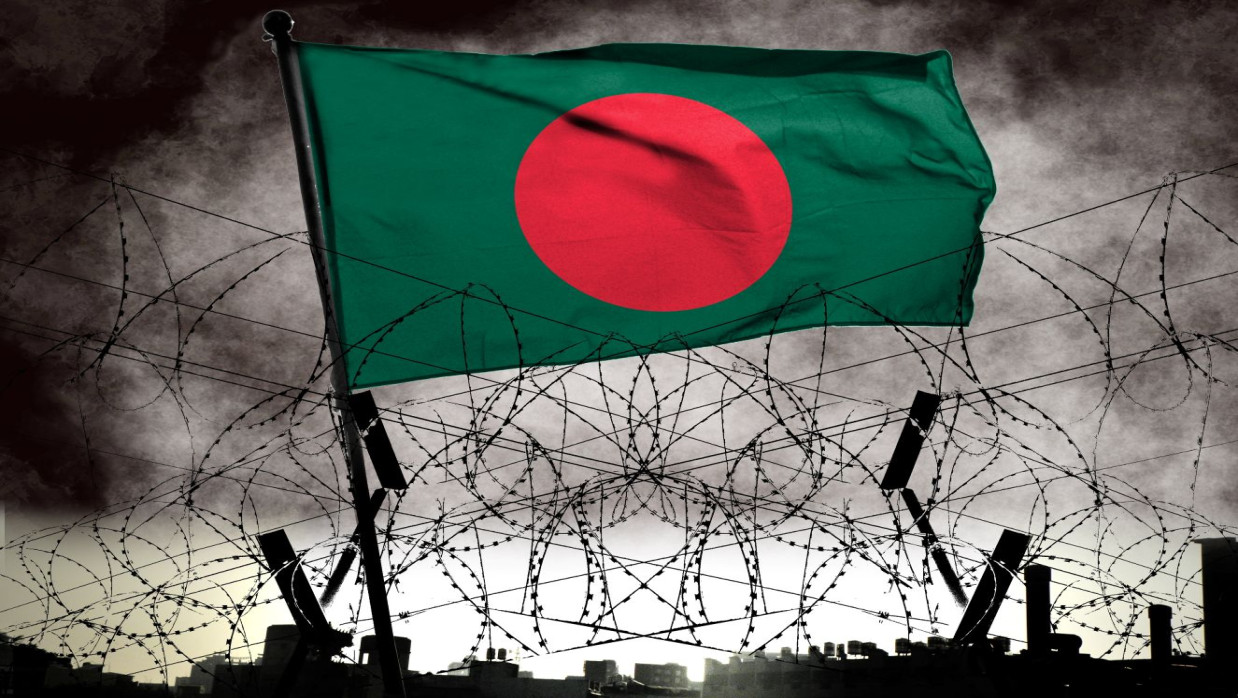
Analyzing the contrasting leadership styles of Mujib and Yunus, particularly their ascension to power following the Bangladeshi revolutions of 1971 and 2024, will provide a deeper insight into the underlying issues at play. Although apples and oranges are unlikely to be compared, keeping in mind their differences, both fruits can be compared. The differences between 1971 and 2024 are significant in many aspects, including in Bangladesh. Sheikh Mujibur Rahman and Muhammad Yunus represent two distinct figures from different eras. Sheikh Mujibur Rahman was a politician who became a national leader, while Muhammad Yunus is known as an NGO leader who later took on a governmental role and gained worldwide recognition as a Nobel Laureate and original thinker. Bangladesh has transformed from one of the poorest countries in the world to one that is likely to become a middle-income nation in the near future. With Yunus as the leader of the statecraft in the country, we can consider what the country went through before and after 1971 until the revolutionary changes of 2024 and beyond.
During the prolonged political crises in 1971 and 2024, Mujib and Yunus emerged as national leaders in Bangladesh. Mujib played a pivotal role in the political turmoil that ultimately led to the formation of Bangladesh following the dismemberment of Pakistan in 1971. In contrast, Yunus stepped into the political spotlight during a different crisis, which culminated in the overthrow of the one-party Hasina dictatorship on August 5, 2024. While there was no evidence that Yunus played a role in Hasina's overthrow, militant student protesters forced Sheikh Hasina, who was widely regarded as the most corrupt and brutal dictator since 1971, to welcome Yunus into the political arena as the Chief Advisor of the country, equivalent to the head of government. Mujib’s rise to political power was intentional, whereas Yunus assumed his role by default. The political vacuum that followed Hasina's overthrow allowed Yunus to briefly lead an interim caretaker government tasked with organizing fresh elections and facilitating a transition to democracy. Mujib was a politician who championed complete autonomy (if not freedom) for East Bengal/East Pakistan in 1948 and again in 1971. In contrast, Yunus was celebrated as a Nobel Laureate and a pioneer of microcredit, a system credited with alleviating poverty in Bangladesh and beyond. While Mujib focused on political leadership, Yunus was previously an academic and NGO operator before becoming Bangladesh's Chief Advisor in August 2024.
It's crucial to provide a brief background on Bangladesh. We should explore the country's prehistory, from the beginning of British colonial rule to the dismemberment of Pakistan in 1971. Understanding the dynamics of nationalism, religion, and the people's political culture will allow for an objective comparison of Mujib and Yunus, along with their philosophies and the contexts in which they lived.
This discussion offers context for a brief prehistory of Bangladesh, covering the period from the Battle of Plassey in 1757 to the emergence of Bangladesh in 1971. It also includes a short history of the country from 1971 to 2024, both essential for understanding Mujib and Yunus's leadership qualities. It highlights the crises of identity and political culture, which have hindered effective governance and the overall comprehensive development of the country. A pivotal year in the history of Bangladesh for those who want freedom, democracy, and human rights is 1971. They also regard 2024 as their Second Independence Day, following 1971. This date symbolizes a new hope for the freedom they felt they lacked under Sheikh Mujibur Rahman and his successors, culminating in the overthrow of Sheikh Hasina’s one-party dictatorial regime on August 5, 2024. This context also offers insights into their ethos, modus operandi, and the challenges they faced during their respective times.
A short prehistory of Bangladesh highlights why Pakistan, which had been the “peasant utopia” for the bulk of East Bengali Muslims (mostly peasants), dismembered in less than a quarter century after its emergence in 1947. We may take the period between 1757 and 1963, from the Battle of Plassey to the rise of Sheikh Mujibur Rahman, which eventually led to the creation of Bangladesh. The transformation of the once-rich Mughal province into an impoverished hinterland under the British and Pakistani periods and its eventual transformation into a nation-state is integral to the understanding of Mujib’s rise as one of the main proponents of what led to the emergence of Bangladesh. Bengal was the richest province of the richest country in the world, Mughal India in the sixteenth through the eighteenth centuries. While Mughal India roughly generated around 25 percent of the world GDP, Subah-e-Bangalah or the Province of Bengal’s share in world GDP was around 12 percent.
The two centuries of British paramountcy turned Bengal into one of the poorest sub-regions in the world. East Bengal, which was once the most prosperous and industrialized part of Mughal India, suffered the most. Within fifty years of British ascendancy, it turned into one of the poorest, deindustrialized agrarian hinterland of British India. The colonial administrators started giving state patronage to high-caste and upper-class Hindus. Through the deliberately unjust land system and other laws and regulations, the East India Company, on the one hand, created upstart classes of almost exclusively Hindu zamindars or landlords, allowed an exorbitant moneylending system and created new classes of Hindu middle classes, professionals, government employees to the detriment of the vast majority of Bengali Muslims. Meanwhile, East Bengal lost its political and economic importance to the Calcutta-centric, Hindu-landed business and professional elites, which continued up to the Partition—the upshot being that growing discontent among Bengali Muslims towards the British and Hindu elites polarized the people on communal lines, roughly between the well-to-do Hindus and the downtrodden Muslims.
However, for various reasons, the class conflict between Hindu haves and Muslim have-nots was communalized to such an extent that in 1947 Bengal was also partitioned on communal lines. Consequently, East Bengal became the eastern wing of Muslim Pakistan, and West Bengal a province of Hindu-dominated India.[1] Consequently, the absurd entity of Pakistan having two wings in the East and West, separated by more than 1000 miles of hostile India, could not last beyond 1971. Due to the various economic, geographic, historical and cultural differences the two wings hardly saw eye to eye on most mundane matters. The historically richer and more developed West Pakistan and poorer and less developed East Pakistan had to go their way. And this is what happened in 1971.
Let us look at Sheikh Mujibur Rahman’s political ascendancy as the sole spokesman of Bengalis in East Pakistan during 1963–1971, from his involvements in the Agartala Conspiracy to the emergence of Bangladesh. In 1963, he toyed with the idea of liberating Bangladesh with Indian assistance, but that didn’t work out. He is said to have secretly crossed the Indo-Pakistan border into Agartala, where he met Indian politicians exploring the possibilities of getting Nehru’s support to liberate East Pakistan from the western wing of Pakistan in that year. Soon after the demise of his leader, guide and philosopher Huseyn Shaheed Suhrawardy on 5 December 1963, Mujib revived the Awami League as an independent entity, by coming out of the National Democratic Front (NDF), which was a broad coalition of opposition parties in Pakistan against the quasi-military rule of Ayub Khan for the restoration of democracy.
In hindsight, it appears that by early 1964, Mujib’s emergence as the President of the Awami League transformed him into a national leader from a provincial one from East Pakistan, overnight. Afterwards, he did not look back until the liberation of Bangladesh in 1971. He became East Bengal’s sole champion only around 1966. The charisma and tenacity he displayed as a champion for East Bengal led to his meteoric rise to the top; however, two successive Pakistani military rulers—Ayub and Yahya—had a much greater contribution to his meteoric rise. Had not Ayub accused him of conspiring to separate East Pakistan from Pakistan in the Agartala Conspiracy Case in the most unconvincing way and Yahya transferred power to him after he won the 1970 elections, Mujib would have remained just another Bengali politician in united Pakistan.
President Ayub Khan’s unconditional withdrawal of the Agartala Conspiracy Case and the release of Mujib and the other co-prisoners on 22 February 1969 following a massive mass movement against the Ayub Regime catapulted Mujib to the pinnacle of his popularity in East Pakistan. Mujib had the extraordinary capability of appeasing or winning over political opponents, peers, followers and potential allies. During the brief period of his political ascendancy from 1963 to 1971, he almost always outsmarted them. He outwitted Pakistani and Indian politicians, including Ayub, Yahya and Indira Gandhi. Politicians from Bangladesh, including seniors like Maulana Bhashani and Ataur Rahman Khan, as well as the over-rated Tajuddin and the over-ambitious Serajul Alam Khan, were simply not in his league. He was much better at convincing people by telling them what they wanted to hear from him or by doing what they wanted him to do than most in Bangladesh. His popularity, however, did not last long after he became the Prime Minister of Bangladesh due to a number of internal and external factors, including his own shortcomings.[2]
Mujib himself and his colleagues were least prepared to run independent Bangladesh. Further compounding the problem was the incompetence and corruption of the Mujib administration. As state capitalism sold as “socialism” in Mujib’s four-pronged state ideology—Democracy–Nationalism–Socialism–Secularism—it confused people, government and society at large, while at the same time fuelling corruption. We need to illustrate the inherent shortcomings and contradictions of Mujibbad (Mujibism) that led to Mujib’s catastrophic fall. Bangladesh’s two bad starts in 1947 and 1971 have done little to improve its prospects today. The superintendence of Mujib made things worse. Thus, whatever was meant to happen in the country happened after liberation, while Mujib oversaw the process. Bangladeshis are still a nation in turmoil due to Mujib’s failure to address growing socio-economic cleavages after becoming President and Prime Minister. Thus, decades after Mujib left, development remains dominated by infrastructure instead of democracy, freedom and human rights. Mujib’s assumption of absolute power in 1975 marked the end of his rule. Combined with his lack of knowledge about international politics and the art of good governance, his demonstration of absolute power proved deadly for both his regime and himself. He destroyed almost completely the state-run industries, communication networks and financial institutions at a time when the country desperately needed better planning. Moreover, he lacked the vision and wherewithal to put the country on the right track. His administration also lost efficient and honest administrators due to nepotism and vindictiveness. His overthrow and violent death (along with those of most of his relatives) on 15th August 1975 at the hands of some Bangladesh Army officers and troops – all freedom fighters during the country’s Liberation War in 1971 – was nothing short of a Greek tragedy.
While Bangladesh under Mujib was chaotic, corrupt and a poverty-stricken “international basket case,” post-Mujib Bangladesh has witnessed a lot of ups and downs, down to the 50th year of its independence. There was a new period of trial-and-error in post-Mujib Bangladesh under Khondkar Mushtaq Ahmed, two generals, Zia and Ershad, during 1975–1990, two civilian governments under Khaleda Zia (Zia’s widow) and Sheikh Hasina (Mujib’s daughter) – during 1991 and 2024 – and a quasi-martial law period (2007-2009).
Seemingly, Bangladesh was a failing state, “an international basket case” up to the mid-1970s, people at home and abroad noticed some improvements in the overall situation of the country. By the 1980s, the country was no longer a basket case or among the poorest in the world. The five-and-a-half years under Ziaur Rahman (1975–1981) signalled the departure from Mujib’s corrupt and inefficient dictatorship in the name of socialism for Bangladesh. The country under Zia was relatively less corrupt and more efficient than it was under Mujib. By de-nationalizing industries and financial institutions—which Mujib nationalized in the name of socialism—Zia introduced a market economy and accelerated agricultural and industrial growth. He pioneered a number of innovative projects, such as grow more food, establish garment factories and send millions of unskilled workers to the Middle East to earn foreign currency for Bangladesh. In other words, he turned the country into a viable entity. General Ershad, who took over the country through a military coup in March 1982, ran a corrupt and degenerated regime for nine years until his overthrow in December 1990.
Nevertheless, during the nine years of autocracy, he—more or less—followed Zia’s economic policy and turned Bangladesh into a major exporter of readymade garments, and an important source of cheap expatriate workers in the Middle East, Singapore and Malaysia. In short, one needs to understand the fifteen years of trial and error under Zia and Ershad to find out what went right and what went wrong in Bangladesh since its emergence in 1971.
A comparative appraisal of the Zia and Ershad regimes provides the answer to the question, of “development before democracy” or “democracy is development” for Bangladesh and other least developed countries and middle-income countries in the world. So, Zia marked a departure from Mujib’s haphazard state capitalism—which he and his “respected” economists sold as socialism—and saved Bangladesh from the Kissingeresque basket syndrome. Sadly, however, rural/peasant patron-client politics that promote factional tensions, conspiracies, mutual hatred and jealousy have again taken control of the polity.
For several years, the Economist famously used the phrase “Battling Begums” to describe Bangladesh’s two successive female prime ministers because, evidently, they cannot stand each other. In addition to conveying the jealousy and rivalry between the two matriarchs, the expression “Battling Begums” also shows the disastrous effect of their mutual contempt on the political economy of Bangladesh. Khaleda and Hasina have been in power since 1991 in quasi-democratic regimes. Let’s elaborate on the accomplishments and failures of the Begums. In some sense, Bangladeshi culture legitimizes dynastic democracy. When it comes to power, privileges and legacies, Mujib and Zia “dynasties” are very different from those Nehru, Bandaranaike or Bhutto left behind. In the absence of a new generation of leaders who are free of the hangover of autocracy and “dynastic” oligarchy, Mujib and Zia dynasties’ legacies will endure indefinitely. In accordance with the dog-eat-dog mentality, Bangladesh has virtually become a perpetual battlefield of the Begums. Khaleda and Hasina both lack administrative experience and skills. Neither of them is highly educated and a good administrator. It was by default that they became leaders. Khaleda succeeded her late husband, President Ziaur Rahman, while Hasina succeeded her late father, Sheikh Mujibur Rahman, the first Prime Minister. They both have their shenanigans, idiosyncrasies and inadequacies. After removing Zia’s name from Dhaka’s International Airport, Hasina has been trying to erase Zia’s memory throughout the country. For example, she has tried to remove Zia’s grave from its current location in Dhaka city by blatantly fabricating that Zia is not buried there, but someone else is (“BNP knows Zia’s body not at Chandrima Udyan: PM”, New Age, Aug 26, 2021).
These efforts are intended to save the Mujib dynasty from extinction or oblivion. By issuing a postage stamp in the names of her son and deceased brother in mid-2021 (with exchequer money), seemingly Hasina tried her best to perpetuate her “dynastic” rule, while all symbols of democracy and the rule of law almost vanished completely under her tyrannical one-party rule, which lasted over fifteen years. Various reports by the Amnesty International, Journalists Without Border, US Human Rights Watch and other human rights agencies during the past few years have projected the Hasina regime as autocratic, corrupt and tyrannical. The Human Rights Watch report in August 2021 revealed that around 600 people from Bangladesh had been forced to disappear by law enforcement officials since 2009. In comparison to Hasina’s misrule and tyranny, even Ershad’s corrupt civil-military oligarchy seems much more benign, civil and efficient. The recovery from this mess is not likely to be fast and complete.
The Dual Crises of Identity and Culture
Bangladeshi Muslims—who represent roughly 90 per cent of the population—hold ambivalent views about their national identity, as discussed in this chapter. Until the Partition of 1947, they had been delusional about their ethnonational identity, believing that they arose from Turco-Arab, Iranian-Afghan or Central Asian Muslim settlers in India. After the creation of Pakistan, however, they began a pilgrimage to Bengal, considering it their ancestral home. While the emergence of Bangladesh marked the victory of secular nationalism against Islam-oriented nationalism in Pakistan, Mujib’s reliance on secularism and socialism turned off most Bangladeshis, especially Muslims. Hence, the rise of political and spiritual Islam in Bangladesh! The purpose of this chapter is to analyse the main reasons behind Islamization and its impacts on society, politics and the economy of the country. It also assesses the impact of state-sponsored Islamization and false-flag operations against so-called Islamist terrorists under the Hasina government since 2009. Political Islam is primarily a result of global politics during and after the Cold War. To begin with, the West encouraged political Islam, which included “jihad” against the Soviet Union in the 1980s. As the Soviet Union’s defeat did not empower the poor and backward Muslims, many of them carried on their version of “jihad” globally. The West’s demonization of Islam and Muslims after 9/11 further agitated Muslims.
Bangladesh was no exception. The Middle East’s exposure to Bangladesh’s semi-literate and poor Muslims as wage workers from the 1970s onwards had Islamized them culturally. It explains why lower-class Muslims are Arabized and their women are hijabized in mass numbers. For the sake of legitimacy, elected and unelected governments, political, business and professional elites, and bureaucrats also championed ritualistic Islam. It is simple hypocrisy that makes them embrace Islam in order to be respected. The cultural Islamization of Bangladeshi society is not synonymous with the rise of political Islam or Islamist terrorism. In Bangladesh, Islam has become a part of people’s identity without transforming them into God-fearing, ethical individuals. As a matter of fact, the government uses Islam for legitimacy, and people use it for identity. Governments and citizens alike espouse Islam without committing to any Islamic ethics or values.
Among the most important questions are: how and why Islam has re-emerged as socially and politically significant in Bangladesh, so much so that the State Religion of a country created in the name of Bengali nationalism is Islam? Islam is championed not just by ulama but also by most political parties, and even by members of the armed forces, some of whom openly demand that the nation become a Shariah-based “Islamic state.” Despite the sensationalized and motivated opinion among Western, Indian and Bangladeshi intellectuals and politicians, come what may, the country will not adopt political Islam as its official ideology, in the foreseeable future. Again, paradoxically, the country still maintains secularism as one of its state ideologies while Islam has been the “State Religion” since 1988. While the relatively secular Awami League is in power, there is much lip service to “secularism.” The Awami League’s arch rival BNP prefers “absolute faith in Allah” over secularism, which is anathema to Islam, in popular parlance.
We need offer a theoretical and hypothetical approach to understanding the crisis of culture in Bangladesh, a nation forever plagued by crisis. The backwardness of the country is attributed by some to lack of leadership, while others attribute it to demographic pressures, natural disasters and colonial exploitation. Nevertheless, with considerable infrastructure development and lessened hunger to some degree, Bangladesh is no longer considered a basket case. The key factor for a country’s growth, development and viability is debated, whether it is good leadership or the right political culture. Bangladesh has inherent cultural problems that prevent effective governance and growth. Furthermore, the culture that hinders good governance and socio-economic development in the country also prevents the right type of leadership from taking over. There is no reason to believe that the country can become developed only by developing its infrastructure. Low-wage labour, skyscrapers, flyovers, metros and luxury malls do not make countries developed.
Democracy, equality, freedom and a government accountable to the people lead to developmental success. To achieve these prerequisites, the people must undergo a cultural transformation into members of a “liberal society,” either naturally or through mass education and collective leadership by a dedicated group of citizens, as was the case during Japan’s Meiji Restoration. Illiberal societies cannot support liberal democracies. Understanding William Kornhauser’s concept of “mass society” as well as Oscar Lewis’s, Samuel Huntington’s, David Landes’s and others’ arguments that “culture matters” is essential in understanding Bangladesh’s underdevelopment. Over the years, history and geography have contributed to shaping the popular and political culture of Bangladeshis, but their religious and secular traditions, beliefs and values have had a greater influence. Backwardness, poor governance and poverty in Bangladesh are all related to Bangladeshis’ collective culture. Understanding this is crucial to understanding Bangladesh’s economic, political and social behaviour.
A revolution in 1971 and a revolution in 2024! Mujib and Yunus, the two post-revolutionary heads of government, were least prepared for the historical events in their wake; both 1971 and 2024 were not inevitable. The first uprising was marked by active preparation and participation from leaders and their followers across various sectors of society. Although Mujib was hesitant to see the emergence of an independent Bangladesh resulting from the mass movement for autonomy in East Pakistan within the framework of a united Pakistan, the second uprising was driven by students, lower-middle-class citizens, and the general populace. This latter movement aimed not to overthrow the dictatorial regime of Hasina, but to eliminate the extraordinary privileges enjoyed by the children and grandchildren of the freedom fighters from the 1971 revolution.
Ironically, both mass movements achieved outcomes that surpassed their initial goals and expectations. The push for greater autonomy in East Pakistan ultimately led to the creation of an independent country, Bangladesh. Similarly, the 2024 movement to abolish special quotas for the descendants of freedom fighters unexpectedly resulted in the overthrow of Hasina's government.
Conclusions
Since Bangladesh was always under foreign rule until 1971, the country never had a tradition of self-rule nor a familiarity with government machinery, governance, urbanization or constitutional notions. The British colonial rulers and their Pakistani successors did little to introduce democracy and legitimate governments to the region. While Europe took several centuries to introduce democracy and accountable government in the wake of cultural and political revolutions, it would be overly ambitious to replicate democratic institutions in a country like Bangladesh. In a traditional, peasant/rural and pre-capitalist society, one cannot simply replicate modern, urban and capitalist concepts. The emergence of capable, charismatic, dynamic and patriotic leaders is the only way to jumpstart the culture that promotes mutual trust and respect, and a sense of belonging to the nation, which can then automatically sustain good governance and the culture of development in the broadest sense. Since Bangladesh has been ruled by foreigners for millennia, most Bangladeshis do not feel like members of the nation. The study examines the socio-economic and political history of the country during the quarter-century of the Pakistani period, which ultimately led to the birth of Bangladesh. Bangladesh emerged as a result of a combination of factors in Pakistan, including discriminatory policies against East Pakistan by West Pakistan and the separatist movement in East Pakistan. In the end, however, it was not just economism that led to the separation of the eastern wing of Pakistan from the entity, but the systematic alienation, marginalization and humiliation of the bulk of the population in East Pakistan played a major role in the creation of Bangladesh.
Given the chequered history of leadership failure in Bangladesh, with possibly the only exception being Ziaur Rahman, the country has experienced an endless cycle of trial and error. This includes a range of regimes, from the phoney socialism and secularism under Mujib to the corrupt military rule under Ershad, and then to the liberal democracy with a touch of Islamic values during the time of Zia and his successor, Khaleda Zia. Following the overthrow of Hasina's corrupt and authoritarian one-party rule, Yunus ascended to power as the caretaker of the interim government, tasked with holding national elections in February 2026.
It is still too early to determine whether the country will become a true liberal democracy, especially given that the majority of its people embrace illiberal values and view corruption as a path to success.
Mass illiteracy and a low standard of education in Bangladesh, a resource-poor country and the most densely populated place in the world after Singapore, present significant challenges. The demographic conditions can be analogously described as if over half of the United States population were concentrated within the state of Iowa. Given the influence of a traditional peasant culture, it is unrealistic to expect the emergence of a liberal democratic society in Bangladesh. For many poverty-stricken people, respecting democracy and the rule of law may feel like a risky gamble, given their instinct for collective survival. Ultimately, only honest and visionary leadership, with a strong aversion to corruption and nepotism, can guide Bangladesh towards democracy, development, and freedom.

0 Comments
LEAVE A COMMENT
Your email address will not be published