

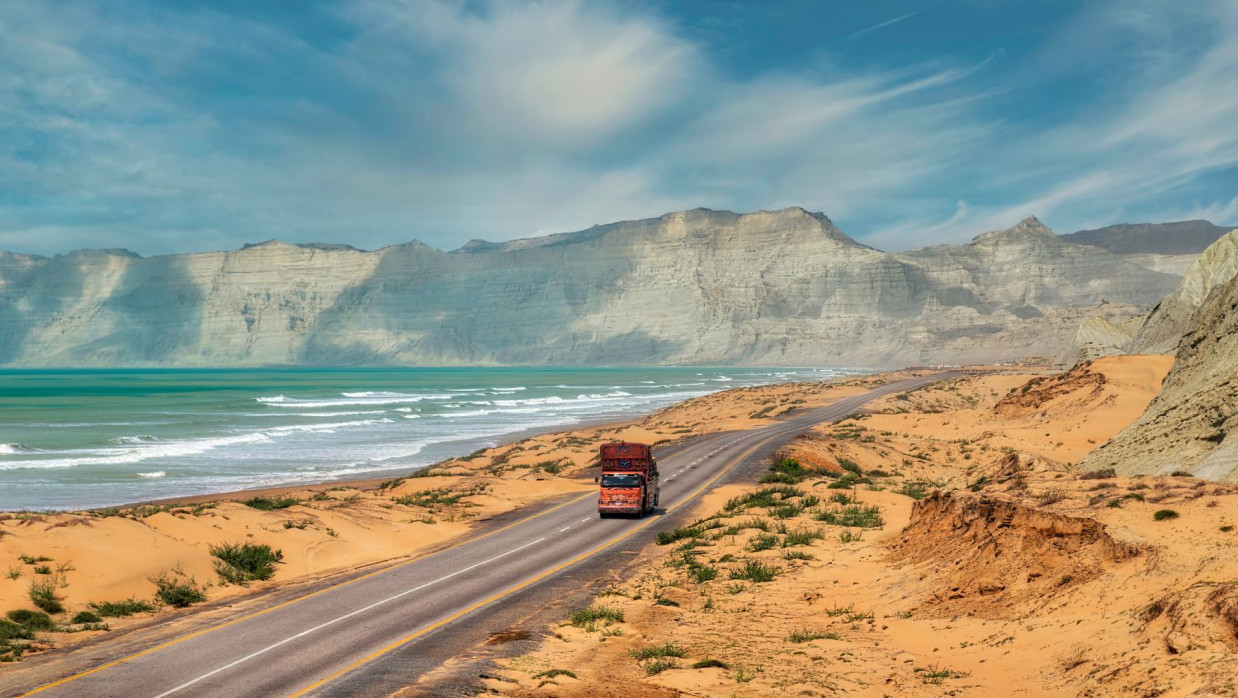
For decades, Balochistan has occupied a paradoxical position within Pakistan’s national narrative—immensely rich in natural resources, yet persistently poor in development outcomes. The recent announcement of multi-billion-dollar investments by some of Pakistan’s largest business groups, coupled with a landmark minerals exploration agreement in Chaghi, suggests that this long-standing imbalance may finally be addressed. More than a commercial milestone, these developments represent a strategic opportunity to redefine Balochistan’s role in Pakistan’s economic and political future.
The commitment by Lake City Holdings, Fatima Group, Deen Group, Hilton Group, and Surti Group—together valued at around $5 billion—marks a shift in domestic investor sentiment. Historically, Balochistan has struggled to attract large-scale private investment due to security concerns, policy uncertainty, and infrastructural limitations. The entry of these established Pakistani conglomerates signals a growing belief that the province is ready for sustained economic engagement rather than episodic or extractive ventures.
Adding further weight to this momentum is the joint venture between Globa Core Minerals and Mari Minerals Limited. This partnership is particularly significant because it blends international technical expertise with local corporate ownership. Globa Core’s experience in gold and copper exploration, combined with Mari Minerals’ domestic footprint, creates a model that could redefine mineral development in Pakistan—one that prioritizes long-term value over short-term extraction.
The choice of Chaghi as the focal point of this agreement is no coincidence. The district hosts some of South Asia’s most promising mineral reserves, yet remains underdeveloped. If explored responsibly, these resources could transform Chaghi into a center of industrial activity, generating employment not only in mining but across supporting sectors such as logistics, engineering, and services. This multiplier effect is crucial for a province where economic opportunities remain scarce.
Former federal minister Gohar Ejaz’s assertion that mineral development can usher in peace and prosperity may sound aspirational, but it is grounded in economic logic. Persistent underdevelopment has been a key driver of alienation in Balochistan. When local populations see tangible benefits—jobs, infrastructure, education, and healthcare—economic activity becomes a stabilizing force. Development, when inclusive, can succeed where coercive approaches have failed.
At the national level, Balochistan’s mineral potential aligns with Pakistan’s broader geoeconomic ambitions. Global demand for copper and gold is rising, particularly as renewable energy technologies and digital infrastructure expand. Countries that can responsibly supply these resources will hold strategic leverage in future global value chains. Balochistan offers Pakistan a chance to move beyond traditional exports and integrate into high-value global markets.
Yet optimism must be matched with caution. Pakistan’s history of resource extraction offers lessons that cannot be ignored. Projects that bypass local communities or fail to ensure environmental protection risk deepening mistrust and resistance. For these investments to succeed, community engagement must be embedded from the outset. Local hiring, skills development programs, and fair revenue-sharing mechanisms should be treated as core components—not afterthoughts.
Transparency will be equally critical. Clear regulatory oversight, public disclosure of agreements, and adherence to environmental standards can help build confidence among both investors and local communities. The involvement of reputable domestic companies provides an opportunity to set new benchmarks for responsible mining—benchmarks that could attract further investment and international partnerships.
Security considerations also remain central. While improved conditions have enabled fresh investment interest, sustainable security cannot be achieved through enforcement alone. Economic inclusion, infrastructure development, and political dialogue must reinforce one another. Mines, roads, and industrial zones should be accompanied by schools, hospitals, and vocational institutes to ensure that growth translates into visible social progress.
Ultimately, what is unfolding in Balochistan is not just an investment story; it is a test of Pakistan’s development model. The province’s integration into the national economy can help address long-standing regional disparities and strengthen federal cohesion. Success in Balochistan would send a powerful message—that Pakistan can convert its natural wealth into shared prosperity through smart policy, domestic enterprise, and inclusive governance.
The path ahead will not be easy, and setbacks are inevitable. But the direction is clear. If managed with foresight and fairness, Balochistan’s resource awakening can transform the province from a symbol of neglect into a cornerstone of Pakistan’s economic revival. The real measure of success will not be the minerals extracted, but the lives uplifted along the way.

0 Comments
LEAVE A COMMENT
Your email address will not be published