

Book review
Published July 21, 2026 | 132 pages | English
The story of religious minorities in India can be looked at in many ways. Displaced and made to feel unsafe. They have been manipulated politically and by different nations. From Hindu to Muslim, everyone has experienced riots, migrated, and felt discriminated against since the splitting of Britain in 1947. Both sides look at their country/religion with only one view and build others' picture of their problem.
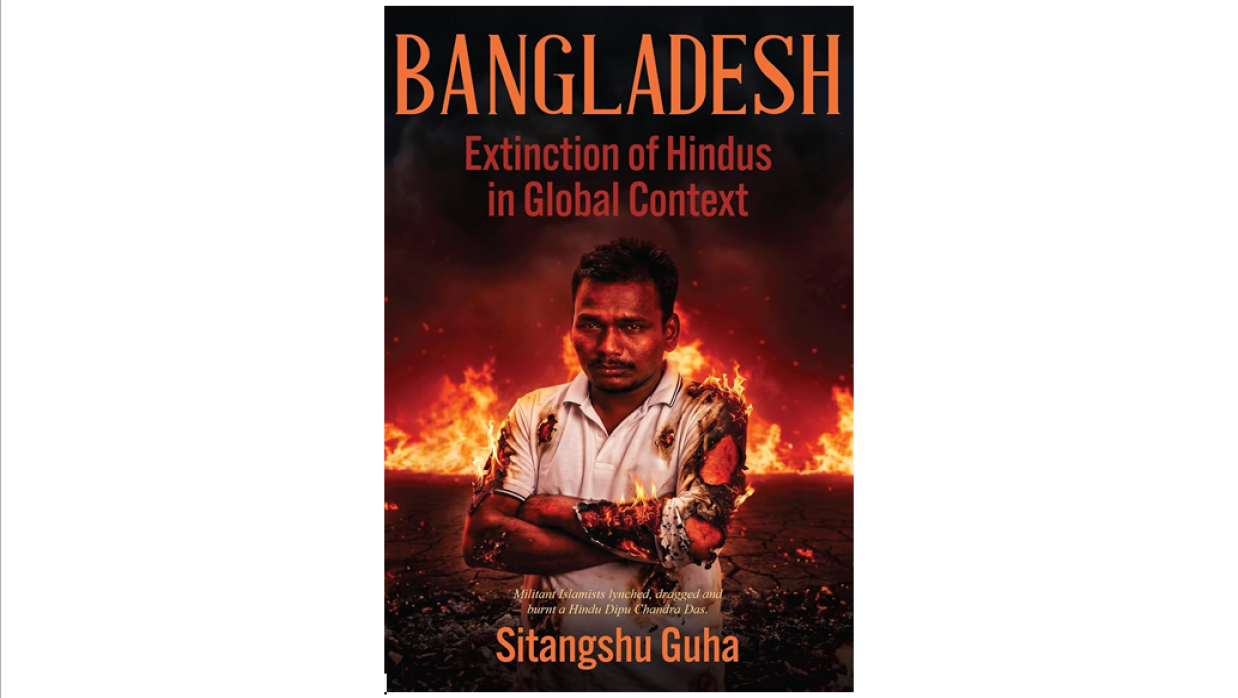
Bangladesh: Extinction of Hindus in the Global Context by Sitangshu Guha explores this argument with an emotional look at how the Hindu community is treated in Bangladesh. This book, released in July of 2026, focuses on the persecution that he feels has been occurring towards Hindus from the 1946 riots all the way to the fall of Sheik Hasina's government in August 2024.
I believe that Guha's points on minority groups should be taken seriously. Religious persecution, destroying temples, and taking people away from their homeland and land is something that is unjust. But we need to learn about all aspects of Bangladesh's communal history. Not only look at the persecution of Hindus but also migration, caste dynamics, support for each political party, and the opportunities each religion had and how they are treated in India. The narrative's central weakness, at least as presented in available descriptions of Guha's book, is its limited engagement with this wider historical and geopolitical context.
The Demographic Question: Decline or Extinction?
Another one of the arguments put forward by Guha was the diminishing number of Hindus in Bangladesh. As the book's final figures show, Hindus made up around 22% of the total population in East Pakistan in 1951. By 1974, that figure had dropped to 13.5%. By 2011, they accounted for only 8.54% of the population, and the 2022 census states that Hindus make up only 7.95% of Bangladesh's population.
As stated before, these numbers can be alarming. Over the past 70 years, Bangladesh has seen a massive shift in religion.
Just because the numbers have decreased doesn't mean they are going extinct.
More Hindus live in Bangladesh today than in 1951. From around 9.2 million in 1951, the number is now about 13.1 million in 2022. While the percentage of Hindus has decreased drastically, there are still many who live in Bangladesh. So when you say they are going extinct, you may be going a step too far.
This decrease can be attributed to many reasons. Migration to India, birth rate, opportunity, insecurity from communal attacks, joining family members in India, and politics in both countries.
While persecution from communal violence played a role in migration, it isn't the only reason people left Bangladesh. Many migrated for opportunity, whether for jobs or schooling.
When trying to make an argument that the Hindus are dying out in Bangladesh, one must take all of these things into consideration. Relying solely on census data can skew your argument.
Partition and the Complex Origins of Hindu Migration
Hindu migration from East Bengal to India began in earnest around the 1947 partition, although population movements had earlier historical roots.
A key aspect of this migration was the departure of educated, prosperous, and influential segments of the Hindu population. Landowners, professionals, civil servants, business families, and members of the urban middle class often had the financial resources, social connections, and education needed to establish themselves in India.
Many considered Calcutta something like home. They had jobs, relatives, and ideas about what the future state would look like.
Of course, this doesn't mean all high-status Hindus left of their own accord or that they had no reason to worry. After partition, uncertainty was widespread, and Hindus could feel threatened.
Nevertheless, the socioeconomic composition of early migration deserves attention.
The departure of influential families also affected those who remained. It weakened established professional networks, altered local economic relationships, and sometimes left poorer Hindu households without the protection or patronage previously provided by more powerful members of their community.
Later migration involved different circumstances, including communal disturbances, property disputes, political repression, and economic insecurity.
Treating all these movements as the consequence of a single, uninterrupted campaign of religious elimination obscures their historical complexity.
Guha's interpretation would benefit from a systematic examination of these different migration phases and the social classes involved.
Noakhali, Historical Memory, and the Burden of Evidence
The communal violence in Noakhali in 1946 occupies a prominent position in Hindu historical memory. The killings, assaults, forced conversions, and destruction associated with the disturbances constituted serious atrocities and contributed to the growing apprehension of Hindus throughout Bengal.
When Gandhi visited Noakhali after these events, he showed that the incident was taken very seriously and that he wanted people to regain trust in each other.
Noakhali should be viewed alongside other incidents during the partition.
From the great killings of Calcutta in August 1946 to retaliation in the state of Bihar and more killings and migrations in the state of Punjab showed us that communalism had failed throughout many areas in British India.
Many death tolls are unknown, and eyewitness accounts can vary based on their religion and views. Historians must decide which facts are accurate.
These facts may have been used to promote certain viewpoints today. But that does not mean we should discredit these incidents.
There should be no story about communalism that leaves out Muslims being killed in Bihar and other regions of the subcontinent.
How did politics and religious leaders cause so much hatred towards each other during this time?
Bangladesh's Hindus and the Question of National Belonging
A particularly sensitive issue concerns the relationship between Bangladesh's Hindu community and India.
India naturally occupies an important place in the religious and cultural imagination of many Bengali Hindus. Shared traditions, family relationships, pilgrimage destinations, linguistic affinities, and historical connections extend across the international boundary.
For some Bangladeshi Hindus, India has also represented a potential destination during periods of insecurity. Family networks across the border can make migration more practical when political or economic circumstances become unfavorable.
However, cultural attachment to India should not automatically be interpreted as political disloyalty to Bangladesh.
Bangladeshi Hindus are not a politically homogeneous community. Their national identities, political preferences, and attitudes toward India differ considerably. Many have longstanding roots in Bangladesh and regard it unequivocally as their homeland.
Nevertheless, the question of belonging merits serious scholarly investigation.
How do cross-border religious and cultural connections influence minority perceptions of security? To what extent do Indian political parties present themselves as protectors of Bangladeshi Hindus? How do developments in India affect communal relationships within Bangladesh?
It's also important to see if politicians use fear of minorities being unloyal to their country for their own gain.
Research should be done on this topic instead of assuming everyone loves their country or their neighboring country.
The Missing Comparison: Muslims in India
Maybe what was left out was how much India treats its Muslims.
India's Muslims number over 200 million, making them one of the largest minority religions in the world. Society and politics have attacked and challenged many aspects of their religion and life. This includes killings, discrimination, and arguments about citizenship and national identity.
After the demolition of the Babri masjid in 1992 and many other violent events that took place in Gujarat in 2002, there were many cases of lynchings and arguments around citizenship. India has shown signs of anti-Islamic behavior towards their own citizens.
This does not mean that what is happening to Hindus in Bangladesh isn't wrong. But it shows that both minorities have suffered.
As previously mentioned, these two nations are very different politically. One is a majority-Hindu democratic country, and the other is a majority-Muslim democratic country. Both countries have laws stating that all religions should be free to practice. However, just because it is stated in a constitution doesn't mean that it will always be applied.
There is no way to say for certain that Bangladesh has treated its Hindus better than India has treated its Muslims or the other way around. We would have to look at amounts of violence, homes owned by each religion, the number of government officials from each religion, and much more.
Guha's book could have contributed more by placing Bangladesh's Hindu minority within this wider regional framework.
Citizenship, Identity, and the Bengali Muslim Experience
Political scientist Navine Murshid offers a useful counterpoint in India's Bangladesh Problem: The Marginalization of Bengali Muslims in Neoliberal Times, which examines how India politically constructs Bengali Muslims as outsiders.
Murshid explores how Bengali-speaking Muslims, particularly in Assam and West Bengal, can become targets of suspicion regardless of their citizenship status.
Her analysis shows how migration, religion, language, and class intersect to produce politically useful narratives of foreign infiltration.
When talking about the Bengali Muslim as potentially being Bangladeshi, it opens up an ironic scenario. If someone has lived there for many generations, why should one question their nationality?
Much like we can be accused of being Indian due to our Hindu beliefs.
In both cases, religion can take over who you belong to.
If we compare Guha's and Murshid's arguments, we can better understand majoritarianism from both sides of a border.
We are also quick to show concern when it involves people of a different faith, but only if it suits our country.
The Legacy of Property Laws and Institutional Discrimination
One of the stronger elements of Guha's argument concerns the historical consequences of the Enemy Property Act and its successor, the Vested Property Act.
They allowed many Hindu properties to be taken away from them and have been a source of resentment towards land ownership to this day.
So they can't just be said to be something we've created out of communalism.
Property insecurity has been a key factor in Hindu migration, particularly among rural households whose livelihoods depend on agricultural land.
However, dispossession also involved local political patronage, corruption, administrative manipulation, and economic opportunism.
Land grabbing in Bangladesh has not been confined exclusively to religious minorities, although minority households have often faced particular vulnerabilities.
The appropriate analytical approach, therefore, is to examine how communal prejudice intersects with institutional corruption and unequal access to political power.
Guha's discussion of these legal mechanisms is valuable because it moves beyond individual acts of violence toward the structural conditions that can perpetuate minority insecurity.
The Political Upheaval of 2024 and Its Consequences
With Sheikh Hasina’s fall from power in August 2024, Bangladesh is once again thrown into turmoil.
In Guha's narrative, there was a focus on Hindu houses, temples, and people being attacked during this time.
These claims need investigation, and anyone proven to be responsible should face justice.
However, we also need to look at what was happening politically during this violence.
Some attacks may have been motivated primarily by religious hatred. Others may have involved political retaliation, personal disputes, opportunistic criminality, or attempts to seize property.
These motivations can overlap, and distinguishing among them does not excuse the violence.
We need stronger evidence to support claims about how many attacks occurred, who carried them out, and how much the government was involved. From what I could find about Guha's book, it lists large numbers of attacks but provides no further information on how they determined that. We need a proper investigation into these attacks to see if these claims are true and if its one thing that caused all of these or if multiple factors played a role.
Human Rights Must Not Become a Selective Instrument
Guha's fundamental moral argument is compelling: religious minorities deserve protection, security, and equal citizenship.
Yet this principle loses credibility when applied selectively.
A Hindu victim of communal violence in Bangladesh deserves the same concern as a Muslim victim in India. A family dispossessed of its property in either country deserves legal protection regardless of religion.
Neither state should use its neighbor's shortcomings to justify its own failures.
Likewise, religious identity should never presume political allegiance or disloyalty.
Bangladesh's Hindu citizens should not be expected to demonstrate loyalty beyond that required of Muslim citizens, just as Indian Muslims should not have to establish that they belong to India continually.
The more productive question is whether both countries' institutions provide equal protection to all citizens.
Conclusion: An Important Warning That Needs a Wider Historical Lens
Bangladesh: Extinction of Hindus in the Global Context raises concerns for anyone committed to religious freedom and democratic citizenship. The historical grievances of Bangladesh's Hindu minority, the consequences of discriminatory property legislation, and the persistence of communal violence deserve sustained scholarly attention.
Nevertheless, the language of extinction risks reducing a complicated demographic and political history to a single explanation.
Understanding the decline in the Hindu share of Bangladesh's population requires examining migration across social classes, shifting demographic patterns, economic opportunities, historical insecurity, and the political relationship between Bangladesh and India.
Nor can the condition of Bangladesh's Hindus be adequately evaluated without acknowledging the experiences of Muslims in India and the broader regional politics of religious nationalism.
Guha's contribution is therefore best approached as an urgent minority-rights intervention rather than, on the evidence presently available, a complete explanation of the historical forces shaping Bangladesh's religious demography.
We need to look at how group identities are formed and abused, not just stories of who has suffered more.
Bangladesh and India have always been connected as one civilization; we shouldn't define who belongs where based on being Hindu in India or Muslim in Bangladesh
What partition teaches us is the exact opposite: there isn't enough to define your citizenship or respect for others based on religion.
If we can write a true account of history that recognizes all victims and holds each side accountable for false narratives and stands up for the rights of minorities without promoting hate towards each other.
I think that would go further in helping us understand the Hindus' plight in Bangladesh and the struggle of living with each other as a community.


0 Comments
LEAVE A COMMENT
Your email address will not be published