

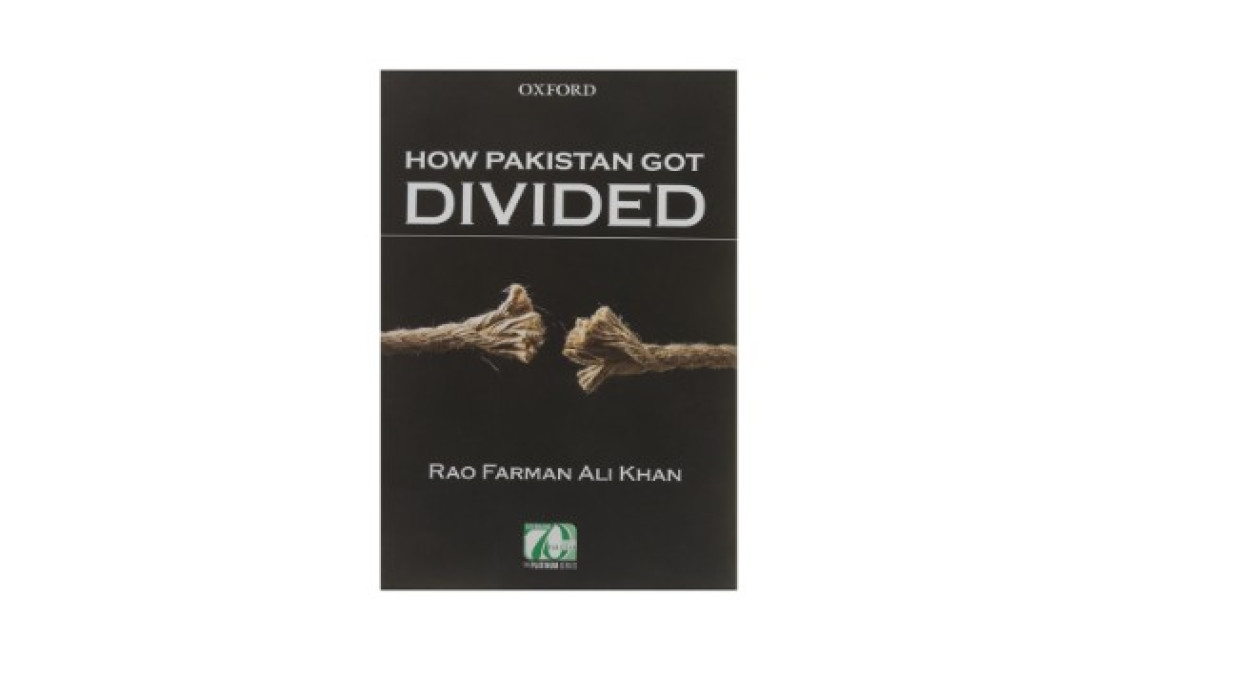
Author: Rao Farman Ali Khan
ISBN-10 0199406987, ISBN-13 978-0199406982, Edition 1st
Publisher Oxford University Press Publication date August 1, 2017
Imagine living through a national tragedy only to watch the most powerful architects of that tragedy rise again. But far worse than that realization is discovering that architects claim victimhood when history reveals their crimes. Those were the Bangladeshis after 1971, horrified by generals they once respected leading Pakistan to delusion and defeat.
In Pakistan, history turned toward national myth. Eastern Muslims betrayed. India conspiring. Western and Eastern wings are never one. For Bangladesh, it was simpler. Pakistani rule was colonialism by another name: political marginalization, economic injustice, and genocide justified retaliation.
Between these histories, at times intersecting, but more often ignoring one another, are confessions. Rao Farman Ali Khan’s How Pakistan Got Divided is one of the best. As a planner of genocide in Bangladesh and then-confidant of defeated Pakistani generals, Rao Farman Ali shares his account of how one of the world’s most populous nations was cleaved in two.
The Author in Context
You will be hard-pressed to find an individual more centrally involved in the tragedy of Bangladesh than Rao Farman Ali Khan. Deployed to Dhaka as a Major General in the final years of Pakistani occupation, Rao Farman Ali has been named several times by survivors of Pakistan’s crackdown on Bengali intellectuals on December 14 as being centrally involved.
But despite his involvement and lofty rank, Rao Farman Ali wrote a memoir whose argument mostly mirrors the national shame Pakistani officials forced onto defeat: Pakistani generals and civil officials lost East Pakistan because India cheated.
His boasting and involvement make the book a curious piece of evidence indeed, but conspiracy theories rarely win by self-admission.
India Didn’t Do It
In terms of historical narrative, Rao Farman Ali refutes some of the most persistent Pakistani claims. Chief among them is India’s role in East Pakistan’s secession. Rao Farman Ali makes clear throughout that Indian support for East Bengali rebels only became substantial after March of 1971. Before that point, Pakistani politics and militancy alone bore responsibility for East Pakistan’s sense of isolation.
Central to Rao Farman Ali’s testimony is the 1970 general election. In it, Sheikh Mujibur Rahman and his Awami League won in a landslide on the basis of the Six-Point program. Rao Farman Ali tacitly admits that the Six Points were not a call for independence but constitutional reform.
East Pakistan’s provincial autonomy was well within the parliamentary rules most Pakistanis voted for in 1970. By refusing to cede power to the victors of the East, Pakistan’s rulers treated East Pakistan not as citizens but subjects. Far from leaving in 1971, the Awami League should have ruled Pakistan from 1970 to 1971. In that sense, 1971 was a case of decolonization rather than secession.
Such is made clear by Rao Farman Ali, who describes in detail how the ruling classes in Pakistan deliberately delayed recognizing their electoral loss at every turn.
More egregiously still, Rao Farman Ali discusses Operation Searchlight. Pakistan’s military crackdown on Bengali civilians, which began on the night of March 25 and lasted well into May, was, in Rao Farman Ali’s telling, a reluctant military response to a nascent rebellion.
As such, he excuses away the deaths of thousands of civilians by conflating armed resistance with civil unrest, peaceful protesters with militants. Rao Farman Ali is neither the first nor last general to view politics as an arena for crushing enemies rather than serving citizens.
Higher blame for this attitude falls to the de facto ruler of Pakistan: Yahya Khan. Rao Farman Ali paints him as weak, paranoid, and detached from the Pakistani public, but most importantly, controlled by his generals. Zulfikar Ali Bhutto looms large over Rao Farman Ali’s account as well. Unlike Yahya Khan, Bhutto’s history, suggesting Bengalis “leave this country before we force you out,” is directly referenced.
Between Bhutto’s cynicism and Yahya’s deference to generals like Rao Farman Ali, there was no political will in West Pakistan to take meaningful steps to compromise with Bengalis before it was too late.
Demoting General Niazi
While Rao Farman Ali’s book touches on countless officials in Pakistan’s collapse, none earns more ire than Lieutenant General A. A. K. Niazi. Commanding General of Pakistan’s Eastern Command from November 1971 until his surrender, Niazi is remembered fondly in Pakistan but devastatingly in Bangladesh.
Rao Farman Ali does not disappoint. He heaps criticism on Niazi throughout the book, accusing him of panicking before the war started in earnest, undermining superiors while in Bangladesh, and even cowardice in his surrender speech.
Pakistan’s surrender document, awarded special ire from Rao Farman Ali, is a lengthy humiliation for him and Pakistan’s military. Rao Farman Ali admits that Pakistani officers were furious that the Instrument of Surrender even recognized the Mukti Bahini, Bangladesh’s freedom fighters. To acknowledge that non-Pakistanis were willingly sacrificing their lives against the state, Rao Farman Ali served was too much.
December 14, 1971
You will search Rao Farman Ali’s entire book for any meaningful comment on the killings of Bengali intellectuals on the night of December 14, long before Pakistan surrendered.
That is because Rao Farman Ali, contrary to later claims, was in Pakistan when the killings occurred. Rao Farman Ali thus attempts to paint himself as ignorant of events, an impossibility given phone records, travel documents, and testimonies that place Rao Farman Ali at meetings with Pakistan’s leaders before and after.
The closest Rao Farman Ali comes to outright admission is in a line in his diary from before his visit to Dhaka on December 14. “Green will be painted red,” Rao Farman Ali wrote.
Metaphorically? Not literally? Too late. Rao Farman Ali visited Dhaka while dozens of civilians, Pakistan knew were non-militants, were being murdered in cold blood. If that sentence wasn’t an order (or at the very least approval of killings), Rao Farman Ali’s entire diary remains suspect.
Conclusion: Politicians, Generals, and Who Blew It
While Rao Farman Ali seeks to spread blame around “politicians” and unnamed generals, his book makes the role of one man beyond doubt: Yahya Khan. From Rao Farman Ali’s account, Yahya Khan lost control of the army long before March of 1971. If anything, Rao Farman Ali’s memoir recalls an army officer with little political power, desperately trying to course-correct years of institutional chaos.
And who allowed that chaos to continue? Pakistan. Whatever political settlement existed between East and West Pakistan had broken down long before the civil war began, as Rao Farman Ali illustrates. Despite the Hamoodur Rahman Commission proving Rao Farman Ali’s and Yahya Khan’s worst fears correct about Pakistani war crimes and leadership failures in Bangladesh, Pakistan has never officially released its findings, even today.
Reading How Pakistan Got Divided feels like watching a man confess to murder for an hour and then get away with it. For Bangladeshis, Rao Farman Ali’s confession is old news. For Pakistan, Rao Farman Ali Khan’s confession is Pakistan.


0 Comments
LEAVE A COMMENT
Your email address will not be published