


20 May 2020 Lowy Institute

Covid-19: The need to
aid Asia to open up
HAIDER A. KHAN PETER MCCAWLEY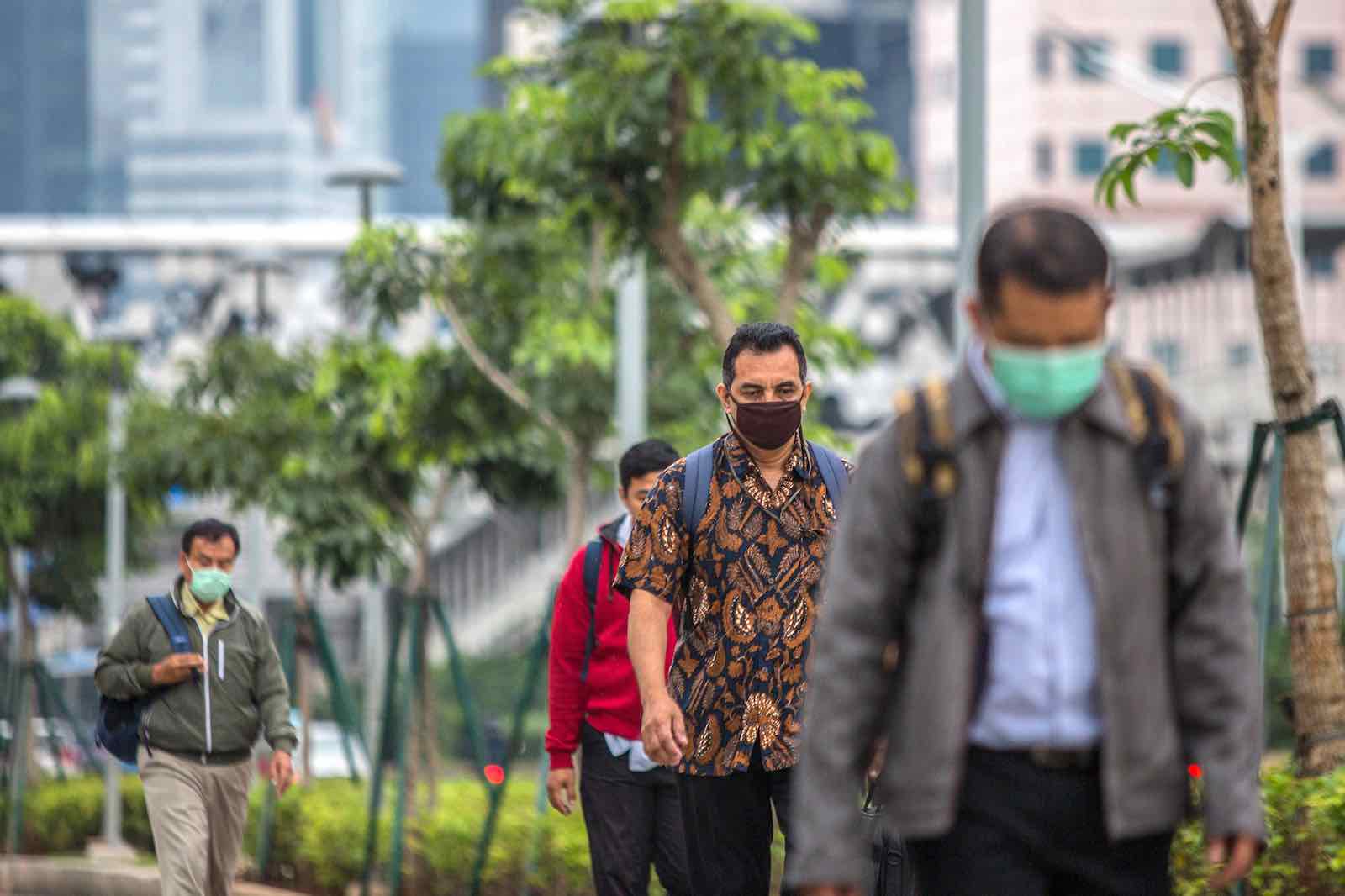 Jakarta, Indonesia (Asian Development Bank/Flickr)Published 20 May 2020
Two things about the public health and economic impacts of Covid-19 are now clear.
First, with just a few exceptions, most affected countries have suffered egregiously, and in many cases unnecessarily. This is a tragic situation.
Second, the response has been mainly left to the national governments and citizens of individual countries.
Sadly, at the international level, the response has been weak – much weaker than what is required. The urgent need now is for multilateral organisations and wealthy nations to respond with coordinated aid programs. The aid should go towards improving both public health and economic conditions in the affected countries. This applies to Asia in particular.
One example from Asia will suffice for now.
Bangladesh has had a good development record over a few decades. Nobel laureate Amartya Sen has compared the socio-economic development of Bangladesh favourably with other South Asian countries, including India. Yet the international aid package for Bangladesh to fight the current crisis has been small and has moved slowly.
Bangladesh is severely resource constrained and can only afford to spend US$12 per capita for health. Only $4 per capita can go towards public health programs. Rapid mobilisation of international aid is now vital.
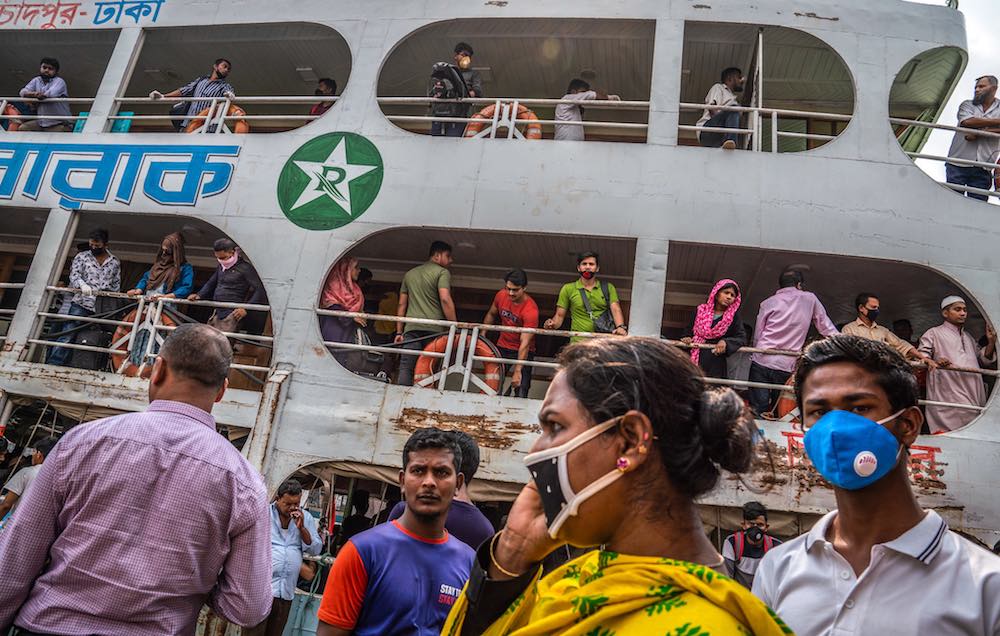
The country has a national emergency response plan, but mobilising resources for the plan and proper targeting will require both bilateral and multilateral assistance to reach the government and non-governmental organisations quickly. One of us has calculated – using the best available data – that a further package of at least $4 billion will be needed in order to stem the downward slide and restore a reasonable rate of economic growth.
The example of Bangladesh shows that large economic responses are needed from the international community. Urgent funding for humanitarian priorities is required as well. The detection, over the past few days, of Covid-19 in the huge Kutupalong refugee camp near Cox’s Bazar is an alarming development. The likelihood that the virus will now quickly spread poses grave risks both for the one million Rohingya refugees in the camp as well as for the wider Bangladesh community nearby. Developing countries in Asia are struggling to cope with widespread impacts of the crisis such as this as well as instability across international financial markets.
Networks related to rapid globalisation make it impossible to isolate one country from the rest of the world.
Strikingly, almost no Western donor country has shown interest in providing significant support to developing countries in Asia. Rich countries are unleashing staggering levels of resources to deal with problems inside their borders while most developing countries are hopelessly ill-equipped to cope.
For Western donor countries, this is not their finest hour. This collective response of Western nations sends a powerful message to developing countries – this time, you are on your own. The corollary is that Asian countries should look to expand their own forms of regional cooperation.
We can see from the rapid transmission of the virus across international borders that numerous key linkages now exist across the world. For example, trade and transportation networks, financial networks, and other networks related to rapid globalisation make it impossible to isolate one country from the rest of the world. We can pull up the drawbridges for a time but at some stage we will need to start lowering them again. It will be hard to know when to start doing this and which drawbridges to lower first.
Nevertheless, it is urgent to reopen economies as soon as possible. One of the most important global lessons of post-Second World War economic history is that openness is a key factor spurring growth.
In 2008, in a major report on international economic issues, the World Bank’s Commission on Growth and Development pointed to the importance of openness. Surveying the experiences of 13 high-growth economies since 1950, the Commission concluded that the essential shared characteristic and “the central lesson of this report” was that “during their periods of fast growth, these 13 economies all made the most of the global economy”.
Sustained growth, the Commission said:
was not possible before 1950. It became feasible only because the world economy became more open and more tightly integrated.
The past two months has seen an unprecedented array of barriers erected across the world, especially in wealthy countries. It is to be expected, of course, that governments will move to protect their citizens – but it is inevitable that much of the protection is also highly protectionist.
The danger now is that wealthy countries will become inward-looking. Countries such as Bangladesh will find that vital opportunities to grow their way out of the Covid-19 crisis are denied to them. Yet they will need continued access to international markets to pursue the export-oriented growth strategies that have been so successful in the past.
Thinking optimistically, we can hope that when the worst of the current crisis has passed, there will be much needed discussion about reforms needed in global and regional relationships.
But the global and regional international organisations and wealthy countries have a largely unmet responsibility to act quickly. They must move now so that channels of cooperation can be preserved even in the face of crisis today.
PNG and Covid-19: The
costs of economic stress
CATHERINE WILSON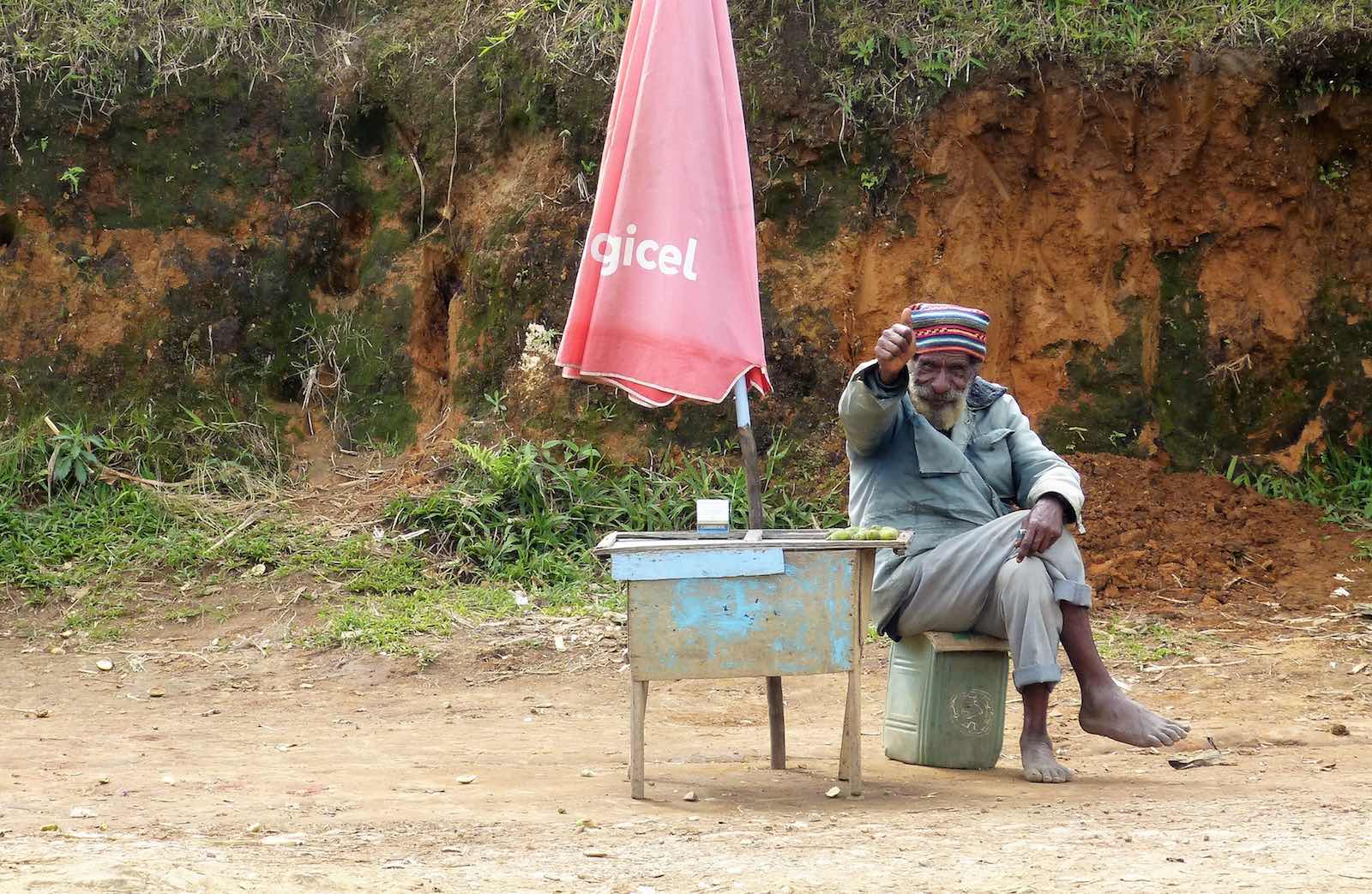 Enga Province, Western Highlands, PNG (gailhampshire/Flickr)Published 19 May 2020
Papua New Guinea has grappled with economic instability for years, exacerbated by generally declining global commodity prices, increasing national debt and allegations of fiscal mismanagement. None of this is helped by high rates of population growth and unemployment. Now the coronavirus pandemic will deliver a further blow to the nation’s extractive economy as the world enters a recession and demand for resources drops.
Health-wise, the Pacific Island state is one of the more fortunate countries, so far, with only a handful of confirmed Covid-19 cases and no fatalities.
But the resource dependence which PNG has promoted since independence won’t be a strength. The returns of the sector, already associated with poor job creation and failure to drive inclusive development, will further diminish. Before the virus outbreak, resources contributed 29% to the country’s GDP, and more than and 10% of government revenues. But in recent years volatile world markets and too much spending in advance of revenue delivery, leading to mounting debt, have significantly wiped out the anticipated benefits for development. A sovereign wealth fund intended to secure long-term revenue savings is not yet operational.
The government was planning record expenditure this year. Yet the Covid-19 outbreak has now left a glaring 2 billion kina (A$890 million) budget shortfall and national debt could surpass 40% of GDP by the end of the year. Meanwhile the country’s growth is forecast to decline to -0.2% this year.
This, as well as the state of emergency provisions, will affect the nation’s 8.6 million people, of whom about 40% already live below the poverty line.
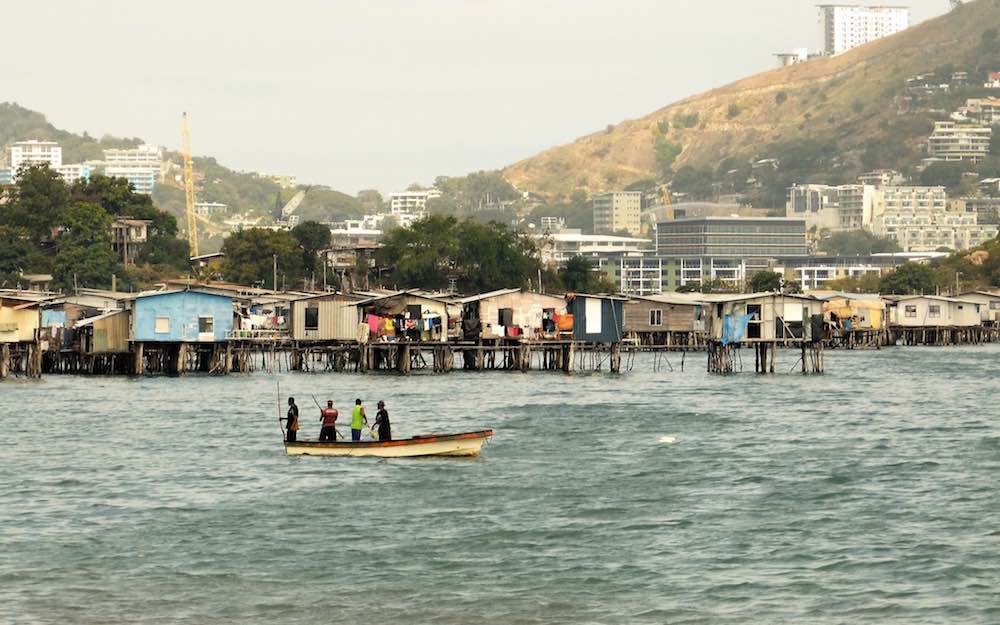
Local PNG economist, Busa Jeremiah Wenogo, has long advocated the development of small and medium enterprises and the informal economy in PNG to boost sustainable livelihoods. But he has warned that social distancing and banning of gatherings places “almost 80 percent of our nation’s workforce in the informal economy in a dire situation”.
Likewise, in a recent interview Paul Barker from PNG’s Institute of National Affairs identified the vulnerability of those with greater dependence upon cash crops for their livelihoods. “[People] living in areas of higher population density, including on oil palm settlement schemes [have] little, if any, land set aside for food production,” Barker told me.
In rural communities, where more than 80% of people reside, subsistence agriculture on customary-owned land remains the bedrock of household self-sufficiency and this will go a long way to maintaining rural food security. The country’s customary or traditional governance also plays an important role in local-level resilience. In times of great need, many families and communities instinctively turn to their head of clan or village chief for direction and support, rather than politicians. It’s likely such coping strategies will come to the fore during the weeks and months ahead.
However, in more crowded urban centres, where people don’t have the same access to land or social support structures, loss of incomes and poor food security could lead to a rise in crime.
Nothing incenses Papua New Guineans more than the suspicion or knowledge that their lives are stricken by hardship because of high-level corruption.
Large-scale violence or conflict is a different scenario. In PNG’s post-Independence history, apart from tribal warfare, this has been mostly connected with local grievances about the nature of foreign involvement in the economy. The most obvious and deadly example was the Bougainville civil war (1989-1998), triggered by anger over environmental damage and inequity associated with the then foreign-owned Panguna copper mine. More recently, landowner grievances about the Exxon Mobil co-venture, PNG LNG, and the Barrick Gold majority-owned Porgera gold mine in the highlands have resulted in violent skirmishes.
Having witnessed decades of under-development alongside massive resource projects, there is nothing that incenses Papua New Guineans more than the suspicion or knowledge that their lives are stricken by hardship because of high-level corruption. A special grevience is the idea of foreign companies taking the land’s wealth and at the same time leaving them poorer. For most citizens, there is a difference between suffering and hardship which has a comprehensible cause and that which is the result of social injustice.
Despite Covid-19 placing an enormous strain on our Pacific neighbour, Barker’s assessment appears sound, that “there should be no reason for chaos or PNG turning into a failed state, although many of its institutions can long be deemed as failing, or severely deficient.”
And though it is too early to judge, further political strength may come from Prime Minister James Marape, who came to power last year. Maraphe has adopted a more assertive stance with foreign investors in resource projects, claiming to better represent his nation’s interests. The emergence of Covid-19 coincided with Marape’s attempt to end Barrick Gold’s involvement in the Porgera mine and amend the terms of the proposed P’nyang gas extension project agreement with Exxon Mobil. Despite the courts ordering the government back to negotiations with Barrick Gold, Marape’s approach is what locals have demanded for a long time. The security and “trust” environment for foreign investors won’t improve unless Papua New Guineans see better returns.
PNG is still ranked a nation of “low human development”: life expectancy is 64 years, barely a quarter of the population have access to reliably mains electricity, and just over half of people in urban areas have improved sanitation (in rural areas, this the rate is less than 15%).
So the pandemic, if anything, highlights the urgency of maintaining a focus on diversifying the nation’s economy to better ride global events and uncertain world markets. Diversification became a core part of the government’s budget policy two years ago. Before the coronavirus outbreak, public expenditure was tuned to stimulating agriculture and the private sector, alongside investment in infrastructure and services, such as roads, power, and digital connectivity.
The government is making cautious moves to lift some of the internal lockdown restrictions. This will lead to improved conditions for the local economy. But it will be important, in carrying the country through this crisis and preserving stability, to not lose sight at the national level of the long-term needs, such as rigorous fiscal management, and more diversified and resilient employment for millions of Papua New Guineans.
Constitutional questions
over Solomon Islands’
coronavirus crackdown
JOSEPH D. FOUKONA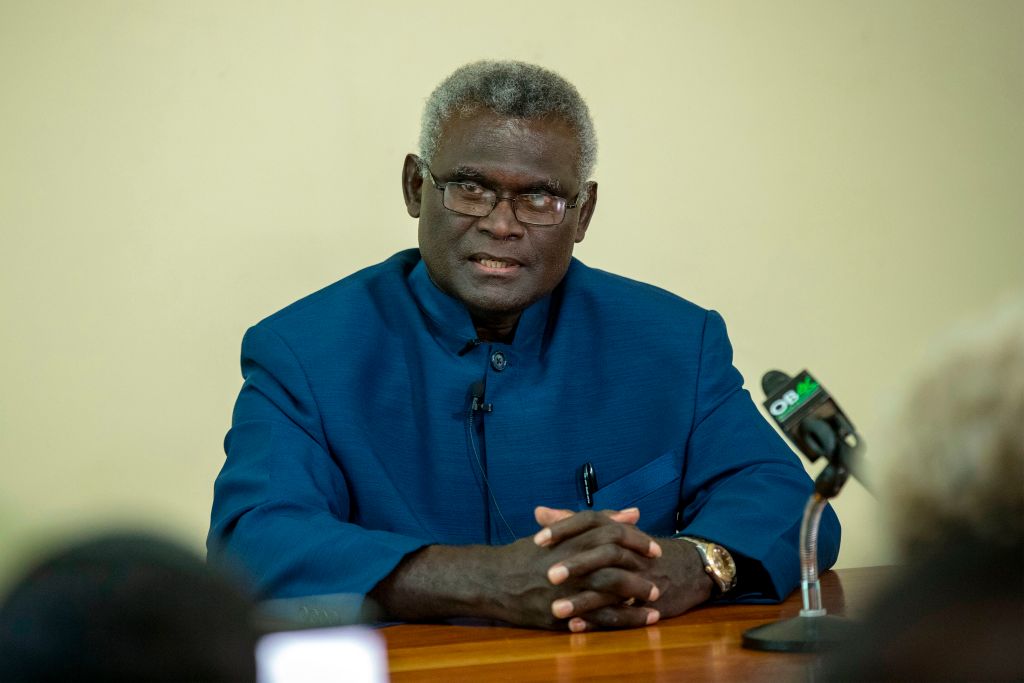 Solomon Islands Prime Minister Manasseh Sogavare (Robert Taupongi/AFP via Getty Images)Published 18 May 2020 10:00
On 25 March, following a government decision, the Solomon Islands Governor General Sir David Vunagi, declared a state of public emergency in response to the Covid-19 pandemic. Solomon Islands remains one of a few countries worldwide that is still without a reported case of the novel coronavirus. The Emergency Powers (Covid-19) Regulations 2020 authorised Prime Minster Manasseh Sogavare to make orders to protect the country from the pandemic and to prevent the spread of virus if there were cases. A travel ban was imposed, stopping international flights (except cargo flights), and schools closed. The maritime border with Papua New Guinea between Shortland and Bougainville was also shutdown.
The government’s decision to invoke a state of emergency was widely accepted as necessary in order to protect the country from Covid-19. On the face of it, the decision was also in line with the constitution.
But there is now an urgent need to examine whether the government has politicised the state of emergency, and whether its behaviour really is constitutional after all.
The regulations give the PM the power to make orders to restrict the movement of people, vessels and aircrafts, restrict assembly, suspend the media and declare a public place as emergency zone. These restrictions could infringe people’s fundamental rights, such as the right to movement, free association and freedom of expression as provided for by the constitution.
The current government’s position is that the Covid-19 Regulations restrict the fundamental rights enshrined in the Constitution. However, such restriction is not absolute. As stated under section 16(7) of the constitution:
Nothing contained in or done under the authority of any law shall be held to be inconsistent with or in contravention of the [fundamental rights provisions under the constitution] to the extent that the law in question makes in relation to any period of public emergency provision, or authorises the doing during any such period of any thing, that is reasonably justifiable in circumstances of any situation arising or existing during the period for the purpose of dealing with that situation.
The High Court of Solomon Islands in Douglas v Attorney General [1999] SBHC 147 explained section 16(7) as follows: “If anything contained in or done under the authority of any law, enacted pursuant to the state of public emergency, is shown not to be reasonably justifiable in the circumstances etc., it may be deemed unconstitutional and invalid.”
The key point is the idea that restrictions on fundamental rights must be “reasonably justifiable … for the purpose of dealing with that situation”.
Recent events raise serious questions about what is reasonable, and whether the government’s actions are focused foremost on dealing with the pandemic.
The question therefore must be “what is reasonably justifiable” for the purpose of dealing with the Covid-19 pandemic – which is the situation for which the state of public emergency was invoked. Recent events raise serious questions about what is reasonable, and whether the government’s actions are focused foremost on dealing with the pandemic.
An example is questions about logging production around the country and phosphate mining in Rennell, which has continued, including with overseas shipments, despite the declaration to keep borders closed. The Bulk Carrier Vessel MV Worship Light was cleared by customs to offload cargo near Honiara despite earlier allegedly violating “international and domestic maritime regulations”. The Western Province Premier, David Lani Gina also questioned why another container ship was allowed to dock at Noro without undergoing a 14-day quarantine as required by the Covid-19 regulations. These are instances of not applying the regulations with potential to undermine the purpose of preventing the spread of the Covid-19 virus.
Other cases have also raised questions about what could be “reasonably justified” as related to preventing the spread of the coronavirus. Claude Posala, a senior medical officer who was outspoken on health issues, lost his job on 6 April for having allegedly breached regulation 26 because his social media posts were purportedly “inflammatory against the government”.
More recently, the national government threatened to suspend the Malaita Provincial Government (MPG) because the province’s Premier, Daniel Suidani was allegedly making statements against the government’s efforts to fight against Covid-19. This included cautioning the government about obtaining Covid-19 equipment from China. Suidani had earlier drawn the ire of the national government for opposing the diplomatic switch to China last year, yet he has described the latest threats as unsubstantiated and based on misinterpretations of the law.
After the opposition leader Matthew Wale cautioned the government not to suspend the MPG “at a time when unity is needed”, the government responded claiming that Wale’s statement was intended to “create disharmony” and “provoke animosity against the government during [the] state of emergency period.” The government said Wale “would be referred to the police for breaching Covid-19 emergency measures”.
Such instances suggest the government has politicised the state of emergency, using the powers to marginalise anyone questioning its decisions, while also being selective in its application and enforcement of the regulations. The Covid-19 regulations, on their face, are constitutionally sound, and may allow for orders that may restrict fundamental rights. Yet the application and enforcement still has to be constitutional, which in this case means applying the law in a manner reasonably justifiable for the purpose of dealing with the Covid-19 pandemic.
COVIDcast Episode 11: Dave Sharma
MP on COVID-19 and Pacific relations

Published 15 May 2020
In Episode 11 of COVIDcast, Jonathan Pryke, Director of the Pacific Islands Program, sat down with Dave Sharma, Liberal member for the federal seat of Wentworth, to discuss strengthening ties between Australia and the Pacific, and a potential Australia‒Pacific travel “bubble”. Sharma has a particular interest in the Pacific region, having served as a diplomat in Papua New Guinea, and is co-convener of the recently formed Parliamentary Friends of the Pacific.
Sharma began by outlining his proposal that the “trans-Tasman bubble” – opening trade, commerce and tourism links between Australia and New Zealand – be extended to Pacific nations. Sharma said Covid-19 had been well controlled in the region with a low number of cases, and he focused on the fact that tourism and trade with Australia and New Zealand was an “economic lifeline” for Pacific neighbours. He noted the heavy toll the virus had taken on the economies of the region, citing Fiji as an example:
About 40% of its GDP comes from tourism and that’s basically gone to zero through this crisis. In Australia we’re looking at an economic contraction of somewhere in the high single figures, but Fiji is looking at the 20‒30% range.
On the question of the global impact of the virus, Sharma said, “It’s much more feasible to see these sorts of normal commerce, trade and tourism links re-establishing themselves between Australia and New Zealand and the Pacific than it is with other parts of the world”, although he cautioned that a Pacific travel bubble would not be in place before the end of 2020. He also noted that relaxing travel restrictions would happen sequentially: “Domestic travel first, Australia and New Zealand travel next, and then more broadly into the Pacific.”
Pryke raised debate about Australia’s migration program and how proposed changes might affect Pacific nations. Sharma highlighted the importance of the Pacific Labour Mobility Schemes, describing it as a “win‒win” for the countries involved, in sharing skills, facilitating remittances, and addressing a shortage of workers in certain sectors.
Pryke and Sharma also discussed what might be next for the Autonomous Region of Bougainville in Papua New Guinea, what else Australia is and should be doing to respond to Covid-19 in the Pacific, and how Australia’s ties with the region can be further strengthened.
COVIDcast is a weekly pop-up podcast hosted by Lowy Institute experts to discuss the implications of Covid-19 for Australia, the Asia-Pacific region, and the world. Previous episodes are available on the Lowy Institute website. You can also subscribe to COVIDcast on Apple Podcasts, listen on SoundCloud, Spotify, Google podcasts, or wherever you get your podcasts.
To act, or not? Al-
Shabaab’s response to a
Covid-19 crisis in Somalia
STEPHANIE CARVER SAMANTHA KRUBER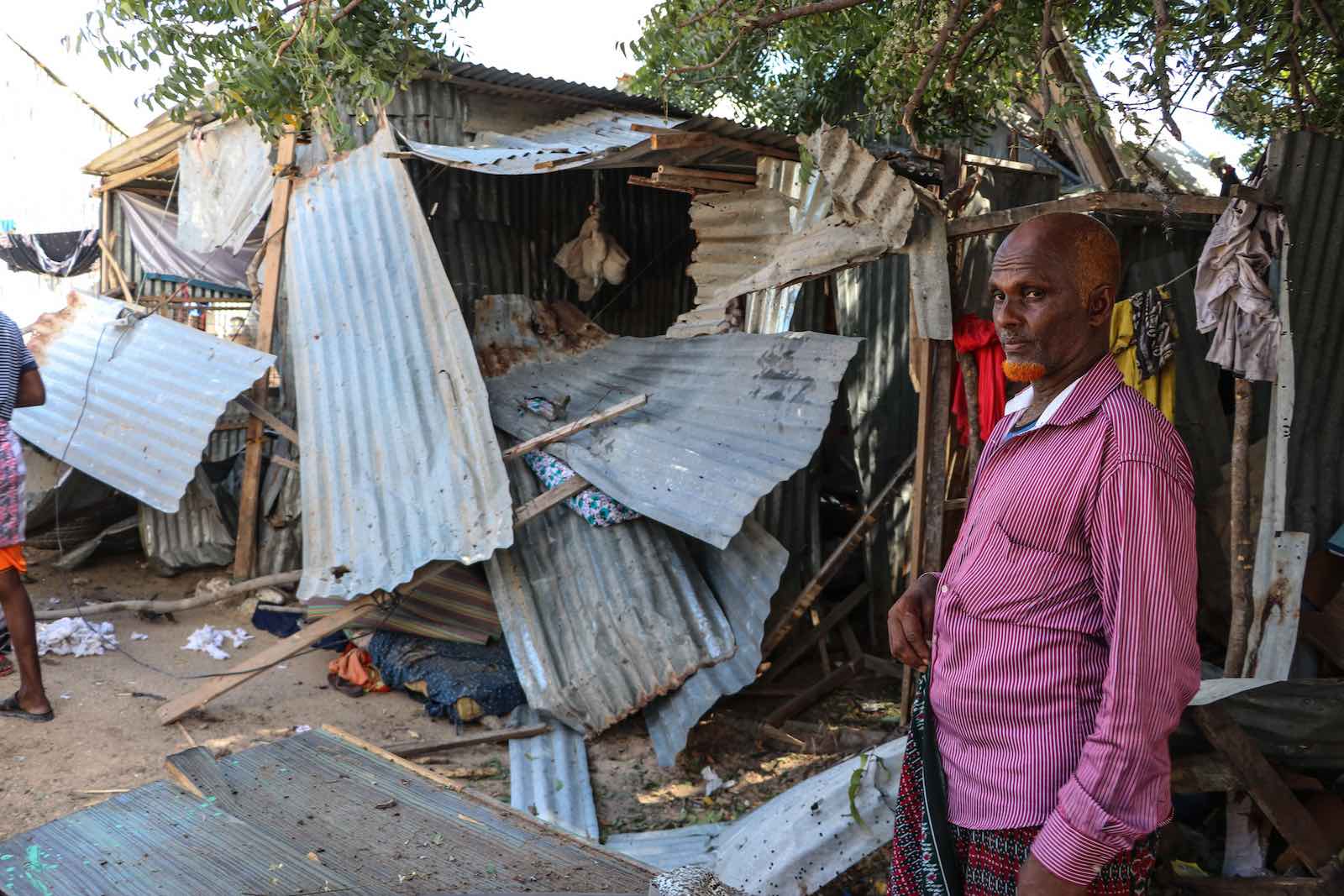 A destroyed house following a suicide bombing attack at a nearby tea shop in Mogadishu, Somalia, on 25 March Abdirazak Hussein Farah/AFP via Getty Images)Published 15 May 2020
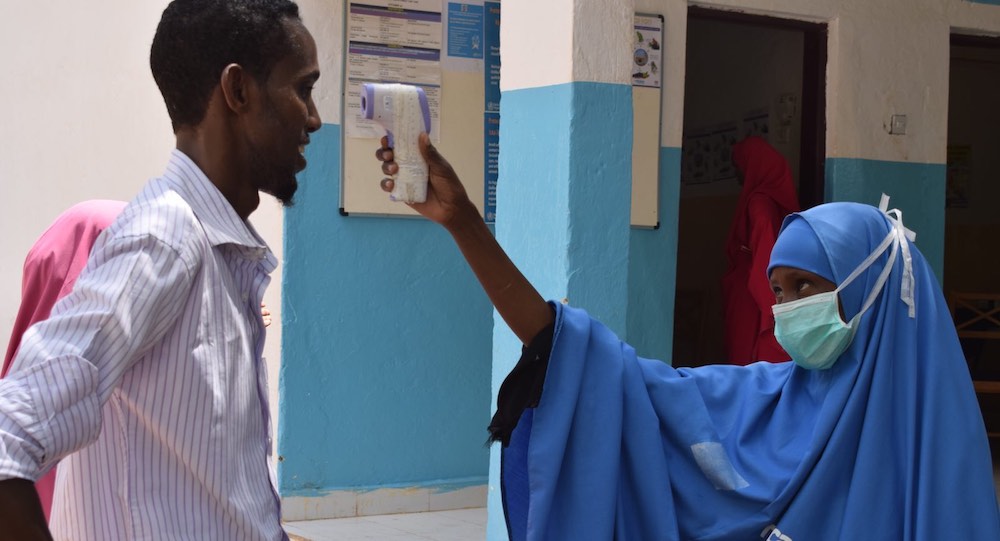
In the wake of the Covid-19 pandemic, regional security agencies have flagged the potential for a new wave of violent extremism to emerge within Somalia. World Health Organisation figures show that Somalia has had more than 1200 confirmed cases of Covid-19 and more than 50 deaths. However, the actual number of cases is likely far higher due to limited testing capacity and lack of skilled health workers.
The pandemic has presented the opportunity for groups to ramp up both rhetorical and physical attacks while governments are feeling particularly weak and distracted by the virus, with the dual objectives of furthering their own respective ambitions and expanding their support base. How, and with what effect, al-Shabaab, Somalia’s most well-known violent extremist group, will operate under these new conditions is yet to be fully realised. However, there are a number of potential trajectories that may emerge.
Exploiting conditions and strengthening networks
Within Somalia itself, the current conditions would be easy for insurgent groups to exploit. Tensions have been running high in the capital after the recent police killings of two citizens while enforcing Covid-19 restrictions on 24 April, culminated in widespread protests over the apparent impunity of the government security forces. And the timing could not be worse, as the frustration over price hikes in food prices in the lead up to Ramadan fans civil unrest. While escalating food costs around the Holy month of Ramadan is not unique, the pressures of the Covid-19 lockdowns mean that the price spikes are higher at a time when the income for many is drastically reduced.
What benefit does this civic unrest have for al-Shabaab? The political turmoil could be harnessed to radicalise and recruit new members, to promote a view that the government of Somalia’s President Mohamed Abdullahi Farmajo has mishandled the Covid-19 crisis, and to present themselves as an alternative.
The Covid-19 crisis might present a new opportunity for al-Shabaab to tighten it grip and expand its control over regions.
So far, the group appears to have taken the pandemic as an opportunity to escalate operations, with a number of attacks reported throughout the month of April. They likely will also capitalise upon existing resentment toward the government’s handling of the pandemic.
The continuing lockdown and price escalations coupled with the reduced earning capacity may push more people to turn to informal networks. In times of crisis, research has indicated that networks have proven invaluable lifelines for everything from ensuring survival, and a means of income to a sense of normalcy. Covid-19 could also see al-Shabaab grow its support network through the provision of much needed services. Extensive informal networks already exist within Somalia, and the prolonged lockdown risk growing these networks further. These networks operate without state regulation or state control and could be readily exploited by al-Shabaab. Indeed, the Covid-19 crisis might present a new opportunity for the group to tighten its grip and expand its control over regions.
Targeted messaging
UN Secretary General António Guterres has called for a “global ceasefire” as the world faces the Covid-19 pandemic. While this has seen some modest success (for example, the Saudi coalition’s unilateral ceasefire in Yemen), it seems unlikely this will resonate with non-state jihadist groups, including al-Shabaab. The Islamic State has already encouraged its supporters to attack Western targets while they are weakened and distracted by the pandemic.
Al-Shabaab has also taken the opportunity to bring Covid-19 into their broader anti-Western narrative, blaming the spread of the virus on “the crusader forces who have invaded the country and the disbelieving countries that support them”. As the pandemic continues, it is yet to be seen whether al-Shabaab will follow the example set by al-Qaeda, with whom they have been affiliated since 2009, which has focused on providing health guidance and condemning the immorality they argue caused the pandemic, rather than actually encouraging violence as Islamic State has done.
The cost of doing nothing?
However, there may be other reasons for al-Shabaab to remain away from the spotlight during the crisis. Violent overtures during this time might be poorly received, and rather than encouraging recruitment, may in fact result alienate the public. Indeed, this very scenario occurred in previous crises in the Horn of Africa. The group has previously caused more harm than good to its reputation during crises, such as during the 2011 famine when it denied there was a famine and banned aid workers from entering Shabaab-controlled territory, turning many of their former supporters against them, and it is yet to be seen if the group has learned from past mistakes.
Alternatively, the group might not have the resources to continue a widespread campaign in light of the Covid-19 pandemic. The group’s extensive networks of taxation – a network that allegedly extends into the diaspora – may be feeling the pinch under market contractions both within Somalia and abroad. This may lead the group to press pause on their campaign of terror for the foreseeable future.
Al-Shabaab has a number strategic choices that could all likely serve the group well, be it using the pandemic to reiterate the failings of the current government, or extend and strengthen existing informal networks, or promote their messaging. Even if the group choose not to act, there is still the possibility of benefit. Unfortunately, al-Shabaab have proven themselves past masters of exploiting political turmoil, and the current crisis provides the group with another opportunity.
The health challenge in PNG is
far greater than Covid-19 alone
ISHANI KALUTHOTAGE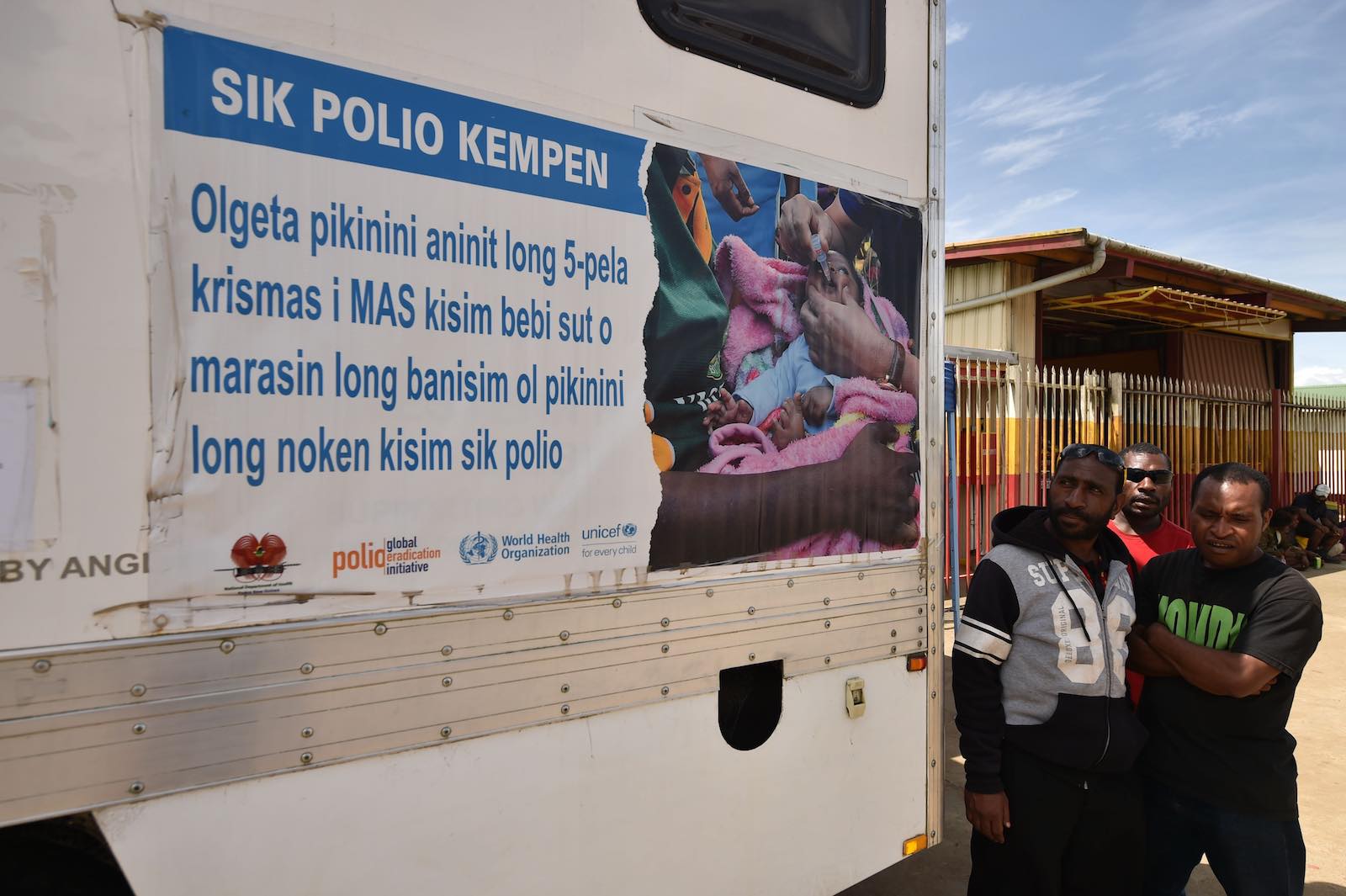 A mobile polio vaccination clinic on a street in Mount Hagen in the Western Highlands, PNG (Peter Parks/AFP via Getty Images)Published 13 May 2020
Papua New Guinea remains one of the most dangerous places in the world to give birth.
Many women and girls walk kilometres for days when heavily pregnant in order to access health facilities. Just ten years ago, women and girls in rural districts would only visit a clinic as a place “to go die”, not to deliver a baby. Stigma and poor health literacy added to the fear – with the country still the hotspot for the world’s most drug-resistant tuberculosis, alarming malaria rates, and recent polio outbreaks. Even today, for every 100,000 live births in the country, 215 women die in complications resulting from labour.
Now add to this the danger of Covid-19.
The PNG health system should fear a larger indirect death toll than from the coronavirus pandemic itself. The myths and misinformation associated with Covid-19 are only going to add to the barriers of receiving a supervised and safe birth. PNG has a population of more than 8 million, with health challenges unfortunately as diverse as its 800 different languages. Vaccination rates are poor, and with people fearful of Covid-19, women and girls will deliver babies in the bush, often alone.
The challenge is to find a balance to prevent the spread of Covid-19 while avoiding the cost to other essential health services.
Studies of the Ebola epidemic in Sierra Leone revealed a 34% increase in maternal mortality rates in health clinics alone during the outbreak. This followed stress on the medical supply chain and transport of drugs and equipment within the country. PNG faces the same risks should Covid-19 overburden the health system. Relatively simple treatments such a medications, gauze, or IV drips can stop a mother from bleeding to death, but it all depends on these potentially life-saving materials being available in rural health clinics.
In pre-Covid times, tuberculosis had been feared as the world’s biggest killer disease, claiming more than 4000 lives a day globally. Amid the coronavirus pandemic, we must not forget that tuberculosis remains the biggest killer, and the most drug-resistant strain, XDR-TB, is silently spreading in PNG. Millions of dollars and years of research have been dedicated towards tuberculosis programs in PNG, and this cannot go to waste as a consequence of the Covid-19 pandemic. Strict tuberculosis treatment regimes are still required, with complete patient compliance. Otherwise, tuberculosis prevalence will spike, and with it worsening drug resistance and ultimately more deaths.
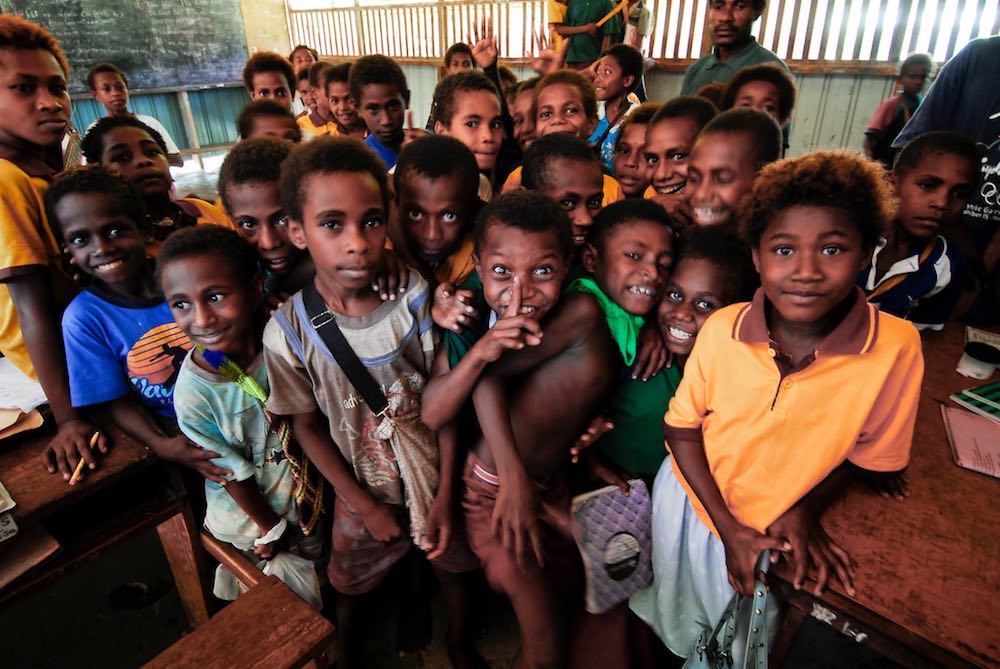
Chronic disease is a major challenge across the Pacific. Malaria is a constant threat, especially in PNG and Solomon Islands, which accounts for more than 90% of cases in the Western Pacific Region, according to the World Health Organisation. That figure could climb if Covid-19 disrupts mitigation efforts, such as the spraying of insecticides, use of treated nets, or access to malaria testing.
Immunisation rates also remain stubbornly low. Headline outbreaks demonstrate the dangers, such as in 2018 in PNG with polio – a disease once thought all but eradicated – or in Samoa with a devastating measles episode. Covid-19 has the potential to severely disrupt what should be routine immunisation programs by gobbling up resources and putting a stop to vaccination patrols due to travel restrictions. The damage from this disruption may not become evident for five or more years.
So for PNG, even as the government seeks to contain the spread of coronavirus, now is the time to emphasize that immunizations are an essential health service. This effort will ultimately reduce the burden on the PNG health system.
All this illustrates that the challenge is to find a balance to prevent the spread of Covid-19 while avoiding the cost to other essential health services. The virus not only attacks people, but the systems people have built in an effort to support the most vulnerable. The burden on an already weak health system will be immense and long-lasting.
PNG is unlikely to reach the Sustainable Development Goals target of reducing maternal mortality rates by 2030, along with the lowering the cost of other major diseases. If any good is to come from the Covid-19 pandemic, hopefully it will be the chance for PNG to reassess the deep-seated problems in its health system and governance – and work towards improving healthcare access for all.
Creating a Pacific bubble
JOE RAFALOWICZ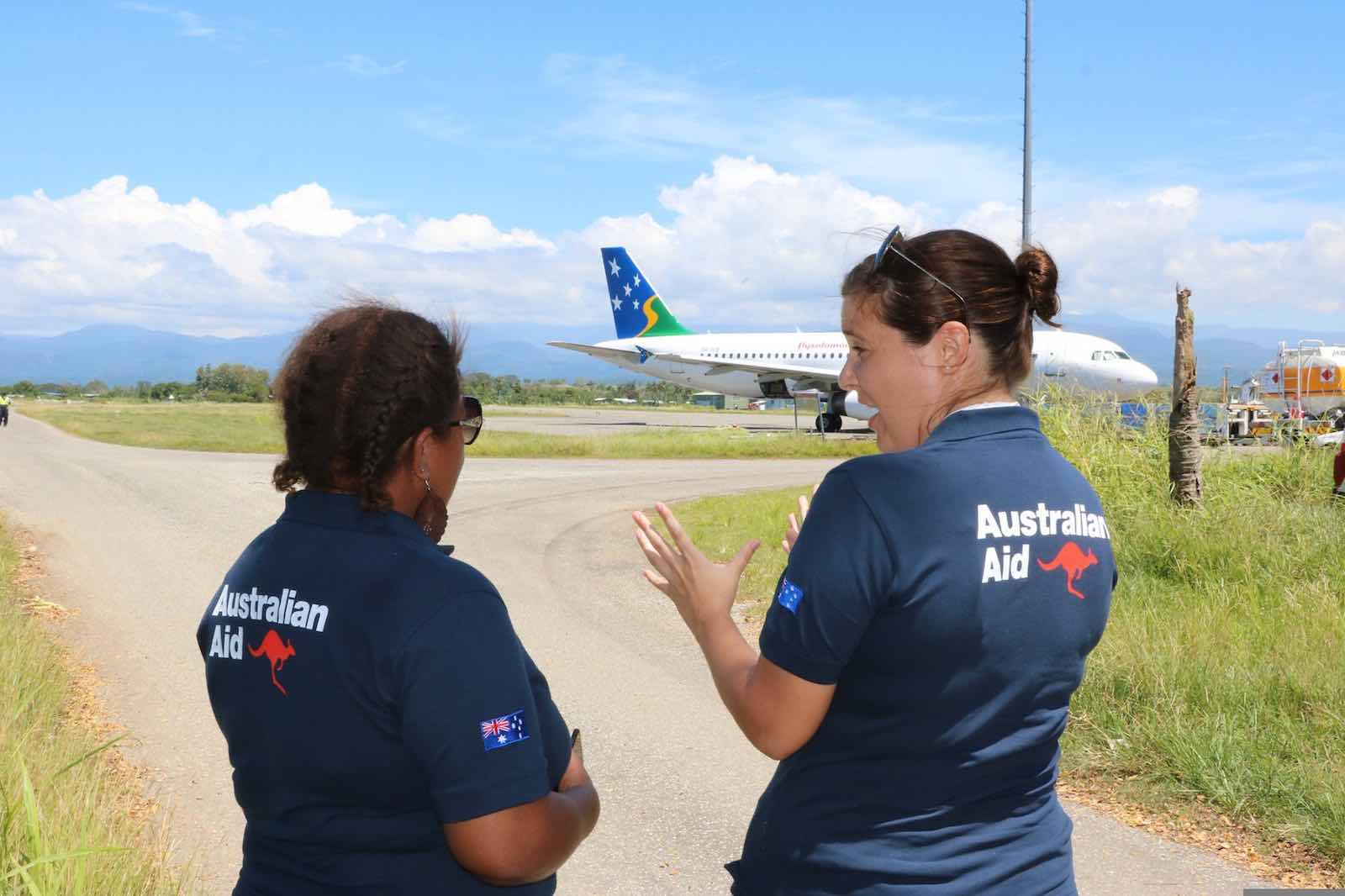 An Australian funded Covid-19 support package arrives in Solomon Islands last month (DFAT/Flickr)Published 7 May 2020
The success in containing the Covid-19 pandemic in both Australia and New Zealand has led to a novel idea – the opening up of trans-Tasman travel as long as each country is able to keep infections under control. It would be a ray of hope and normalcy, and an economic plus for both parties. While so far no Pacific countries are included in the “bubble”, Minister for International Development Alex Hawke has indicated they could well be next – provided they continue to successfully manage the pandemic.
Early signs are positive. Vanuatu and Solomon Islands have had no infections at all, while Fiji had just 18 cases, with no new infections in the last two weeks. New Caledonia has not had a new case in several weeks. Tonga has had no cases, is even looking at re-opening night clubs.
The benefits of a regional bubble extending to the Pacific go beyond increasing the number of sunny holiday spots available to Australian tourists. A relaxation on travel restrictions would have an enormous impact on the lives of children in the region. Australia considers the Pacific “our family” – and its Pacific Step-up strategy has largely been about entering a new chapter in the relationship with these neighbours. Here is an opportunity to do just that.
Countries in the Pacific are seizing this moment to increase regional cooperation. The Pacific Islands Forum, of which Australia is a member, has invoked the Biketawa Declaration to respond to the crisis, the same collective response instrument that was used when Australian and New Zealand peacekeepers were deployed to Solomon Islands. The Forum has compared the response to Covid-19 to the Tuvaluan concept of “te fale-pili” – meaning houses which are close to one another have a moral responsibility to protect each other in times of hardship. The region is ready to step up, and is asking Australia and New Zealand to join them in doing so.
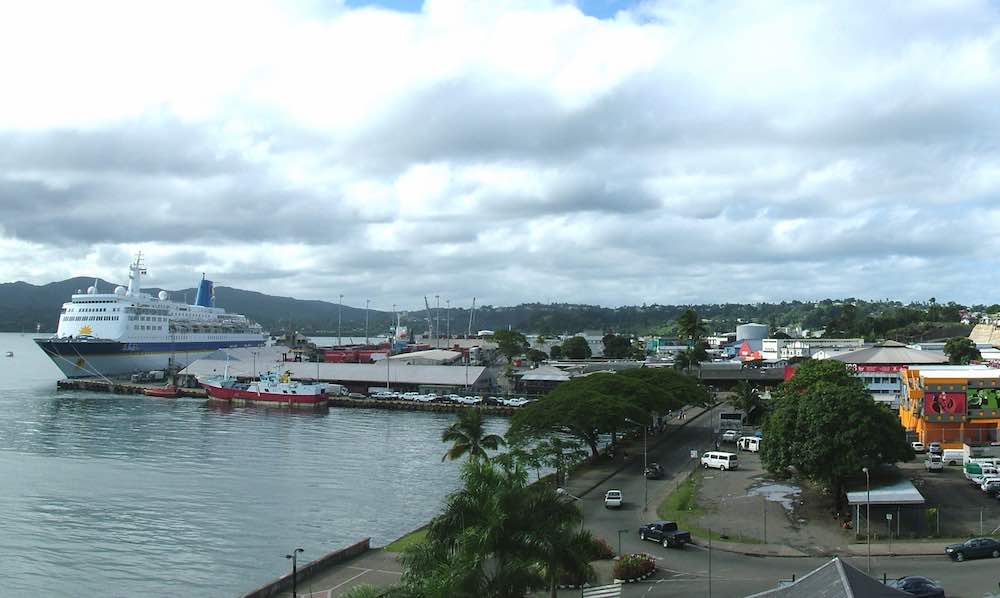
Fiji has one of the lowest rates of extreme poverty in the Pacific yet its prosperity is built almost entirely on tourism – 10% of households have at least one person working in the tourism industry. According to the ANZ bank, Fiji may lose nearly 602,000 visitors by air this year, a 67% drop translating into a GDP contraction of around 12%, putting about 75,000 jobs at risk. Vanuatu, too, is expected to experience a contraction in GDP, in part due to a loss of up to 21,000 tourism jobs, and will likely experience a major recession, compounding the impact of Tropical Cyclone Harold.
The fall-out of this drop in visitor numbers will be experienced by the most vulnerable: children in poor households whose families have the least savings. Or in the case of Vanuatu, families already reeling from the impact of Cyclone Harold. At a time of belt-tightening across the Australian government, allowing tourism to continue to Pacific neighbours is one way of ensuring they do not fall into a poverty and debt trap.
The sunburnt English backpacker is unlikely to return to regional Australia anytime soon. By scaling up regional worker programs, Australia can ensure enough labour in key industries, while giving hard-working Pacific Islanders a chance to send money back to their families.
Another major income source for families in the Pacific is remittances; they are a greater share of Pacific economies than aid, and represent between 5–40% of the GDP of Pacific countries. The World Bank estimates that due to Covid-19, global remittances are projected to decline by approximately 20%, making this economic shock the largest decline in remittances in recorded history.
Australia is the source of 26% of remittances to the Pacific, with Pacific seasonal workers sending home approximately $2,200 over a six-month period in Australia, and bringing an average of $6,650 in savings back at the end of their work. The Australian government has allowed Pacific Islanders on labour mobility schemes to stay in Australia during the pandemic and to keep working, allowing this lifeline to continue.
The creation of a regional bubble which includes the Pacific would allow these programs to continue and even to expand, as agricultural and seasonal labour from other countries dries up – the sunburnt English backpacker is unlikely to return to regional Australia anytime soon. By scaling up these programs, Australia can ensure enough labour in key industries, while giving hard-working Pacific Islanders a chance to send money back to their families.
This pandemic is a cataclysmic upending of business as usual for international tourism and migration. And yet Australia is incredibly fortunate to find itself in a neighbourhood where Covid-19 is being taken seriously, and has so far been contained in several countries. The Pacific Step-up is about Australia forging genuine partnerships with neighbours. That means relationships which are reciprocal and made between equals, which makes them enduring in a way that donor-recipient bonds are not.
Australia and New Zealand have been invited into the Pacific family – with all the privileges and responsibilities that entails. There are almost 1 million children in the Pacific whose livelihoods hang in the balance – their ability to continue their schooling or obtain the healthcare they need is dependent on a functioning local economy. Including the Pacific in the bubble should be Australia’s declaration of faith in the Pacific family and show a commitment to the future of the children who live there.
Philippines: Bangsamoro,
between conflict and Covid-19
GEORGI ENGELBRECHT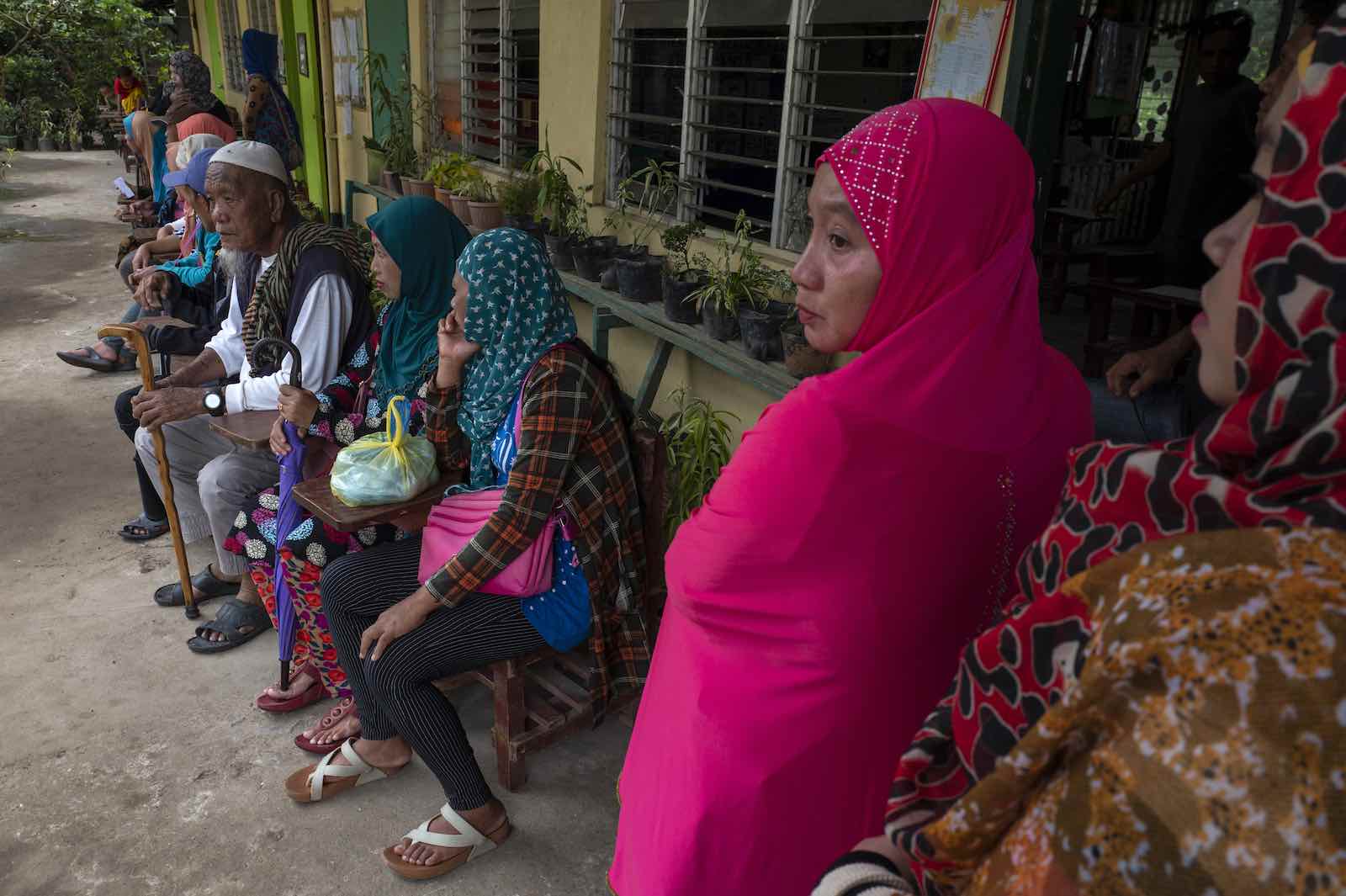 Residents wait to vote on an autonomy referendum, 6 February 2019, Salvador, Lanao del Norte, southern Philippines (Jes Aznar/Getty Images)Published 6 May 2020
In the midst of a delicate war-to-peace transition, still punctuated by military operations, attacks from militant groups and vendettas between feuding clans, the newly created autonomous region of Bangsamoro, in the southern Philippines, is now living in fear of Covid-19. While the extent of the pandemic remains unclear due to lack of testing, the virus presents an additional challenge the 13-month-old interim government led by the former rebels of the Moro Islamic Liberation Front (MILF) could have well done without. They might, however, find a silver lining among the pandemic’s dark clouds.
One year after its creation, the MILF-dominated Bangsamoro Transition Authority (BTA) still needs to prove itself. Most of the established ministries are operating, one third of the MILF’s combatants have been decommissioned and the much-awaited block grant mechanism – which provides the region with some financial autonomy – is on track. But internal divisions within the Bangsamoro parliament, adjustment to the realities of governance, and administrative hiccups have also led to skepticism on the ex-rebels’ ability to govern efficiently. They also face a dilemma in their relations with the region’s most powerful families. Bangsamoro’s tradition of dynastic leadership means the former rebels need to accommodate clans that remain the backbone of the Bangsamoro political culture. Yet building a strong and inclusive institution inevitably implies challenging these families’ influence.
Persistent violence is an additional burden to communities plagued by uncertainty and economic hardship. It might further threaten humanitarian operations. It could also jeopardise peace in the long run.
In this context, the Covid-19 crisis is becoming a crucial test. The region’s weak health infrastructure is clearly not prepared for the impact of a wide-reaching pandemic. But, if managed well, the crisis could prove to be an opportunity for the regional authority to assert itself as a capable institution in the eyes of both the region’s clans and the general population.
In the battle against the virus, the BTA needs to work in close collaboration with the five provincial authorities and numerous municipalities across the region, which are all in the hands of various clans. In the early stages of the pandemic, it drafted a contingency plan, set up a regional Covid-19 taskforce and demonstrated leadership in keeping the public informed on developments. Meanwhile, the provinces and municipalities led by local powerbrokers constituted the first line of response, channeling food assistance to communities that have been under various lockdowns since March. In some cases, BTA ministries reached out with direct aid as well, working with local authorities. While the response was not always systematic or well-coordinated, it achieved a degree of complementarity and seems to have avoided the worst – at least for now.
At times, political discord hampered the response, notably in Cotabato City, the seat of the BTA. Cotabato’s outspoken mayor has never hidden her scepticism of the former rebels’ capacity to govern, opposing the formal turnover of the city to the Bangsamoro more than one year after its residents voted, along with other Bangsamoro inhabitants, to join the new autonomous region. Since the outbreak, she openly argued with BTA officials about protocols for the distribution of relief. While this pandemic-related dispute has waned for now, the clash of interests between a strong-minded local leader and the new Bangsamoro administration is likely to resurface.

It is not Covid-19 alone that threatens Bangsamoro’s mostly rural areas. The lockdown’s impact on an already dire economic situation threatens long-term consequences. Following President Duterte’s announcement to lift the lockdown over some parts of the Philippines, the BTA needs to plan ahead. Testing for the virus in the Bangsamoro is not yet possible, and medical equipment is sorely lacking. While the BTA is setting up an isolation center in Cotabato to care for potential patients and plans to increase local testing capacity, it should also improve contact tracing and implement social-distancing measures in the post-quarantine stage, in coordination with local authorities.
Given the track record of past regional governments, even if relief operations continue after the lockdown, communities will likely worry about uneven distribution and be suspicious of any potential misuse of funds. The BTA needs to ensure maximum transparency in the distribution of aid and avoid favouritism. It would also likely gain goodwill by preparing early to help the socio-economic recovery of the most vulnerable areas that were affected by the lockdown. It should not, in particular, ignore the remote and often neglected islands of the Sulu Archipelago.
Covid-19 and its impact should also not eclipse a longer-lasting challenge in the Bangsamoro: communal violence between clans, known as “rido”. Since the outbreak, these Facebook Twitter Linkedin Pinterest Whatsapp Email

0 Comments
LEAVE A COMMENT
Your email address will not be published