

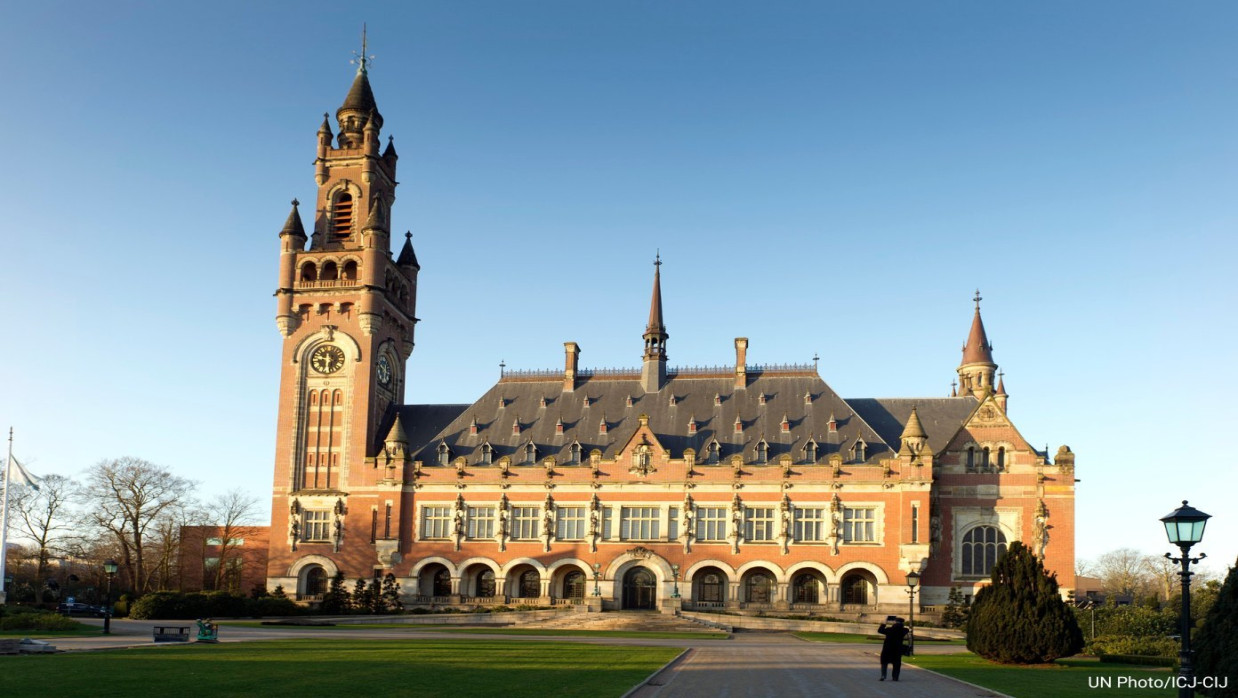
On 19 November 2026, the ICJ found that Myanmar had committed genocide against members of the Rohingya community. This is likely to be seen as an important landmark for the development of international legal principles. The fact that the military junta in power has dismissed the decision out of hand highlights the absurdity that, while various bodies can find that acts amounting to the most serious crimes may have been committed, there is no will to take any consequent action. At least the Rohingya in Bangladesh, numbering over one million, can feel that what has befallen them has been formally acknowledged. Whether this will lead to repatriation with appropriate rights and an end to many years of exile is much less clear.
By a majority of 9 judges to 6, the ICJ was satisfied that acts amounting to genocide had been carried out against the Rohingya in 2017. These included large-scale killing, rape and other sexual assaults, burning and destruction on a wide scale of property including entire townships, and various horrors inflicted on young children. The Court was not persuaded that these acts could be explained as a response to insurgent activity carried out by some Rohingya. The scale of attacks on and destruction of settlements, and settlement of areas by others, was sufficient to find the requisite intent to commit genocide.
The Government of Myanmar quickly denounced the decision. It pointed out that 6 of 15 judges dissented and, in any event, considered it an unjust decision. This, of course, is no reason the judgment should be less valid. Courts will, of course, decide issues by majority, as any other level and type of court does domestically. There will be varying views on the weight of different facts and the principles of law to apply, but that does not change the conclusion reached on balance by a majority of judges.
But this is perhaps unsurprising given the prevalence of an attitude of military supremacy over the requirements of a Constitution and other international commitments. The actions of the military against various ethnic groups have been justified on the basis that they are required to defend the unity of the Myanmar State. Of course, prolonged military rule has created disparate groups and civil strife, stunted economic growth, and further isolated the country from the rest of the world.
Events leading up to the horrors suffered by the Rohingya from 2017 would stretch back many years. The 1982 Law on Citizenship deprived the large majority of Rohingya of full citizenship, and there have been progressive restrictions on their freedom to travel, marry, receive an education, work, and participate in public life, reducing them to virtual stateless persons in their own country. The series of attacks from 2017 were thus the most drastic manifestation of those features, driving over 700,000 people to seek refuge in Bangladesh.
That a case could be brought before the Court by another State, here the Gambia, acting at the behest of the OIC, is therefore an important affirmation that other States have an interest in ensuring that genocide does not occur anywhere, irrespective of their proximity to the group at risk. It was commendable that a small African State took the lead in bringing such proceedings, which so many other much larger and wealthier countries declined to do, asserting the international obligations on all States in respect of genocide.
However, a major gap remains between legal and de facto responsibility. The ICJ has ordered a range of actions regarding accountability and reparation for wrongs done, and the return of displaced persons. There is no appeal from its decisions, but it has no means of enforcing them or ensuring implementation by a recalcitrant State. Failure to implement can be raised with the UN Security Council, but whether such principles are given practical effect often depends on wider political considerations.
Both China and Russia would be significant players, each to a different degree and with different interests. For China, Myanmar is strategically valuable, both economically, including the prospect of ports and other links to the Indian Ocean, and in terms of general security, securing its long land border, and its investments. Russia has long been a supplier of military equipment and other support to the Myanmar military. It would therefore be most unwelcome if the Security Council imposed any sanctions or other penalties, and its vetoes would be difficult to overcome.
That China should feel able to criticize the decision as going beyond the proper remit of a court of law is significant, given its longstanding advocacy of respect for State sovereignty and absence of external interference. It would wish all sides in the political and military conflict in Myanmar to remain amenable to its influence. But there are clear duties and restrictions under the Genocide Convention on acts against any persons within a State's territory. No State is free to act with total impunity towards such persons.
The USA itself is therefore far from impartial when it comes to application and adherence to decisions on genocide. In 2022, it went so far as to conclude that genocide had been perpetrated by the Junta against the Rohingya. It has nevertheless taken a measured approach to the ICJ decision, calling for careful examination and caution against politicizing the ICJ. This is all the more noteworthy given its attitude to various legal processes concerning Israel and events in Gaza.
There can be no claim to objectivity in the determination and punishment of acts of genocide if the crimes of one (adversary) State are denounced in the strongest terms, but those imputed to another (friendly) State are dismissed out of hand. Obvious differences between any two such situations will, of course, need to be weighed carefully on their merits, but differing approaches reflecting political sympathies serve only to cast doubt on human rights as universal values.
Considerable impacts of this situation fall on Bangladesh, which has been providing a home to close to a million Rohingya now for about 10 years, bearing a very heavy burden on all aspects of the environment, economy, social order, and security. The collections of squalid camps fringing Cox's Bazar are a testament to its laudable generosity to the refugees and to the world's failure to find a solution to their protracted homelessness. It would be unreasonable to require it to continue harboring these people as long as the perpetrating State will not create satisfactory circumstances for their return.
Simply allowing them to return to Rakhine State would not be enough. There would also need to be guarantees about all other privileges of citizenship: freedom to travel around Myanmar, freedom from violence, rights to property and businesses, and so on. Perhaps Rohingyas should be rehabilitated to a self-administered administration under a federal system.
The military position in Rakhine State itself adds another dimension. Much of the area, at least from which many Rohingya have been driven, is under the control of various resistance groups, most significantly the Arakan Army, all hostile to the current Regime. So, it is by no means clear that full cooperation from the Government of the Union would suffice. Presumably, at a minimum, there would need to be governments in effective authority over the area in question, committed to respecting and implementing the rights of the Rohingya over other claims.
It is also a time when Min Aung Hlaing has every incentive to gain some measure of international acceptance and non-condemnation, following his prolonged military domination and much-discredited elections. It is thus apt that an authoritative body of jurists holds him and his army responsible for some of the most serious wrongs that can be visited on a civilian population. How far countries are prepared to deal with Myanmar and its military government should very much depend on visible moves to address these issues, punish those responsible, and move towards a civil settlement.
Many human rights bodies will no doubt urge stronger sanctions, continued shunning, and action by the UN Security Council. All can help apply further pressure on the authorities. But it would be unrealistic to expect these to bring about a satisfactory solution on their own; they would also need to be designed with care to minimize their impact on ordinary people while denying as much funding as possible to the instruments of oppression.
More widely, this case and decision test the readiness of much of the rest of the world to uphold the standards and values for which it claims to stand, born out of the horrors committed in this century. There was to be a legal mechanism to give effect to "never again". But as long as certain States can ignore these obligations, the aspiration remains unfulfilled.
Clearly, for the victims of the genocide, much more would be required to feel that justice was done: recognition of their right to Myanmar citizenship, return to and recognition of their former homes and possessions, trial and punishment of offenders, and, most importantly, self-governance under a federal system. So, there is a long way to go before the plight of the Rohingya is resolved. In the meantime, this is an important decision for international law, but it also highlights ongoing atrocities. If it is to be more than empty words, States around the world must respect the decision and international law more broadly.


0 Comments
LEAVE A COMMENT
Your email address will not be published