

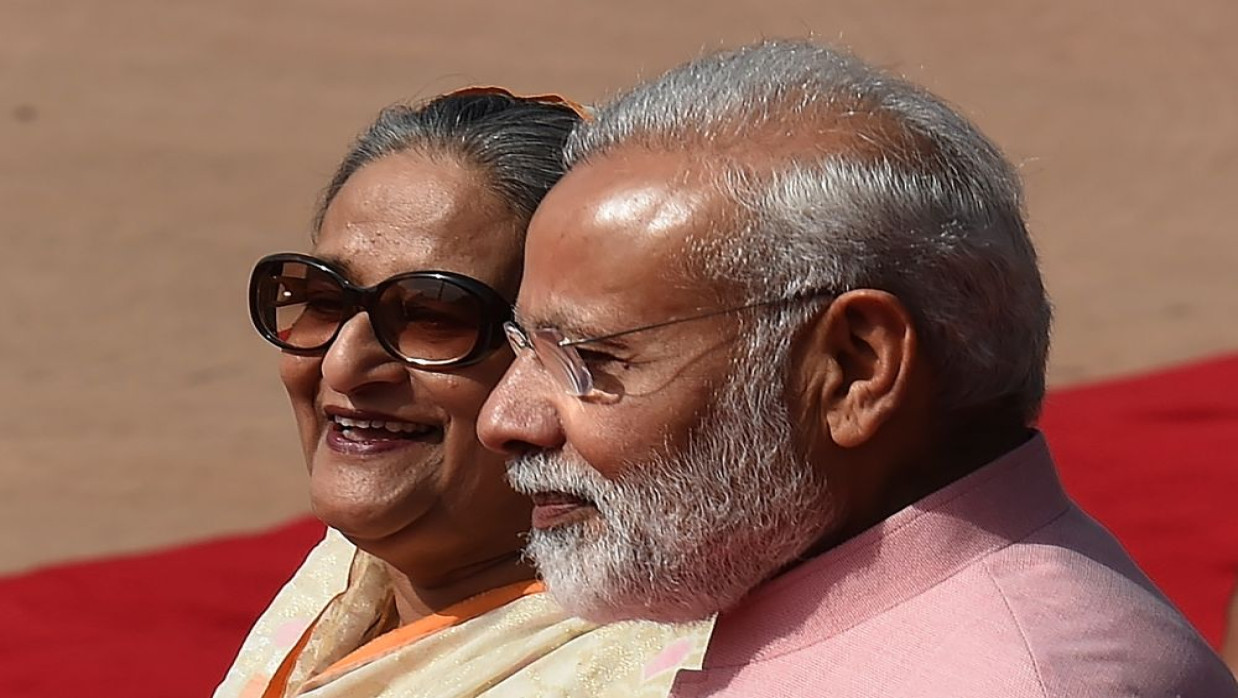
Sheikh Hasina's fall on August 5, 2024, did not simply mark the end of fifteen years of increasingly authoritarian rule in Bangladesh. It upended India’s decades-old tutelage over Bangladesh’s political sphere; put Nobel Prize-winning professor Muhammad Yunus squarely in the seat of accountability for running Bangladesh; and revealed that Bangladeshis had reinstalled a much-maligned political regime. But beyond domestic pressures, Hasina faces four foreign policy conundrums that won’t disappear if she or the Awami League tries to pin them on Yunus.
For one, Hasina was New Delhi’s knight in shining armor. During her tenure, Bangladesh conceded to major Indian demands on security cooperation, transit connectivity, trade, and access to India’s northeast. New Delhi likely scrambled when Hasina fled Bangladesh. Hosting Hasina after her ouster was one way to soothe the sudden upset. For Yunus, his government meant greater autonomy from New Delhi.
Indian discomfort showed up in sections of its media, which lashed out at Yunus. Commentators on TV news and partisan talking heads eagerly painted post-Hasina Bangladesh as sliding into chaos, Islamic extremism, and anti-Hindu violence. Legitimate worries about minorities' safety were lost among accusations fueled by political bias, which ignored the popular will for democracy that had toppled Hasina. While Indian newspapers and magazines differed in tone, a few seemed nearly as invested as Hasina was in smearing Yunus and damaging his reputation abroad.
The most significant developments, however, have taken place outside Bangladesh and India. Four scandals have become international issues that Yunus cannot reduce to conspiratorial politics.
First is the case of Saima Wazed, Hasina’s daughter, and her job at the WHO. When Wazed was appointed WHO Regional Director for South Asia, the Hasina family touted it as an international victory. Months later, after scrutiny of the circumstances of her appointment and allegations of misconduct, Wazed was placed on leave. Whether justified or not, the controversy played out at an international organization with its own bureaucracy. Hasina can malign Yunus for encouraging the WHO to look into her daughter, but she can’t insist they act on orders from Bangladesh’s acting government.
Second is Tulip Siddiq, Hasina’s niece and a British Member of Parliament. In January 2025, Siddiq resigned as Britain’s Economic Secretary to the Treasury after questions were raised about properties and associates of Bangladesh’s former government. Siddiq has denied wrongdoing, and resignation is not an admission of guilt. But it shows that British institutions tasked with parliamentary oversight, ethics, and holding politicians accountable to the public were examining the Hasina political family's patronage networks. Yunus can’t dictate British institutions, and he can’t brand their investigations as “Bangladeshi” conspiracies.
Third are investigations into overseas assets and suspected illegal fund transfers. During Hasina's tenure, allegations have surfaced involving politically connected businessmen, questionable bank loans, capital flight, and foreign properties. Probes followed, with some implicating British investigators and properties owned by prominent Bangladeshis.
Asset-freezing orders are preventive measures, not criminal convictions. Every accusation needs to be independently assessed and tried in a court of law. But fair trial standards don’t erase bank statements, property deeds, and legal actions taken in other countries just because a new government comes to power in Dhaka. The Awami League cannot unilaterally end investigations opened by British or other foreign authorities just by winning an election again.
Fourth and deadlier still by historical standards is the United Nations inquiry into the killings of July–August 2024. Last February, the UN Human Rights Office released its detailed report on the crackdown on Bangladesh’s protests. According to the UN report, up to 1,400 protesters may have been killed between July 1 and Aug. 15 last year. The report also highlighted “patterns of abuse” by security forces and individuals linked to the previous government.
This isn’t politically motivated rhetoric shouted from the parliament floor or party-patriotic grenade-throwing. This is an investigative report that’s now part of the public record for the entire world to examine. These aren’t criminal convictions, but settlements; elections or throwing rocks at Yunus won’t change that.
The International Crimes Tribunal of Bangladesh sentencing Hasina in absentia to death on 20 November, 2025 added further weight to the controversy surrounding the case. Hasina condemned the trial as being politically motivated. Concerns about due process and the trial's fairness are valid. However, the UN investigation was a separate entity, and its conclusions are distinct from the domestic court's decision.
Taken together, these four episodes create a situation different from standard political retribution. Hasina can demonize Yunus as a political crony bent on revenge. She can rally Awami League loyalists and count on editorial support from friendly quarters in India. Hasina and her party may even have some slight chance of political redemption. But Yunus and his supporters can’t change what’s now part of the international institutional record.
Bangladeshis benefited materially from Hasina's time in office. The Awami League also deserves credit for helping Bangladesh achieve independence. Neither excuse lets Hasina completely off the hook for her behavior. Nor should India mistake support for her for support for itself. Bangladesh should reward its cooperation with reciprocity, not friendship.
In the end, Yunus may have dealt Hasina a blow she can never recover from. Politics can patch over scandals, but schematics stored in UN archives can’t be revised. The facts may still hurt Hasina’s political ambitions, but they won’t hurt India-Bangladesh relations as long as New Delhi acts responsibly.


0 Comments
LEAVE A COMMENT
Your email address will not be published