

A Historical Analysis
Noakhali is the site of one of the darkest episodes in the Indian subcontinent. There are countless stories of murder, rape, forced conversion, loss of property, and exile that still haunt Hindus today. Muslims also remember 1946 against the backdrop of British rule and exploitation, poverty, lack of political representation, and other communal riots that took place across British India. They were all part of one tragedy, written in different ways at times to serve contemporary political ends.
We need to look at what happened in Noakhali without comparing one community to the other. Hindus were killed for no reason, and it is unacceptable to blame Muslims for the happenings in Calcutta or Bihar. We also can't forget the atrocities done on Muslims at the hands of the Hindus during this period. We need to accept that these things happened and not try to brush them aside or use them against each other.
Noakhali took place on 10 October 1946 during the Hindu celebration of Kojagari Lakshmi Puja. It took place across many areas of Noakhali and Tipperah (now Comilla) in Eastern Bengal. Violence did not stop after October, but the killings and threats continued for months after. Noakhali was only months away from the British dividing India and creating Pakistan. Millions would flee, and the political landscape of South Asia changed forever.
What happened in Noakhali did not stem from a simple political dispute. Since the British arrived, they exploited the already corrupt agricultural system. The permanent settlement created in 1793 allowed Zamindars to control most peasants and agricultural workers, who paid exorbitant rent. Many of these peasants in Eastern Bengal were Muslim, and many of the Zamindars and moneylenders were Hindu. This is not always true; there were Hindus who suffered from this and Muslims who owned land. Different areas of Bengal suffered from this in different ways.
Because religion and class were linked, tensions arose. People were fighting over land, loans, and rent. Many Hindus had more opportunities to learn and work in administrative jobs than their Muslim counterparts. With the rise of Islamic leaders such as Haji Shariatullah and the Faraizi movement, many Muslims gained awareness and began fighting back against this oppression.
Another devastating impact on the rural areas was the Bengal Famine of 1943. It caused many people across Bengal to starve and die from hunger due to war conditions, price rises, and governmental negligence and disparity. As a result, the rural population suffered and began to lose faith in their government. In 1946, they were still suffering the effects of this famine and rising political divide.
During British rule, there was a large divide created between Hindus and Muslims. From 1909, separate electorates were introduced, leading to political parties representing each religion. Later changes to the electoral system gave religion greater significance in political power. The British never created the Hindu/Muslim divide but increased it through their rule, and parties started to take sides on how the country should be run.
Most Indians wanted a free India, and the Indian National Congress reflected this. People had many opinions on federal versus state power and minority protection. The Muslim League was created by Muhammad Ali Jinnah, who argued for Pakistan because he believed that Muslims were a political nation. When talks broke down about the Cabinet Mission Plan of 1946, the gap between Muslims and Hindus only grew.
What led directly up to Noakhali was the massacres that took place in Calcutta in August of 1946. After the Muslim League called for Direct Action Day on August 16th, there was killing and burning throughout the city. Both Hindus and Muslims were killed during the days of chaos. The Great Calcutta Killing left people with no faith that the two religions could live together.
When Muslims were massacred in Bihar later that year in October/November, it was another devastating incident. Hundreds of Muslims were killed and fled their homes. It is important to remember that this took place after Noakhali began its massacres on October 10th. So it cannot be said that this triggered the Noakhali massacres. There were tensions going on prior to this and the killing that took place in August of Hindus and Muslims. The events in Bihar only fueled the fire.
Local leaders played a major role in what happened in Noakhali. Many have cited Maulavi Ghulam Sarwar Husseini as a key factor behind the incident. Bands of men roamed the streets, killing and destroying Hindu property. One of these killings was that of the Hindu landlord of Ramganj named Rajendralal Ray Chowdhury.
There have been some rumors about outraging religious sentiments, Hindu landlords, and Muslims being ill-treated. All of this needs proper documentation to verify. Rumors can help create a mob, but there is no evidence that what was rumored actually happened. There is also no reason to blame attacks on Hindus who had nothing to do with certain landlords.
People were killed, shops were looted, houses and temples were burnt. People were converted to Islam, married off against their will, and raped. Many Hindu families were forced out of their villages. Some took refuge with neighbors and local authorities. The plight of women was unimaginable. Their abduction and the trauma that followed had far-reaching effects.
How many people were actually killed is still uncertain. Government reports showed a much lower figure than politicians claimed at the time. It is even harder to say how many were forcibly converted or raped and displaced. We should not allow these numbers to inflate or diminish the horrors of what happened. But the organized persecution and loss of safety were certainly there.
Not all Muslims behaved the same. Some took part in the atrocities, and some helped instigate the mobs. Others protected their Hindu neighbors and prevented them from being harmed. These actions showed why we cannot blame an entire religion for the sins of a few.
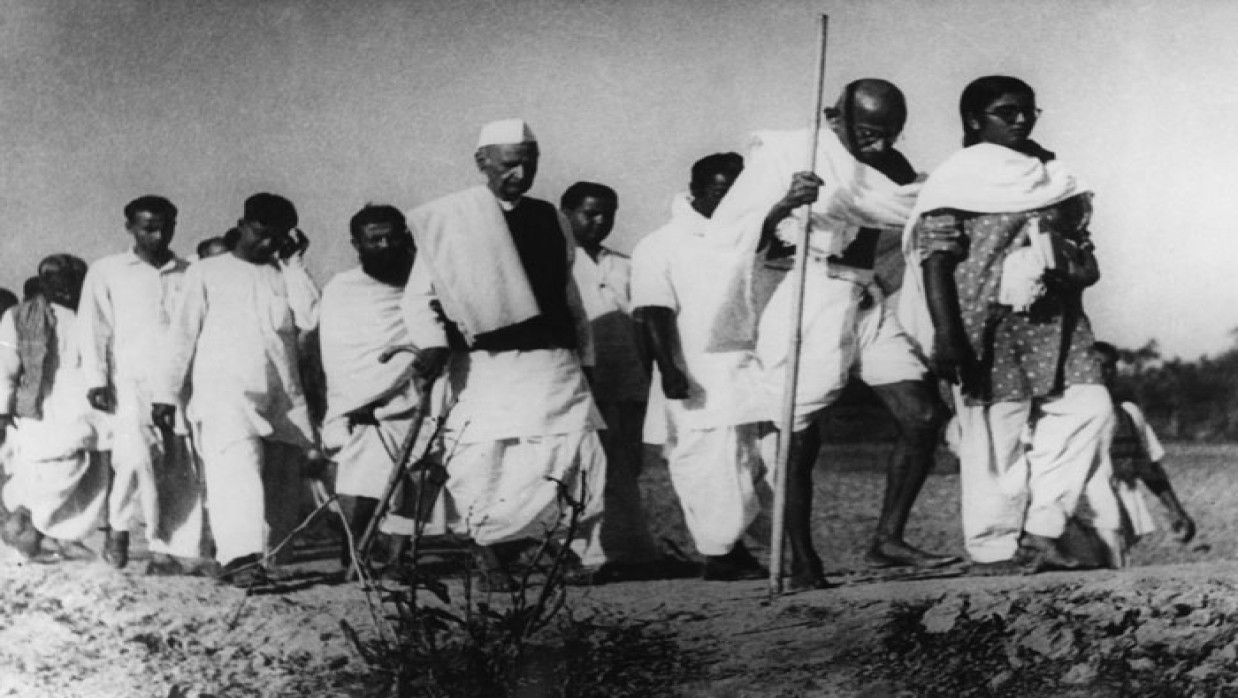
When Mahatma Gandhi arrived on the scene, it was one of the greatest humanitarian efforts made during this time. He traveled to Noakhali on 6 November 1946 and arrived the next day. He did not limit himself to meeting with political leaders. He spent months visiting villages and seeing firsthand the damage done. Gandhi began his village tour on foot in January 1947. He wanted to give Hindus hope and convince Muslims to protect their fellow villagers.
What Gandhi showed was that communal violence was unacceptable. Hindus in Bihar would never retaliate against Muslims for what happened to them in Noakhali, and Muslims would never retaliate for Hindus. His actions challenged the mindset taking hold among Indians.
However, Gandhi could not stop what was to come. With the riots happening in India, Muslims felt they needed constitutional protection to prevent them from being a permanent minority. Hindus felt they were unsafe living under Muslim rule in Noakhali.
This led to violence in other parts of India. After Hindus attacked Muslims in Noakhali, they began retaliating in other provinces as well. When Nehru was documenting what was occurring in Bihar, he noted large groups of people attacking Muslim houses, killing them, and looting their houses. He believed this was retaliation for what happened in Noakhali. Once violence took place between communities, it began fueling more violence against each other.
However, saying that India was divided due to the violence that occurred in Noakhali would be wrong. Many factors contributed to India's division. From constitutional disputes to nationalism. Britain wanted India split, and leaders could not come to a mutual agreement. Violence played a major role but was not the only reason.
The British decision to transfer power in August 1947, accompanied by hurried boundary-making and inadequate arrangements for population security, compounded the catastrophe. By dividing Punjab and Bengal, they tore people apart. Separating these regions caused many problems, including economic breakdown and mass refugee flows. Partition did not result in the peaceful separation of two religions but instead created more minority groups and unsettled border disputes.
There are also events that occurred after partition that prove religious nationalism is not all that can be concluded from the division of India. In 1971, Pakistan was split when the Bangladeshi people rose up against the oppression by fellow Muslims. They were politically oppressed, economically exploited, and discriminated against culturally for many years before the Pakistani army massacred many of them. This proved that just because you share the same religion does not mean you will live together in peace and equality.
For contemporary Bangladesh, Noakhali's history remains especially significant. The protection of religious minorities must remain an essential measure of national integrity, just as the protection of Muslims and other minorities in India is a fundamental obligation of that country's democratic institutions. Neither society benefits when historical atrocities are selectively remembered to justify present-day hostility.
The history of Noakhali has largely been shaped by grudges passed down through generations and political leanings. The focus is either on the suffering of the Hindus or on the oppression the Muslim peasants went through and lived under fear. Some historians focus on the Muslim uprising and don't mention the atrocities committed against helpless Hindu citizens. These narratives fail to consider both communities, as they were political groups made up of many different kinds of people.
Examining this event should include survivors, British officials, contemporary newspaper articles, court cases, and census data. It should also include family members who lived in both religions. It is important to note what actually happened and separate facts from made-up stories. Many also stood up for their neighbors and didn't let hatred get to them.
It should not be viewed as a triumph by either community or a lesson that Hindus and Muslims will never live together. But 80 years after what happened, we must remember that what occurred in Noakhali can teach us about the effects of political manipulation, economic oppression, corrupt institutions, and mass hysteria evolving into riots.
What happened in 1946 is Bangladeshi history. Indian history and Pakistani history. We should always remember those affected and look at what led up to these events with an open mind. We can learn from this tragedy that attacking innocent civilians will never make up for injustice. How a nation treats its minorities reflects how powerful it truly is.
We can all learn from this if we remember everyone who suffered during that time. And know who did what to whom.


0 Comments
LEAVE A COMMENT
Your email address will not be published