

For generations, naval strategists judged sea power almost entirely by what was visible on the surface. Battleships, heavy frigates, and carrier battle groups formed the backbone of what 19th-century colonial powers called "Gunboat Diplomacy." The objective was straightforward: park massive naval firepower off a foreign coastline to dictate political outcomes on land.
Today, that paradigm is shifting beneath our feet. Across the Indo-Pacific, the real strategic weight is moving from the surface down into the depths. What we are witnessing is the emergence of what strategic analysts call Submarine Diplomacy.
From the multi-billion-dollar AUKUS pact to routine undersea patrols across the Indian Ocean, submarines are no longer just tactical combat tools. Major powers deploy, transfer, and base them as central instruments of foreign policy. Nowhere is this silent competition more evident than in the Bay of Bengal.
Ground Zero for Undersea Competition
The Bay of Bengal is not an isolated body of water. It is the principal conduit connecting the Indian Ocean with the Malacca Strait. For Beijing, the Bay offers a practical bypass around its "Malacca Dilemma"- the vulnerability of its maritime energy corridors during a crisis. Through deep-water port projects and overland energy pipelines running through Myanmar, China has steadily expanded its maritime footprint.
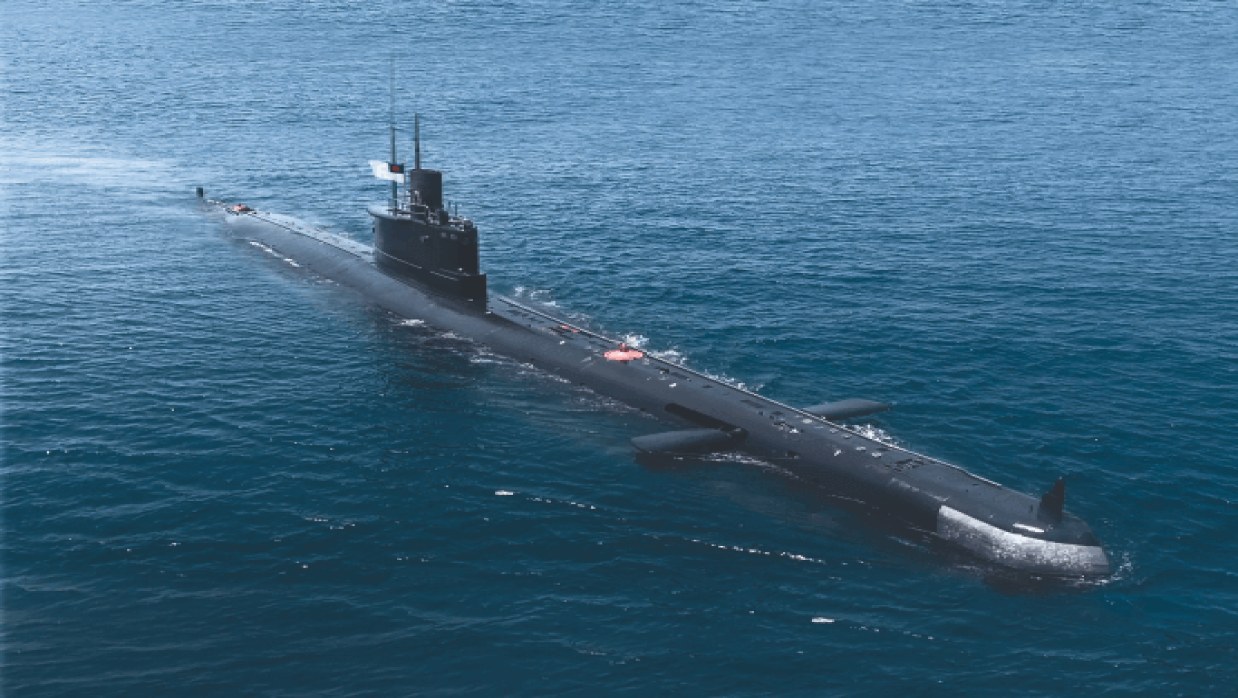
Undersea transfers have been central to this regional posture. When China supplied refurbished Type 035G Ming-class diesel-electric submarines to Bangladesh (BNS Nobojatra and BNS Joyjatra) and Myanmar (UMS Minye Theinkhathu), it altered regional maritime calculations overnight. Combined with modern support facilities like the submarine base at Pekua in Cox’s Bazar, the Bay has become an active arena of sub-surface deterrence.
Naturally, this shift has raised eyebrows in New Delhi and Washington. For India’s Eastern Naval Command, the presence of operational submarines right on its maritime flank disrupts long-held assumptions of uncontested sea control. For the United States, keeping these critical Sea Lines of Communication (SLOCs) open has driven expanded bilateral engagements and routine joint drills like CARAT.
Submarine Diplomacy vs. Gunboat Diplomacy
There is a fundamental doctrinal difference between old-fashioned gunboat diplomacy and modern submarine diplomacy, particularly for developing littoral nations.
Gunboat diplomacy relies on overt intimidation to achieve sea control. It is expensive, conspicuous, and historically associated with colonial hegemony. Furthermore, in an era of satellite tracking, shore-based missile batteries, and armed drones, large surface ships operating in narrow coastal waters are exceptionally vulnerable targets.
Submarine diplomacy, by contrast, operates on the logic of Sea-Denial. It relies not on visibility, but on calculated ambiguity. A coastal navy does not need to rule the open oceans or purchase multi-billion-dollar carrier groups; it only needs to convince an adversary that any attempt to blockade national ports will incur unacceptable losses. By maintaining an unseen presence beneath the waves, even a modest fleet forces superior navies into a cautious, defensive posture without firing a shot.
The Historical Reality of Undersea Asymmetry
Naval history provides clear proof of how disproportionate undersea leverage can be:-
During the Second World War, German Admiral Karl Dönitz used U-boat wolfpacks to bring Britain’s maritime lifelines to the brink of collapse, despite the vast surface superiority of the Royal Navy. The psychological toll was real. Winston Churchill candidly noted after the war that the U-boat menace was the only threat that ever truly frightened him.
Decades later, Soviet Admiral Sergey Gorshkov adopted a similar logic. Unable to match the United States carrier for carrier during the Cold War, he invested heavily in submarines and anti-ship missile barriers, effectively denying American carrier strike groups uncontested access to Soviet waters.
Regional conflicts reflect the same dynamic. In 1965, Pakistan's lone submarine, PNS Ghazi, kept major Indian surface combatants confined to Bombay harbor purely through the threat of its unseen location. In 1971, Ghazi’s deployment to the Bay of Bengal forced India’s aircraft carrier, INS Vikrant, to reposition defensively until the threat was eliminated. Similarly, during the 1982 Falklands War, Argentina’s single operational submarine, San Luis, evaded hundreds of British anti-submarine munitions and severely constrained Royal Navy carrier operations.
Recent incidents across the Indian Ocean, including sub-surface strikes against surface combatants like the Iranian frigate IRIS Dena, underscore this harsh modern reality: surface warships operating without dedicated undersea protection are exposed and vulnerable.
Strategic Imperatives for Bangladesh
For Bangladesh, maritime defense is intimately linked to its founding history. In March 1971, eight Bengali submariners undergoing training at France's Toulon naval base risked their lives to defect and join the Liberation War. Their tactical expertise formed the backbone of Operation Jackpot, the historic commando operation that crippled enemy-held ports and altered the course of the war.
When Bangladesh inducted two Ming-class submarines in 2017, it completed its transition toward a three-dimensional navy. Yet these legacy platforms lack modern Air-Independent Propulsion (AIP) and are nearing the end of their operational utility.
Because Bangladesh's economy depends entirely on uninterrupted sea trade for fuel, raw materials, and export cargo, protecting its maritime approaches is existential. Investing in two modern, off-the-shelf AIP-equipped conventional submarines is not an offensive luxury; it is a necessary national security insurance policy. It ensures that no regional power can easily impose a blockade or constrain sovereign decision-making during a crisis.
At the same time, national policymakers must exercise extreme caution regarding maritime sovereignty. Administrative choices, such as expanding port limits into sensitive riverine corridors like the Feni River to establish transit routes, have profound geopolitical consequences. Such decisions must be evaluated strictly through a national security lens by seasoned naval planners, rather than treated purely as commercial or bureaucratic arrangements.
Looking Ahead
Submarine diplomacy has rewritten the playbook for maritime security across the Indo-Pacific. For Bangladesh, recognizing this dynamic is critical to defending its sovereign rights and economic future. By drawing upon the legacy of the 1971 Toulon submariners and maintaining a credible, modern undersea deterrent, Bangladesh can ensure that the Bay of Bengal remains an open avenue for national prosperity, protected by a silent, effective shield beneath the waves.


0 Comments
LEAVE A COMMENT
Your email address will not be published