

Malaysia First, Then China: Bangladesh’s Pragmatic Search for Economic Security
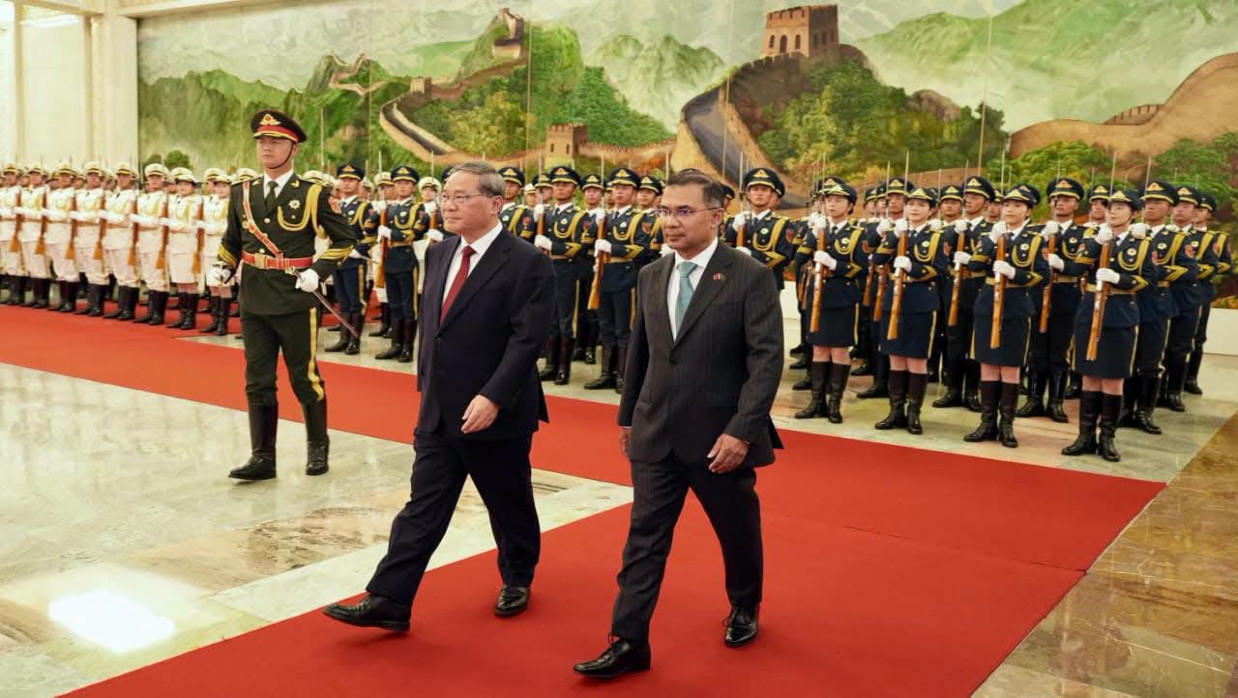
Prime Minister Tarique Rahman’s selection of Malaysia and China for his first international trips as head speaks volumes. The first countries any head of government visits can reveal a lot about their administration’s priorities. Rather than Washington, DC, or New Delhi, or Riyadh, or some other capital where Bangladesh might go to find geopolitical allies, Tarique went to where Bangladesh is going these days to find jobs, investments, infrastructure, and growth. The sequence of the visit also matters. Malaysia first, not China. This trip is about jobs. This trip is about markets. This trip is about economics, not geopolitics. Not about ideology.
For Bangladesh, Malaysia has been and remains crucial. It is the world’s top destination for legal Bangladeshi migrant workers with over 800,000 on its books. Millions more Bangladeshis work in Malaysia through unofficial channels. Millions of families in Bangladesh depend on cash inflows totaling billions of dollars each year.
In 2024, Malaysia halted all foreign worker recruitment. This impacted Bangladesh both in terms of future employment prospects for Bangladeshis abroad, at a time when unemployment was increasing at home, and in the current repatriation of workers. Fast-tracking the reopening of Malaysian markets to Bangladeshi labor was thus top of Dhaka’s agenda. The PM spoke of protecting migrant workers’ rights, technical cooperation, and attracting Malaysian investment in both manufacturing and high-tech sectors. Each of these points addresses immediate needs in Bangladesh. Each point also feeds into Prime Minister Tarique Rahman’s promises of creating jobs.
Another prong of Bangladesh's economic policy was emphasized during the second leg of the visit to China. Bangladesh has made China its top trading partner and one of its largest development finance providers. Bangladesh seeks around US$6 billion in fresh Chinese funding for power transmission lines, transport infrastructure, water treatment plants, health care, and port development.
All of these requests also come on top of what has already been a growing relationship. China has invested in major infrastructure projects in Bangladesh through its Belt and Road Initiative; bilateral trade has surpassed US$24 billion per year; and recent agreements, ranging from industrial investments to cooperation on future technologies, made within the last year show that economic cooperation is only expanding further.
Nevertheless, Bangladesh appears careful not to allow this growing partnership to evolve into excessive strategic dependence. The most revealing example is the continued postponement of the long-discussed Teesta River Comprehensive Management Project. China has expressed interest in financing the project for years, while India has consistently viewed such involvement with caution because of the river's strategic and political sensitivity.
Leaving the Teesta project unfinished at the planning stage could also be Dhaka’s way of indicating that it will welcome Chinese capital when economic interests align. But on issues that might change geopolitical calculations on the ground, it will likely hedge.
Dhaka has also had to pay close diplomatic attention outside of Asia. A few days before Rahman’s visit to China, envoys from the U.S., U.K., Japan, and Sweden met to consult with Bangladesh’s foreign secretary. While such routine gatherings among Western diplomats are not unheard of, the timing of the meeting suggested that Bangladesh’s growing closeness with Beijing had been noticed by its biggest allies and partners. As great-power rivalry between China and the West escalates across the Indo-Pacific, Bangladesh’s foreign policy choices will increasingly come under scrutiny from outside powers.
Bangladesh’s foreign policy has traditionally been characterized by commentators as "friendship to all, malice toward none." Since Bangladesh's earliest years as an independent country, its leaders have sought to maintain warm relations with China, India, the U.S., Japan, the European Union, Gulf states, and Southeast Asian countries. By cultivating ties with all major powers, Bangladesh can attract investments from all sides, reduce the risk of dependence on any one country or group, and capitalize on economic opportunities wherever they arise.
Rahman's first overseas tour appears consistent with that long-standing tradition. Malaysia offers immediate relief through employment and remittances, while China provides capital for large-scale infrastructure and industrial development. At the same time, Bangladesh has avoided taking actions that would unnecessarily alienate India or its Western development partners.
The challenge going forward will not only be to raise funds but also to navigate the political and economic strings attached to them. Hedging has become particularly challenging amid heightened global competition. Should Dhaka walk that fine line, maintaining influxes of investment while retaining strategic independence, Bangladesh will emerge as a mature middle power capable of navigating the Indo-Pacific with confidence. Should Dhaka allow itself to become financially indebted to the point that political choices are impacted, today's debts may become tomorrow's vulnerabilities.

0 Comments
LEAVE A COMMENT
Your email address will not be published