

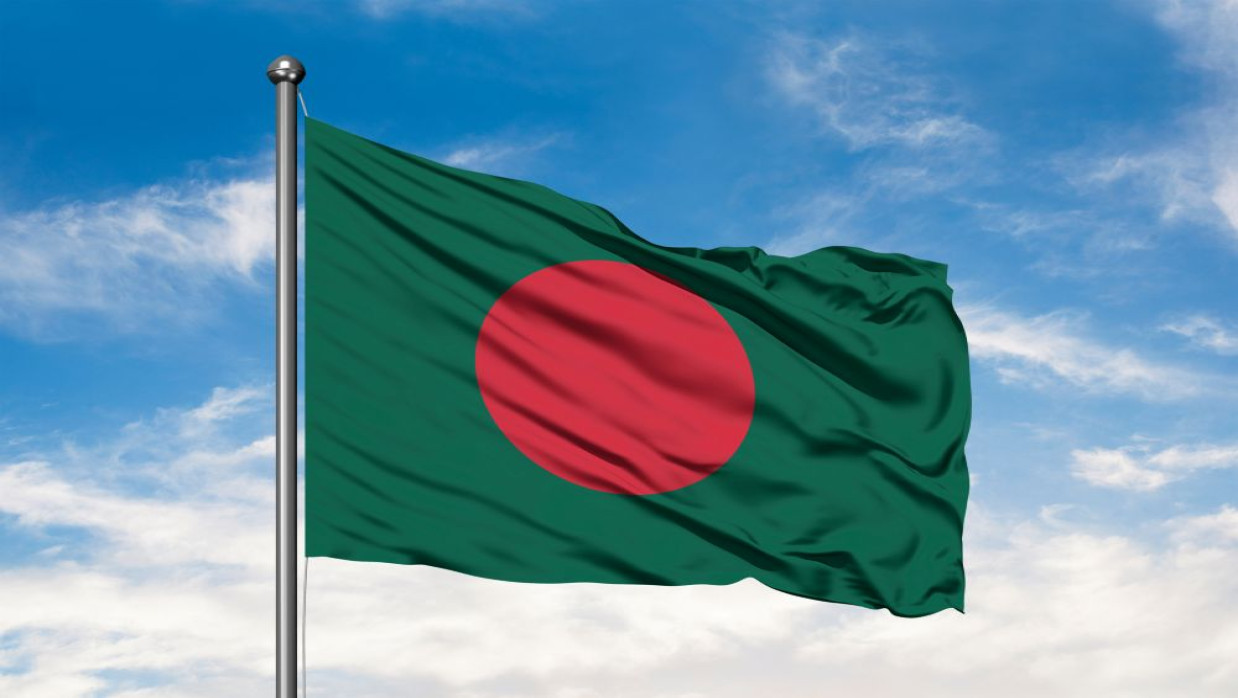
A nation comes into existence due to deep-rooted historical and social reasons. The history of a nation is an essential ingredient in its social and political identity. The continued existence of a nation depends on its sense of national identity and cohesion, which are strong enough to weather the storms and stresses of the contemporary world. The history of a nation, besides being a record of major events, also comprises its political, social, military, and cultural heritage, including its literary, scientific, and artistic expressions as well as its religious belief systems. Hence, for Bangladesh, given it is a relatively young nation, it is of great importance that its history be understood by all Bangladeshis.
In this article, a summary is given of the last two millenniums of Bangladesh’s history. The purpose of this article is not to simply lay out a series of historical facts, but rather to use historical facts to explain a few of the society’s outstanding features -- in particular, why is Bangladesh a Muslim-majority nation with a relatively homogenous population. There is also the other dictum, that a nation should learn from its history, or else it will continue repeating its mistakes.
PART I: THE BEGINNING
Bangladesh in Antiquity (Prehistory to 300 BC)
The Aryan migration to India started around 2,000 BC and the Aryans occupied, and were confined, to the area of Punjab and Sind for about 1,000 years. From the very outset an integral part of Aryan society was the Hindu religion that is based on the caste system, the supremacy of the Brahmin priest caste and the Vedas -- written in Sanskrit language that has its origins starting about 1,500 BC and descends from the Proto-Indo-European language family. Iron ore deposits found in Bihar provided the material means for clearing up the dense jungle which had a strangle hold on the Gangetic plain, and by 1,000 BC the Aryans had settled in stable villages and created an agriculturally based truly indigenous Gangetic civilization.
During this period, the area now known as (East) Bengal was inhabited by tribals and scattered Aryan settlements. The first recorded mention of Bengal is the epic poem of Mahabharata, written around 600 BC (historians place it between 600 to 400 BC), where the kingdom of Bengal is mentioned amongst the kingdoms which gathered for the great mythical battle at Kurukshetra (near present-day Delhi).
Buddhist Period (300 BC – 1100 AD )
Buddhism was propounded by the Buddha around 450 BC (sometimes c. 480–400 BC) and had a profound impact on the civilisation of East Bengal. Buddhism was a product of the settled Gangetic civilisation, and developed, together with other religious trends, as a direct challenge to Hinduism. Buddhism was anti-caste, rejecting the idea of dividing society along caste lines, and developed doctrines independent of the Vedic doctrines of Hinduism; it also rejected the Brahmin priestly caste. In particular, the central Vedic concept of Atma (soul) was negated by Buddhists based on their theory of Emptiness (śūnyatā in Sanskrit or shunnota in Bengali) – resulting in the concept of An-atma (no soul).
One can trace the origins of Bangladesh to a society in (East) Bengal distinct from Hinduism, dating back over two thousand years. The population of East Bengal were amongst the earliest converts to Buddhism, around 100 BC. This was a decisive break with Brahmanism, and a society free from caste divisions was consequently established.
South India had been left untouched by Buddhism, and by about 700 AD Hinduism had staged a resurgence from its bastions in South India and overthrew and extinguished Buddhism in North India. Most sources agree that the last significant Buddhist kingdoms in India were in Gandhara, now in Pakistan, and in the Pala Empire in Bengal; both effectively came to an end by the early 11th century.
The Southern Silk Road (135 BC to 1453 AD) and the Ganges -- Brahmaputra delta
The Silk Road refers to the various transcontinental routes dating back well before the Chinese Han dynasty (206 BC–220 AD), when the Silk Road was formally established. It continued from 135 BC to 1453 AD.
The southern Silk Road consisted of routes from China’s Chengdu Province, crossing Kunming and then entering Assam and Myanmar. Another route entered Myanmar from China along the Irrawaddy River, and yet another entered Myanmar via Mandalay – all these routes went on to Manipur, Assam, and then to the Ganges-Brahmaputra delta. The Silk Road connected China with South and West Asia as well as with southern Europe. The figure shows a map of Asia in 800 AD and the Ganges-Brahmaputra delta, which was one of the main destinations and transit points on the southern Silk Road. Due to its geographical location on the southern Silk Road, the Ganges-Brahmaputra deltaic civilisation, which was encompassed by the ancient Pala dynasty and was the precursor to contemporary Bangladesh, was in constant contact with the flow of ideas and goods from and to the different centres of world civilisations.
Between the 5th and 7th centuries, many Chinese monks such as Yijing and Xuanzang travelled to Bengal via the southern Silk Road. Among the trips by Chinese monks to India, the most famous was that of Xuanzang during 627-645. Another piece of evidence of the southern Silk Road is found in the journeys of Arab and Persian traders.
According to Islamic tradition, as recorded in later sources, the first contact between Islam and China began in 616, when four companions of the Prophet Muhammad travelled to China via Bangladesh, using the Chittagong–Kamrup–Manipur route and the southern Silk Road. One of the four companions, Sa‘d ibn Abi Waqqas visited China a third time in 650–651; he was received by the Tang dynasty Emperor Gaozong and established an embassy of the Muslim caliphate in Guangzhou, China, where he is also buried.
Pala Empire (750 – 1161)
There was anarchy and chaos in East Bengal in the period preceding the emergence of the Pala Dynasty, the first rulers to unify East Bengal; the dynasty lasted from 750 AD to 1161 AD (some sources extend it to c. 1174) and spanned Bihar and Bengal. To end the political chaos and anarchy prevalent in Bengal at that time, regional chieftains by consensus elected King Gopala , the founder of the Pala dynasty -- and ushered in a golden period for East Bengal. The Palas expanded their territory across much of northern and eastern India, becoming a dominant power in the region. The map shows the Pala dynasty, 800 AD.
For four centuries, from 700 to 1100 AD, East Bengal was the centre of world Buddhism with monks from South-East Asia and China regularly visiting Buddhist centres of learning at the residential universities at Mainamati (Comilla) and Mahastangar (Rangpur). During this period, the school of Tantric Buddhism evolved in East Bengal. The famous Buddhist scholar Atish Dipankar (1000 AD) from Bikrampur is counted among the founders of Tibetan Buddhism and is held in reverence to this day by Tibetan lamas. The ashes of Atish Dipankar were brought to Dhaka from China in 1979.
Buddhist monks from Bangladesh were present in 800 AD at the completion ceremony of the Stupa at Borobudur in central Java, one of the seven wonders of the world; some experts believe that the design of Borobudur is based on the stupas found at Mahastangar.
The Pala dynasty is renowned for its support of the arts, literature, and education. The Vikramashila and Nalanda universities flourished under their patronage. This flowering of society, culture, and intellect during the Buddhist Pala dynasty was also the high point of civilization in East Bengal and has not been equalled since then.
There are numerous archaeological studies being carried out regarding the existence of ancient cities in Bangladesh; in particular, these studies indicate that Mahasthangarh, Bhitagarh, Bikrampur, Egarasindhur and Sonargaon were major international trading centres on the southern Silk Road.
The Ganges–Brahmaputra delta was a major international trading centre for over 2,000 years. The Buddhist Pala dynasty was the centre of world Buddhism for 400 years. The Pala dynasty could flourish and prosper spiritually, socially, and materially due to its powerful economy, which was partly attributable to the central and pivotal role of Bengal in ancient international trade.
Hindu Sena Kingdom 1097 – 1225
The Hindu Sena Dynasty seized power around 1095 AD and lasted until 1225 AD, although in practice it effectively ended in 1204 with the Muslim invasion of Bengal. The Senas were from Andhra Pradesh and, on conquering East Bengal, found a society in which centuries of Buddhism had weakened orthodox Hinduism. The Senas tried their utmost to reintroduce Hinduism back into East Bengal. Vallala Sena (1158–1179) apparently invited five `pure’ Brahmins from Kannauj. Many Bengali Brahmins trace back their ancestry to this period.
Although the Senas carried out an active policy of persecuting the Buddhists, there were no significant conversions to Hinduism, and Buddhism continued to be the religion and culture of East Bengal until the Muslim period. The Hindu kingdom of East Bengal lasted for just over a hundred years, and, with hindsight, it was only a temporary, transitional stage between the Buddhist and Muslim phases of East Bengal's social formation.
PART II: TRANSFORMATION
Muslim Rule of Bengal 1202-1494
Lakshmanasena was expelled from Nadia in 1202 by the Turkish chief Muḥammad Bakhtyār Khilji. The Sena kings continued to rule eastern Bengal for several decades, but the main political power in Bengal passed to the Muslims. The period from 1202 to 1345 saw no Muslim ruler governing a unified Bengal. Instead, this era was defined by the independent governors of the Delhi Sultanate, who first conquered the region and then gradually broke away to establish their own rule, ultimately laying the groundwork for the unified Bengal Sultanate. In 1342, a local warlord, Shamsuddin Ilyas Shah, proclaimed himself as monarch of the Kingdom of Lakhnauti. He would go on to consolidate his rule by conquering the other independent kingdoms of Bengal before proclaiming himself as Sultan of Bengal in 1352.
Bengal is mentioned by Ibn Batuta, the world-famous traveller, who reached the port of Chittagong in modern-day Bangladesh in 1345, intending to travel to Sylhet. Ibn Battuta went further north into Assam, then turned around and continued with his original plan, travelling from Chittagong to China along the coastline.
Sultan Ibrahim Sharqi brought a force from Jaunpur in Uttar Pradesh, which was the capital of his Sharqi Sultanate, and marched his army into Bengal, which was ruled by Raja Ganesh. He was forced to abdicate the kingdom in favour of his son, Jadu, who agreed to embrace Islam and was named Jalaluddin Mohammad Shah (1415--1432). He maintained good relations with Muslim religious institutions and personalities in Bengal who had been persecuted during his father's time.
However, after Ibrahim Sharqi left Bengal, Ganesh reassumed power and reconverted his son to Hinduism. Only after Ganesh's death in 1418 did Jalaluddin return to Islam.
The Hussain Shahi Dynasty 1494-1538
Alauddin Hussain Shah (1494–1519) is considered the greatest of all the sultans of Bengal for bringing a cultural renaissance during his reign. He conquered Kamarupa, Kamata, Jajnagar, and Orissa, and extended the sultanate as far as the port of Chittagong, where the first Portuguese merchants arrived. The Hussain Shahi Dynasty was marked by a long spell of undisturbed peace, prosperity, communal harmony and the development of Bengali culture and literature. This is why the Hussain Shahi era is considered the 'golden age' of the Bengal sultanate.
The rulers of this period took an active interest in the growth of local literature by patronising the major poets of the time. The Sultans, because of their close association with the local people, gave status and dignity to the Bangla language, which now began to play the role that Sanskrit had earlier in the pre-Muslim period. The map shows the domain of Hussain Shahi Bengal.
During Jalaluddin's reign, Bengali became a court language alongside Persian. A new era of patronisation of the Bengali language and culture began, and this process gained momentum in the era of the Hussain Shahi Dynasty that followed. Shaikh Zahid composed his yogic philosophy, Adya Parichaya, in 1498-99 AD, and it is one of the earliest specimens of Bangla poetry dealing with yogic ideas. Yusuf Raja Khan was an official of the court and he was one of the few Muslim writers of Vaisnava padas, which were songs dedicated to Vishnu.
A notable literary development during the Hussain Shahi period was the so-called Dobhashi tradition, in which works were written in a mixture of colloquial Bengali with Arabic and Persian vocabulary. Sabirid Khan was a major figure in this tradition, and Shah Muhammad Sagir wrote Yusuf-Zuleikha; Bahram Khan wrote Laily-Majnu, blending Bengali with the Islamic literary style. Syed Sultan wrote his greatest works (Nabibangsha, Janganama) slightly after the Hussain Shahi period.
Nusrat Shah (1519–1532) was the second and a prominent ruler of the Hussain Shahi dynasty; he patronised both Islamic and Hindu traditions. This period marked the beginning of large-scale vernacularization of Sanskrit texts into Bengali, making them accessible to the common people. The translators of the Mahabharata into Bengali were patronised by Hussain Shah and his son Nusrat Shah. Nusrat Shah’s reign marked the peak of Bengal’s cultural and political influence in early 16th-century India.
Under the Sultans of Bengal, the region combined agricultural abundance with industrial might to create one of the most prosperous economies in the medieval world, and the region flourished as a major economic power. This prosperity was driven by a diverse industrial base, a vibrant agricultural sector, and long-distance trade. The twin pillars of this economy were the textile industry, particularly the world-famous muslin manufacturing, and a robust shipbuilding sector that supported extensive maritime trade networks. During the Sultanate period, muslin was exported to China, Southeast Asia, West Asia, and eventually to Europe via Arab and Persian traders.
Muslim manufacturing was established well before the Pala dynasty, with references to fine textiles dating back to ancient times, for example by Kautilya (roughly 400 BCE). The Pala empire inherited shipbuilding from earlier times but took it to new heights with state patronage. The Pala navy was a formidable force, playing a dual role in both trade and defence in the Bay of Bengal. This naval strength was crucial for the empire's commercial and diplomatic reach
Historical evidence confirms that ships from the Bengal region were part of an ancient maritime network. The west coast of India had commercial relations with Egypt, Phoenicia, and Babylon from very early times. Ships made in Bengal were large enough to be ocean-going vessels and connected Bengal to a global maritime network stretching from China to the markets of Europe and the Middle East, carrying on a tradition of trade that dated back to the days of the Roman Empire
In the field of architecture, the most spectacular achievement was the famous Adina Mosque in Pandua, built by Sikandar Shah in 1375. The mosque was not only larger than the largest mosque of the Delhi Sultans of the time, but also the largest mosque in the entire Indian subcontinent in the 14th century.
Mughal Rule of Bengal 1576-1760
In the early stages of the Mughal campaign to conquer Bengal, Munim Khan, Akbar’s trusted general, led the Mughal army against Afghan Sultan Daud Khan Karrani. They fought the decisive Battle of Tukaroi on 3 March 1575. After the death of Munim Khan, Daud Khan reclaimed the throne of Bengal. Mughal rule was finally established in Bengal after the defeat and execution of Daud Khan Karrani in the Battle of Rajmahal on 12 July 1576 at the hands of Khan Jahan Husain Quli Beg.
After Khan Jahan's victory, the Mughals made determined and sustained efforts to establish their authority over Bengal, till ultimately, in 1612, Islam Khan Chishti, the subahdar of Jahangir, brought the whole of Bengal (except Chittagong) under Mughal control. Different military chieftains and Bhuiyans, some of whom were powerful enough to be styled as rajas (kings), controlled different pockets of Bengal. They tried to resist the Mughal aggression as independent or semi-independent chieftains.
Among those who resisted the Mughals, some Bhuiyans, known as Bara-Bhuiyans (twelve territorial landholders) stand out prominently. The Bara-Bhuiyans resisted the Mughal aggression for several decades. The chief of the Bara-Bhuiyans was Isa Khan, who assumed the title of Masnad-i-Ala. He joined other Bhuiyans and led them in the struggle against the Mughals until his death in 1599.
Isa Khan's son, Musa Khan, took the lead of the Bara-Bhuiyans and mounted stubborn resistance against the Mughals. But they were finally forced to submit to the imperial armies led by Subahdar Islam Khan Chishti in the reign of Emperor Jahangir. The Muslim dynasties of East Bengal lasted until 1757; they were loosely under the rule of the Delhi Sultanate since 1576. By the early 17th century, under Emperor Jahangir, Mughal authority in Bengal was firmly established, and the region became a prosperous province of the empire, enjoying a large measure of independence.
The agrarian and demographic transformation of Bengal under the Mughals furthered the widespread conversion to Islam.
Conversion of East Bengal to Islam (680-1750)
Many scholars have studied the conversion of East Bengal to Islam, and the discussion below presents one view. The southern Silk Road was the means of a constant maritime, commercial and missionary communication between the Muslim world and Bengal. The southern Silk Road is most likely the earliest historical vehicle for bringing the message of Islam to the South Asian subcontinent, with Arab traders bringing Bengal into contact with Islamic teachings. The use of the southern Silk Road by Arab and Persian traders opened the route for many Islamic preachers and scholars to travel to East Bengal and, sometimes, onto the Malaysian Peninsula and Indonesia.
The delta's ecology produced a wet-rice peasant society fundamentally different from the dry-land agrarian society of the Gangetic plain further west. The caste system's occupational logic, based on a division of labour and designed for a different agrarian economy, had much weaker functional roots in Bengal's deltaic agriculture.
Eaton's argument about the "eastward moving agrarian frontier" is essentially a delta argument: as new land was cleared in the Bengal delta from the 13th century onwards, the social structures being established there had no pre-existing Brahminical order to conform to. Sufi missionaries and Muslim cultivators were literally building new communities on new land simultaneously. The delta created the social vacancy that Islam filled.
For a population that had already rejected Brahminical hierarchy, Islam's insistence on equality before God and active engagement with worldly life offered a coherent and attractive alternative social framework.
The conversion to Islam by the people of East Bengal was a continuation of the region’s anti-caste struggle against the Hindu Sena Dynasty’s caste-based rule. By first converting to Buddhism and then to Islam, the population of East Bengal had effectively negated the emergence of caste divisions, with all its social inequities, and constituted themselves into an entity distinct from the rest of predominantly Hindu India. For a population that had already rejected Brahminical hierarchy, Islam's insistence on equality before God and active engagement with worldly life offered a coherent and attractive alternative social framework.
One of the oldest mosques in all of South Asia has recently be
en found in Bangladesh, in Lalmonirhat, on the banks of the Brahmaputra River, a few kilometres north of Rangpur. If confirmed, this would be one of the oldest mosques in South Asia. It is claimed that the mosque was built around 688/689 CE (or even earlier), which local tradition attributes to Sa'd ibn Abi Waqqas's journey via Rangpur to China in 648, a mere 50 years after the death of the Prophet Muhammad in 632 AD. The mosque, so far up the Ganges-Brahmaputra delta, was most likely built by Arab traders travelling along the southern Silk Road to China. Excavations at Paharpur (Rajshahi) and Mainamati (Comilla) have led to the discovery of coins of the Abbasid Caliphate (750–1258, 1261–1517) dating from the 8th century to around the 13th century, providing independent evidence of Arab traders travelling to China.
One of the oldest Sufi shrines in Bangladesh, commemorating Bayazid Bastami (804–874), is in Chittagong and is estimated to have been built around 850 AD. Bayazid Bastami has a tomb in Iran, and the shrine in Chittagong commemorates his tomb, or, some say, his followers who visited Bengal. Other shrines of Muslim saints who predate the Muslim rule of Bengal are those of Sultan Mahmud (1047) at Bogra, Muhammad Sultan Rumi (1053) at Mymensingh, and Baba Adam (1119) at Bikrampur, Dhaka. The tombs of Muslim saints shows that Islam was an integral part of the people’s life in East Bengal, and at peace with the Buddhists and Hindus, well before the arrival of the Muslim rulers.
Once the power of the Hindu Sena dynasty ended and Muslim rule had been established, it opened the way for the widespread dissemination of Islam. Islam’s spiritual outlook and way of life provided answers to many of the spiritual aspirations and practical needs of the people of Bengal. This led to large-scale conversions of the population of East Bengal to Islam, which began as early as the 13th century and accelerated during the Mughal era (16th–18th century) due to agrarian expansion and settlement policies.
One of the most famous warrior-saints of Bengal is Shah Jalal ibn Muhammad al-Yamani (1271-1346); by the 18th century, most of Bengal's population was Muslim. The first official census in 1872 by the British colonial government revealed that Muslims constituted more than 70% of the population in the core eastern districts of Bengal (e.g., Chittagong, Dhaka, and other regions that now make up Bangladesh).
Some people hold the view that Islam in Bengal was `spread by the Sword’, due to a) the advent of Muslim rule in India and b) the invasion of Bengal by Bakhtiyar Khilji in 1202. The study of the Silk Road and related historical evidence indicates that both views are incorrect: the advent of Islam in Bengal was most likely a result of the southern Silk Road and occurred well before the Muslim rule of India.
By the 1700s, the middle class among Bengali Muslims was well established. The official language of the Mughal empire was Farsi (Persian). The languages associated with Islam in medieval India were Arabic, Farsi and Urdu. It was natural that the Bengali Muslim middle class was educated through Madrassahs and Maktabs, and that the Muslim ulama (moulanas, quazis, moulvis, etc.) was the highest manifestation of the Muslim intelligentsia. It should be noted that, because Farsi was the official language of all transactions of the Mughal state, the Islamic-based educational system served a function far beyond a purely religious dimension, unlike its present-day connotations.
Islam brought a dynamic engagement between one’s religious beliefs and the lived lives of the people of Bengal -- unlike Buddhism and Hinduism, which encourage withdrawal from the world and emphasise meditation and contemplation. Islam is anchored in the Holy Qur’an that enjoins active engagement with the productive, familial, cultural, and spiritual aspects of life in this world. Bengali Muslims indigenised Islam, giving it a form suited to the context and culture of their own society. Islam in Bengal has also integrated the Bengali Muslims with the larger continuum of Muslims worldwide and has made them the inheritors of the rich history and legacy of Islam as a world religion.
Bengali Muslims practice orthodox Sunni monotheist Islam, with no element of syncretism or idol worship.
Islam is deeply grounded in the consciousness and lived lives of the people of Bangladesh and differs from Buddhism’s focus on detachment from the world; hence, one can surmise that the future of Islam in Bangladesh is set to grow from strength to strength.
PART III: SHAPING OF BANGLADESH
British Rule (1757 – 1947)
The British colonisation in 1757 AD shattered the existence of independent Muslim power in Bengal. The destruction of Muslim rule in Bengal signalled the start of a long process of decline in the power and identity of Muslim Bengalis. As is well known, to colonise India, the British had to overthrow Muslim rule, viewed Muslims as their primary enemy and subsequently used all possible means to systematically reduce the power of the Muslims.
By switching the official language from Farsi to English in 1837, the British destroyed the economic and social basis of the Bengali Muslim educated strata; the power and relevance of the Muslim ulama was reduced to the purely religious sphere. Due to their alienation from colonial rule, the Bengali Muslims stayed away from acquiring an English education. Muslims lost further ground by being singled out as the main ‘culprits’ for the great anti-British national uprising of 1857. Map shows the British Bengal Presidency, 1858.
For almost a century starting from 1757 to the 1860s, the Muslims of Bengal were without any cultural, political, or intellectual leadership; their middle-class and intelligentsia had been decimated by the British, their education in madrasahs rendered irrelevant in their daily lives and with their Hindu Bengali neighbours leaving them far behind in social development. Hence, by the 19th century, the fate of Muslim Bengalis had reached its lowest point.
A significant event in the origin of contemporary Bangladesh takes place around the middle of the 19th century, starting with reforms initiated by Sir Syed Ahmed, Nawab Abdul Latif, Syed Amir Ali and so on. From 1860 onwards began the long process of reviving the consciousness of Bengali Muslims. Muslim reformers introduced new and modern ideas, in particular English education amongst the Bengali Muslims, and an ideological rapprochement with British rule. The most significant victory of this period was the establishment of the University of Dhaka in 1921. This was the beginning of the re-emergence of the modern Muslim Bengali middle-class and that would, in time, provide much needed leadership to the masses of Muslims of Bengal.
The British colonial rule in Bengal (1757–1947) was marked by numerous destructive activities that had long-lasting impacts on the region's economy, society, culture, and environment. Bengal, once one of the wealthiest regions in the world, was reduced to poverty by the end of the ceaseless plundering by the British rulers. A summary of the destructive rule by the British colonialists is given below.
- The British East India Company systematically extracted wealth from Bengal, including its treasury, after the Battle of Plassey (1757). The British deliberately destroyed Bengal's thriving textile and handicraft industries to promote British-manufactured goods.
- British policies exacerbated famines, including the Great Bengal Famine of 1770, which killed an estimated 10 million people (one-third of Bengal's population). Reference: van Schendel, Willem. A History of Bangladesh. Cambridge University Press, 2009.
- The introduction of the Permanent Settlement Act (1793) by Lord Cornwallis imposed heavy land taxes on farmers, leading to widespread impoverishment and famines due to farmers being forced to grow cash crops (like indigo and opium) instead of food crops. Before the Act land was collectively used by the cultivators and land belonged to the village community. After the Act, land was auctioned to the urban moneyed class, who were overwhelmingly from the Hindu merchant castes such as Banias, Sahas, Basaks, and Shroffs. This system of absentee landlords, who lived in the cities, continued till the Partition of India in 1947.
- During World War II, the British extracted massive amounts of food and resources from Bengal to support their war efforts, leading to the Bengal Famine of 1943, which killed 3 million people (estimated by Amartya )
- The British dismantled existing political structures and centralized their power, reducing local rulers and elites to figureheads. The British brutally suppressed uprisings, such as the Sannyasi Rebellion (1770–1800), the Indigo Revolt (1859–1860) and the Moplah uprising (1921), killing thousands of protesters and rebels.
- Indians were recruited as sepoys in the British Army and were often used as cannon fodder in wars, including World War I and II.
- British officials looted and transported countless artefacts, manuscripts, and treasures from Bengal to Britain, stripping the region of its cultural heritage. The British promoted English as the language of administration and education, marginalising Bengali and other regional languages.
British colonial rule institutionalised Hindu-Muslim communalism
There were periods of tension and persecution within that period — including the Sena persecution of Buddhists (acknowledged earlier in the same article), and episodes of inter-communal strain under various rulers. The harmony was real in significant periods but not unbroken, and Muslims and Hindus had been in harmony for almost 600 years under the Muslim rulers of Bengal.
To rule India, the British pursued their insidious policy of ‘divide and rule’ and incited the Hindus against the Muslims. Communalism was not invented by the British, but they institutionalised and weaponised it, spreading it far and wide across society. In particular, the British fostered communal divisions between Hindus and Muslims to weaken the independence movement. Indigenous education systems were dismantled, and traditional schools (pathshalas and madrasas) were replaced with Western-style education, which alienated the educated elite from their cultural roots.
The Morley-Minto reforms 1909 instituted separate Muslim electorates. The Montagu-Chelmsford reforms (1919) expanded this, and the Communal Award (1932) extended this divisiveness to other groups. The formation of the Indian National Congress in 1885, with the blessings of the British, was a party for Hindus, and the Muslim League was formed in 1905 as a party for Muslims. Each step deepened the structural logic that religious community, not class or region, was the primary political identity.
The result of this insidious policy of dividing the Indian community along communal lines finallyled to the partition of India in 1947, which was one of the largest and bloodiest mass migrations in the 20th century, with lives lost estimated at one million and about 15 million displaced. The subsequent hostile inter-state relations of South Asian countries, up till the present, is also a long-term historical result of the malign effects of British colonialism.
The Great War of Independence (1857-1859)
The Great War of Independence was a large-scale revolt by both the Muslims and Hindus against British rule. The Bengal regiments—especially the Bengal Native Infantry and Bengal Light Cavalry—were central and catalytic in the 1857 uprising. Over 100,000 rebels were killed by the British. The decade following the revolt led to widespread deaths, with some estimates placing the deaths at 10 million -- due to epidemics, famine, and British retaliatory violence. Reference: Amaresh Misra in War of Civilisations: India AD 1857.
The British singled out Muslims as their main enemy and target, thus dividing the rebels. After British forces retook Delhi in September 1857, the city was subjected to extreme violence and collective expulsion. Many historical accounts confirm thousands of Muslims were slaughtered in Delhi and elsewhere in the aftermath, and that their religious and cultural institutions were systematically targeted. The vast majority of Muslims were either killed, expelled, or not allowed to return to Delhi for up to two years—while Hindus were permitted back sooner.
The crimes of British Colonialism in India, and in Bengal in particular, are enormous, and the list above is just a few points to illustrate their genocidal, exploitative and oppressive rule.
Bengali Language (1204 – 1952)
The Bengali language is one of the world's major languages, the sixth most widely spoken. Bengali is derived from ancient Sanskrit and pre-existing spoken vernacular dialects. The emergence of Bengali is a complex linguistic phenomenon and, in brief, it evolved into a distinct language, drawing on the many Prakrit (spoken) dialects of Eastern India and influenced by Pali through Buddhist texts. The Buddhist canons were written in Pali. While Pali and Sanskrit are related languages with extensive vocabulary and conceptual overlap, Pali is not derived from Sanskrit but rather descended from a related yet distinct spoken vernacular. Bengali is a descendant of Magadhi (Eastern) Prakrit combined with Sanskrit – and a distinct proto-Bengali form emerged from this synthesis, differing from Sanskrit in grammar and vocabulary. The Bengali language was developed from Jain and Buddhist religious texts; Bengali Brahmins looked down on Bengali as the language of the lower castes and instead used Sanskrit for all their religious writings. The first recorded writings in Bengali are the Caryapadas, Tantric texts from the 12th century (Buddhist mystic songs, 10th–12th century).
During Muslim rule in Bengal, Bengali coexisted as a regional language alongside the official Farsi and developed over six centuries. Middle Bengali (1400–1800) was a form of Bengali language used in the courts of the Sultans of Bengal. Persian was the official language for state documents (farmans), but Bengali was used for local governance and taxation. Some qazi (Islamic judge) rulings were translated into Bengali for wider understanding. Bengali script appeared alongside Arabic/Persian on Sultanate coins. The Mughals (1576–1757) downgraded Bengali, favouring Persian. But Sultanate-era trends laid the foundation for modern Bengali.
During the rule of the Hosain Shahi Dynasty, both Muslims and Hindus actively participated in the development of the Bengali language and culture. Although Bengali evolved from Sanskrit via Prakrit, its distinct identity emerged under Muslim rule, which introduced Persian/Arabic vocabulary, enriched its literature, and helped standardise the language. Unlike Sanskrit, Bengali is more analytical, less inflected, and deeply influenced by Islamic culture.
Modern Bengali
The modern version of the Bengali language was crafted by the British colonial authorities at Fort William College, beginning in 1800. Fort William College was not simply a language school — it was a colonial institution that standardised written Bengali prose to serve British administrative purposes. The pandits they employed came overwhelmingly from upper-caste Hindu backgrounds with a natural preference for Sanskrit roots. This was not purely a conspiracy — it was also a class and caste interest operating through a colonial institution.
The total Bengali vocabulary includes around 28% foreign loanwords. Bengali contained about 2,000-5,000 Persian loanwords before British reforms, with several thousand Arabic loanwords as well. As a continuation of the marginalisation of Muslims and the divide and rule policy, the British and their chosen pundits Sanskritized the Bengali language and removed thousands of Persian and Arabic loanwords. For example, Jaygopal Tarkalanker’s dictionary, Parsik Abhidhan, listed Sanskritized words for over 2,500 Persian words
The Sanskritization of the Bengali language was a colonial project to reinforce Hindu identities and marginalise Muslim contributions. Despite efforts to remove Persian and Arabic words, they remain deeply embedded in Bengali, with spoken Bengali today still having thousands of words directly borrowed from Arabic, Persian, and Turkish.
The leadership of Bengali language and culture passed into the hands of Hindu Bengalis, from the communal writings of Bankim Chandra to the more liberal literature of Tagore. The Sanskritisation of written Bengali created a growing divergence between the literary language and the spoken language of Muslim Bengalis, whose everyday speech retained the Persian and Arabic vocabulary. This meant that the Bengal Renaissance — Bankim, Tagore, the whole cultural flowering — was conducted in a register that was subtly but structurally alien to Muslim Bengalis. This is a direct cause of the cultural alienation that fed into the Pakistan movement.
The Bengali Language Movement, resulting in the martyrdom of many on 21 February 1952, cemented Bengali as a component of the identity of the people in East Pakistan, now Bangladesh. 21 February was declared as International Mother Language Day by UNESCO in 1999. Today, over 300 million speakers use two standard forms of Bengali (Bangladesh: more Persian-influenced; West Bengal: more Sanskritized).
Bengali Muslims died for a language whose dominant literary form had been partly shaped to marginalise their cultural heritage. The Language movement was entirely justified -- the imposition of Urdu was an attack on culture and identity -- but the tension between fighting for Bengali while that Bengali had been Sanskritised against the Bengali Muslims is an irony of history. With the emergence of Bangladesh, whose national language is Bengali, the centre of gravity of the Bengali language has gradually shifted to Bangladesh.
Pakistani Interregnum (1947 – 1971)
In 1947, most states of India had an overwhelmingly Hindu majority population, and Pakistan was created as a homeland for the Muslim majority states. The creation of East Pakistan was the result of the growth of the Muslim Bengali middle class from the 1920s to the 1940s. A. K. Fazlul Huq was one of the leading figures of this phase of Bangladesh (together with Moulana Bhashani, Hussain Suharwardy, etc.), and he was bestowed the title of Shere-Bangla for his untiring efforts towards the upliftment of Bengali Muslims.
The creation of East Pakistan, in effect, led to the demise of absentee landlordism, since most of the large landlords were Hindus and migrated to India after 1947. This fact partly explains the relatively more egalitarian society of Bangladesh compared to other South Asian countries.
East Pakistan had an unequal relationship with West Pakistan – which dominated the economy and held a preponderance in the civil administration and the military. This resulted in large-scale disparity between the two wings. Pakistan had a policy of the economic exploitation of East Pakistan, with export earnings and financial resources being disproportionately apportioned to West Pakistan. This led to a higher economic growth rate in West Pakistan. The unequal treatment was politically resisted in East Pakistan by exploiting differences with West Pakistan in language and culture.
Linguistic nationalism based on the Bengali language was the political and cultural vehicle for resisting and opposing Pakistani rule. The struggle to oppose Pakistani rule in time led to the people carving out a new identity superseding their identity as citizens of Pakistan. The demand to resolve the disparity between the two wings finally led to irreconcilable differences, culminating in the Liberation War in 1971.
The Emergence of Bangladesh (1971)
This article focuses on 1947–1971 as a completed history — the economic disparity, the language movement, the 1970 election results, the genocide, and the liberation. Post-1971 Bangladesh falls outside this article's scope. The 1970 election results alone — Awami League winning 160 of 162 East Pakistan seats — are a powerful historical fact that shows that the military crackdown had no legitimacy.
Negotiations in March 1971 for a peaceful resolution of the irreconcilable differences between the two wings of Pakistan were replaced by the genocidal actions of the Pakistan Army against the people. The people heroically carried out an armed struggle against the genocidal Pakistan Army, and after a bloody civil war lasting nine months and entailing countless sacrifices, Bangladesh was born on 16 December 1971. The scholarly estimates of the number of people massacred by the Pakistan Army range from roughly 300,000 (Pakistani and some Western estimates) to 3 million (Bangladesh government figure). R.J. Rummel and others have attempted independent estimates in the range of 1.5–2 million. Independent verification was impossible given the circumstances, but even the lowest credible estimates constitute a large-scale atrocity and genocide.
In the war of independence, all Bangladeshis regardless of their religious beliefs, political convictions or affiliations, ethnicity, etc, participated with equal enthusiasm. A country was created in which all Bangladeshis, irrespective of their religion, ethnicity, or creed, could live together as one nation.
The founding of Bangladesh in 1971 as an independent country was a watershed event in the historical struggle of the Bangladeshi people. The Pakistani interregnum was a necessary stepping stone for achieving Bangladesh’s liberation. The historical setbacks suffered by East Bengal in 1757, and later in 1857, were fully reversed after almost 200 years and conditions for the unfettered growth of all strata of society were created.
The creation of Bangladesh also means that for Bengali Muslims, the objective basis for the harmony between the Bengali and Muslim aspects of their identity was now in principle established. At present, there are a few Bengali Muslims for whom either the Bengali or the Muslim aspect of their identity is dominant. However, since Bangladesh is a country in which Bengali Muslims constitute the overwhelming majority, it is only a matter of time that a society based on the fusion of both these aspects will become the norm.
Conclusions
The long history of struggle of the people of East Bengal for an independent existence goes back two hundred years in its anti-British phase and over two thousand years in its Buddhist and Muslim phases. The core identity of Bangladesh is based on the independent existence of a social formation that goes back to over two thousand years. A brief study of history shows that the Banga-Samatat-Harendra of ancient India—comprising East Bengal, which is today’s Bangladesh—because it was the delta of the Ganges-Brahmaputra rivers, was a region that has always been distinct not only from the rest of India but also from West Bengal.
The major transitions from Hinduism to Buddhism to Islam show the dynamic nature and critical consciousness of the people of East Bengal, who could reject deeply embedded rituals, traditions, and cultural habits of food and clothing to embrace a way of life that is emancipatory and empowers people at the grassroots. In the modern era, starting with British colonisation, this critical consciousness came into play in 1857, in 1947, in the students-initiated movement of 1969, in the war of independence in 1971, and, most recently, in the nationwide mass uprising in July 2024. Each step taken by the people was for greater emancipation from the rule of an oppressive ruling elite.
Economic growth is the single most important task facing Bangladesh. To institute the social changes necessary for rapid economic growth and to successfully navigate the upheavals that such changes will inevitably unleash, Bangladeshis need a strong sense of national identity. Knowledge of history, especially amongst the younger generation, is one of the crucial ingredients of the core of such a national identity.
For over two thousand years, Bangladesh has been at the confluence, junction, and crossroads of transcontinental trade, which, in part, has given rise to a powerful economy and a prosperous society. Due to its geographical location, Bangladesh is in constant contact with the flow of ideas and goods from and to the different centres of world civilisations. Vast sea changes in the international environment have created an opportunity for Bangladesh to reclaim its pivotal position as one of the centres of the globalised world.

0 Comments
LEAVE A COMMENT
Your email address will not be published