

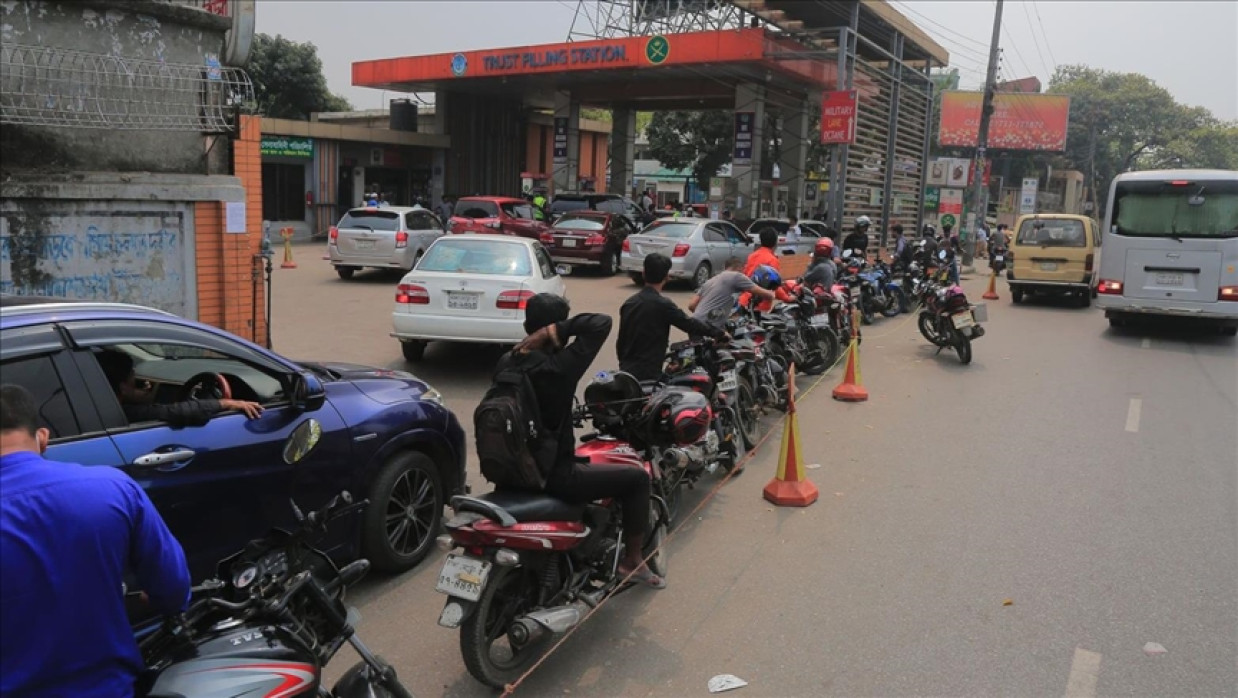
Over the past several weeks, Bangladesh has been facing a growing wave of economic pressure marked by rising fuel prices, increasing LPG costs, mounting public debt obligations, and concerns over weakening investment and employment conditions. Taken together, these developments are creating a complex and interconnected set of challenges that affect households, farmers, businesses, and policymakers alike. From an analytical standpoint, the situation reflects not a single crisis but a convergence of multiple stress factors that are reinforcing each other.
A recent announcement by the Power, Energy, and Mineral Resources Ministry introduced significant adjustments in fuel prices. Diesel has been raised to Tk 115 per litre, octane to Tk 140, petrol to Tk 135, and kerosene to Tk 130. Compared to previous rates, this represents an increase of Tk 15 per litre for diesel, Tk 20 for octane, and Tk 19 for petrol. Such a sharp upward revision has an immediate transmission effect across the economy.
Diesel, in particular, plays a critical role in transportation, agriculture, and logistics. When diesel prices rise, the cost of moving goods increases, which eventually leads to higher prices of essential commodities in markets. For rural economies, where diesel-powered irrigation and agricultural machinery are widely used, this increase directly raises cultivation costs. As a result, farmers face pressure on both input costs and market competitiveness.
Petrol and octane increases also contribute to higher transportation fares and logistics costs in urban and semi-urban areas. Consumers typically feel this impact through rising daily expenses, including food prices and commuting costs.
In addition to fuel adjustments, liquefied petroleum gas (LPG) prices have also increased significantly. The Bangladesh Energy Regulatory Commission raised LPG prices by Tk 17.62 per kilogram, pushing the cost of a 12kg cylinder from Tk 1,728 to Tk 1,940. This marks the second increase in less than three weeks, signaling sustained pressure on household energy affordability.
For middle- and low-income families, LPG is a primary cooking fuel. Repeated price increases in a short period reduce disposable income and force households to adjust consumption patterns. In many cases, families may shift toward lower-cost but less efficient energy sources, which can create additional health and environmental concerns.
At the macroeconomic level, concerns over rising public debt are becoming more prominent. According to parliamentary disclosures cited in recent discussions, Bangladesh’s outstanding foreign debt has reached approximately $78 billion. Over the past decade and a half, the country has received more than $85 billion in external loans while repaying over $22 billion in principal and nearly $9 billion in interest.
The widening gap between borrowing and repayment reflects a structural challenge: while external financing has supported development projects and budgetary needs, it has also created long-term repayment obligations. Debt servicing now consumes a significant portion of fiscal planning, with annual budgets allocating substantial resources for repayment of both principal and interest.
From a policy perspective, high debt levels do not automatically signal crisis, but they do reduce fiscal flexibility. When a large share of revenue is allocated to debt servicing, fewer resources remain available for subsidies, social protection, infrastructure expansion, and emergency response measures.
Another dimension of the current economic strain is the reported slowdown in foreign investment. Reduced investor confidence-whether due to political uncertainty, global economic conditions, or domestic regulatory concerns-can lead to lower capital inflows. When investment declines, industrial expansion slows, and job creation weakens.
In such conditions, factory closures and layoffs become more likely, particularly in labor-intensive sectors. This has a direct impact on urban employment and indirectly affects rural economies through reduced remittance flows from domestic migrant workers employed in industry and services.
The economy, therefore, faces a dual challenge: weaker job creation at home and increasing dependence on external income sources such as remittances.
Remittances continue to play a crucial stabilizing role in the national economy. They support foreign exchange reserves, household consumption, and poverty reduction. However, reliance on remittances also introduces vulnerability, especially when external shocks affect migrant labor markets.
Recent geopolitical tensions in the Middle East have raised concerns about employment stability for migrant workers in certain regions. Any disruption in labor markets abroad can quickly translate into reduced remittance inflows, affecting millions of households that depend on overseas income.
This dependence highlights a structural imbalance: while remittances provide short-term stability, they cannot substitute for sustained domestic industrial growth and diversified export earnings.
In response to rising economic pressures, the government has introduced various social assistance mechanisms, including family cards for low-income households and targeted assistance schemes for farmers. Reported benefits include monthly financial support aimed at easing household burdens.
While such measures provide short-term relief, their long-term effectiveness depends on implementation efficiency, targeting accuracy, and fiscal sustainability. Cash transfer programs can help stabilize consumption, but they do not directly address structural issues such as input shortages, agricultural productivity constraints, or energy supply instability.
One of the most critical risks emerging from the current situation is increasing pressure on food security. Agriculture is highly sensitive to fluctuations in fuel and fertilizer costs. When diesel prices rise and fertilizer supply becomes constrained, farmers are forced to bear higher production costs and face greater operational uncertainty. In addition, several fertilizer factories have reportedly shut down due to shortages of raw materials, further tightening supply and adding to the challenges in the agricultural sector.
If these conditions persist during key cultivation seasons, there is a risk of reduced output or delayed farming cycles. Combined with logistical cost increases, this could contribute to upward pressure on food prices in domestic markets.
From a broader perspective, food security is not only about production levels but also about affordability and distribution. Even if total production remains stable, rising transportation and input costs can still reduce access for lower-income populations.
Overall, the current economic landscape reflects a combination of rising energy costs, increasing debt obligations, investment slowdown, and heightened external vulnerability. Each of these factors alone would present a manageable challenge, but together they create a more complex environment that requires coordinated and sustained policy responses.
From a personal analytical standpoint, the most important concern is not any single policy decision but the interaction between multiple pressures. Fuel price increases affect agriculture, agriculture affects food prices, debt affects fiscal capacity, and investment affects employment. When these links tighten simultaneously, the system becomes more sensitive to shocks.
The way forward requires balancing short-term relief measures with long-term structural reforms. Energy pricing policy, agricultural input stability, investment climate improvement, and debt management will all need to work in alignment. Without such coordination, the risk of prolonged economic strain-and potential food security stress-remains significant in the near future.


0 Comments
LEAVE A COMMENT
Your email address will not be published